
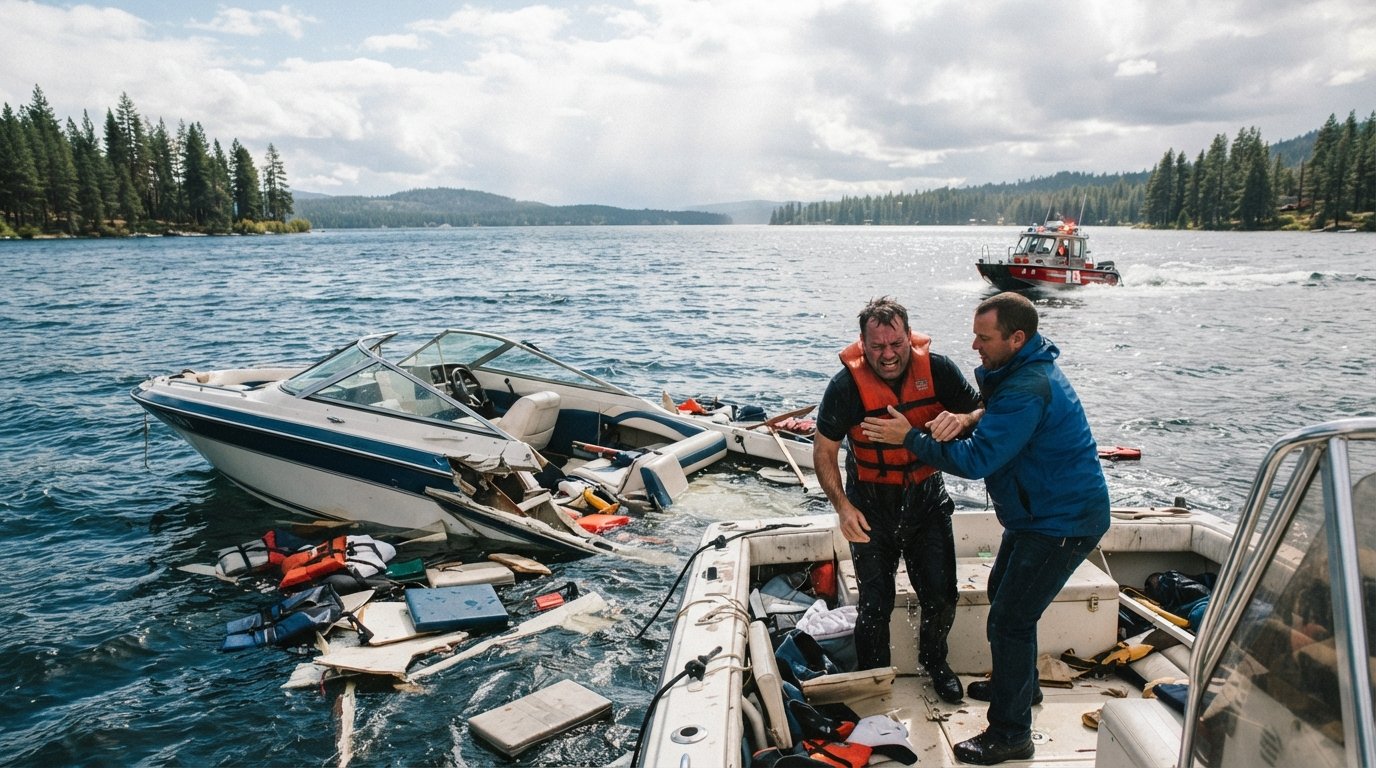
Boating Accident Lawyer: Legal Options for Water Injuries
Injured on the water? A boating accident lawyer can review your legal options, identify liable parties, and pursue compensation for medical bills and lost wages.

By Elspeth Warren
A day on the water can turn dangerous in seconds. Whether you are cruising a lake, fishing offshore, or riding a personal watercraft, a collision, a fall overboard, or a propeller strike can leave you with serious injuries, mounting medical bills, and uncertainty about who is responsible. If you were hurt on a boat, jet ski, or other vessel, a boating accident lawyer can help you understand your legal options for injuries on the water and pursue the compensation you may deserve.
Boating accidents are more common than many people realize. The U.S. Coast Guard reports thousands of recreational boating incidents each year, resulting in hundreds of deaths and thousands of injuries. Common causes include operator inexperience, speeding, alcohol use, equipment failure, and dangerous weather conditions. When negligence plays a role, injured victims may have the right to file a claim against the responsible party.
This guide explains the legal landscape of boating injury claims, the types of compensation available, the challenges unique to maritime and recreational boating cases, and how to find qualified legal help. It also outlines practical steps you can take after an accident to protect your health and your legal rights.
Understanding Boating Accident Injuries and Their Causes
Boating accidents can produce a wide range of injuries, from minor cuts and bruises to catastrophic trauma. The most serious incidents often involve high speeds, heavy vessels, or contact with propellers. Victims may suffer traumatic brain injuries, spinal cord damage, broken bones, amputations, burns, and drowning-related injuries. Even a low-speed collision can cause lasting harm if a passenger is thrown against a hard surface or into the water.
Several factors contribute to boating accidents. Operator error is among the most frequent, including failure to maintain a proper lookout, reckless maneuvering, and inexperience with the vessel. Alcohol impairment is a major contributor, affecting both operators and passengers. Mechanical failures, such as steering or engine problems, can also lead to collisions or capsizing. Environmental conditions, including strong currents, fog, and sudden storms, add another layer of risk.
In some cases, more than one party may share responsibility. For example, a boat rental company might be liable if it rented a vessel with known defects, while the operator could also be at fault for negligent handling. Identifying all responsible parties is a critical step in building a strong claim. An experienced attorney can investigate the incident, gather evidence, and determine who should be held accountable.
Legal Options for Injuries on the Water: Understanding Your Rights
When you are injured on the water, the legal options available depend on several factors, including where the accident occurred, the type of vessel involved, and the relationship between the parties. Generally, boating injury claims fall into a few categories: negligence claims, product liability claims, and claims under maritime law.
Negligence is the most common basis for a boating accident claim. To succeed, you must show that the responsible party owed you a duty of care, breached that duty, and caused your injuries. For example, a boat operator who speeds through a no-wake zone and collides with another vessel has likely breached their duty to operate safely. If you can prove negligence, you may recover damages for medical expenses, lost wages, pain and suffering, and other losses.
Product liability claims may arise if a defective part or design flaw contributed to the accident. Suppose a steering cable snaps due to a manufacturing defect, causing the operator to lose control. In that case, the manufacturer or seller could be held liable. These cases often require expert testimony to establish that the product was defective and that the defect caused the injury.
Maritime law adds another layer of complexity. Accidents on navigable waters may fall under federal admiralty jurisdiction, which has its own rules and procedures. The Jones Act, for instance, protects certain maritime workers, while the Longshore and Harbor Workers' Compensation Act covers others. Recreational boaters are typically not covered by these statutes, but general maritime negligence principles may still apply. An attorney familiar with both state and federal maritime law can help you navigate these distinctions.
If you were injured while riding a scooter on land, the legal principles are different but the importance of prompt action is similar. In our guide on e-scooter accident lawyer legal options for injured riders, we explain how to identify liable parties and preserve evidence, concepts that also apply to boating injury claims.
Key Steps to Take After a Boating Accident
The actions you take immediately after a boating accident can significantly affect your ability to recover compensation. The first priority is always safety. Ensure that everyone is accounted for, call for emergency assistance if needed, and move to a safe location if possible. Once immediate dangers are addressed, you can begin documenting the incident.
Collecting evidence is crucial. Take photographs of the vessels involved, the surrounding area, and any visible injuries. If there are witnesses, get their names and contact information. Request a copy of the accident report from the responding law enforcement agency or the Coast Guard. If you can, note the registration numbers of the boats involved and the names of their operators.
Seek medical attention even if you feel fine. Some injuries, such as concussions or internal bleeding, may not show symptoms immediately. A medical evaluation creates a record linking your injuries to the accident, which is valuable for your claim. Follow your doctor's treatment plan and keep all appointment records.
Finally, avoid discussing the accident with insurance adjusters or the other party's representatives without legal guidance. Anything you say can be used against you. Instead, contact a boating accident lawyer who can handle communications and protect your interests. A lawyer can also help you understand the statute of limitations for your claim, which varies by state and type of incident.
Potential Damages and Compensation in Boating Injury Cases
If you succeed in your claim, you may be entitled to several types of compensation. The specific damages available depend on the facts of your case and the laws of the relevant jurisdiction. In general, victims can seek economic damages, non-economic damages, and in rare cases, punitive damages.
Economic damages cover tangible losses, such as medical bills, rehabilitation costs, lost income, and property damage. If your injuries prevent you from returning to work, you may also recover lost earning capacity. Non-economic damages compensate for intangible losses, including pain, suffering, emotional distress, and loss of enjoyment of life. These are often harder to quantify but can be substantial in serious injury cases.
Punitive damages are awarded when the defendant's conduct is especially reckless or intentional, such as operating a boat while intoxicated. Not all states allow punitive damages, and they are typically reserved for egregious cases. An attorney can advise you on which damages are recoverable in your situation.
It is important to remember that boating accident claims often involve multiple insurance policies. The operator's homeowners or renters insurance may provide coverage, as might a standalone boat insurance policy. If the accident involved a commercial vessel, such as a tour boat or ferry, the company's liability insurance may come into play. Identifying all available insurance sources is a key part of maximizing your recovery.
Common Challenges in Boating Accident Claims
Boating accident cases present unique challenges that can complicate your claim. One major issue is determining jurisdiction. Accidents on federal waters may fall under admiralty law, while those on state lakes and rivers are governed by state law. The distinction affects filing deadlines, damage caps, and procedural rules. An experienced attorney can determine which body of law applies and build your case accordingly.
Another challenge is proving fault. Unlike car accidents, boating accidents do not always involve clear traffic rules or physical evidence like skid marks. Reconstructing what happened may require expert analysis of vessel damage, weather conditions, and witness statements. The sooner you involve a lawyer, the better your chances of preserving critical evidence.
Insurance companies can also be a hurdle. Adjusters may try to minimize your claim or shift blame onto you. They might argue that you assumed the risk of boating or that your own negligence contributed to the accident. Under comparative negligence rules, your recovery may be reduced by your percentage of fault. A skilled lawyer can counter these arguments and advocate for a fair settlement.
How a Boating Accident Lawyer Can Help
Hiring a boating accident lawyer offers several advantages. First, an attorney can conduct a thorough investigation, gathering evidence from multiple sources, including Coast Guard reports, marine surveyors, and accident reconstruction experts. This evidence is essential for establishing liability and proving the extent of your damages.
Second, a lawyer can handle all communications with insurance companies and opposing counsel. This protects you from saying something that could harm your case and allows you to focus on recovery. Your attorney can also negotiate aggressively on your behalf, using their knowledge of similar cases to value your claim accurately.
Third, if a fair settlement cannot be reached, your lawyer can file a lawsuit and represent you in court. Litigation may be necessary to secure the compensation you deserve, especially in complex cases involving multiple defendants or disputed liability. Having an experienced advocate by your side can make a significant difference in the outcome.
When choosing a lawyer, look for someone with specific experience in boating accident and maritime law. Ask about their track record, their approach to case evaluation, and their fees. Many personal injury attorneys work on a contingency basis, meaning you pay nothing unless they recover compensation for you. This arrangement makes legal representation accessible to injured victims regardless of their financial situation.
If you are unsure where to start, consider using a reputable legal referral service. Platforms like FreeLegalCaseReview connect individuals with qualified attorneys and offer free, confidential case evaluations. These services can help you find a lawyer who fits your needs without upfront costs.
Statute of Limitations and Filing Deadlines
Every state imposes a statute of limitations on personal injury claims, including those arising from boating accidents. The time limit varies, typically ranging from one to three years from the date of the accident. If you miss the deadline, you may lose your right to sue, regardless of how strong your case is.
Maritime cases may have different deadlines. For example, claims against the federal government under the Suits in Admiralty Act have a two-year limit, while some states impose shorter periods for claims against municipalities. Because these rules can be complex, it is wise to consult an attorney as soon as possible after your accident.
In some situations, the statute of limitations may be tolled (paused) or extended. For instance, if the injured person is a minor or lacks mental capacity, the clock may not start until they reach adulthood or regain capacity. An attorney can evaluate whether any exceptions apply to your case.
Choosing the Right Legal Representation
Selecting the right attorney is one of the most important decisions you will make after a boating accident. Not all personal injury lawyers have experience with maritime law or boating-specific issues. Look for an attorney who has successfully handled cases similar to yours and who understands the nuances of admiralty and state law.
During your initial consultation, ask about the attorney's experience, strategy, and communication style. A good lawyer will listen to your story, explain your legal options clearly, and answer your questions without pressure. They should also provide a clear fee agreement so you know what to expect.
If you prefer to compare multiple attorneys, a referral service can streamline the process. LawyerCaseReview, for example, offers a peer-influenced selection process to match you with top-rated legal professionals. You can submit your case details online and receive a free evaluation from participating law firms. Remember that LawyerCaseReview is not a law firm and does not provide legal advice; it is a resource to connect you with qualified attorneys.
Do not wait to seek legal help. Evidence can degrade, memories fade, and deadlines can pass. Taking action quickly improves your chances of a successful outcome.
Boating accidents can change your life in an instant. With the right legal guidance, you can pursue the compensation you need to move forward and hold negligent parties accountable.