
Breathalyzer Refusal Consequences by State: A 2026 Guide
Facing a breathalyzer refusal? Learn the consequences of refusing a breathalyzer test by state. Call (833)-864-8408 for a free DUI case review.

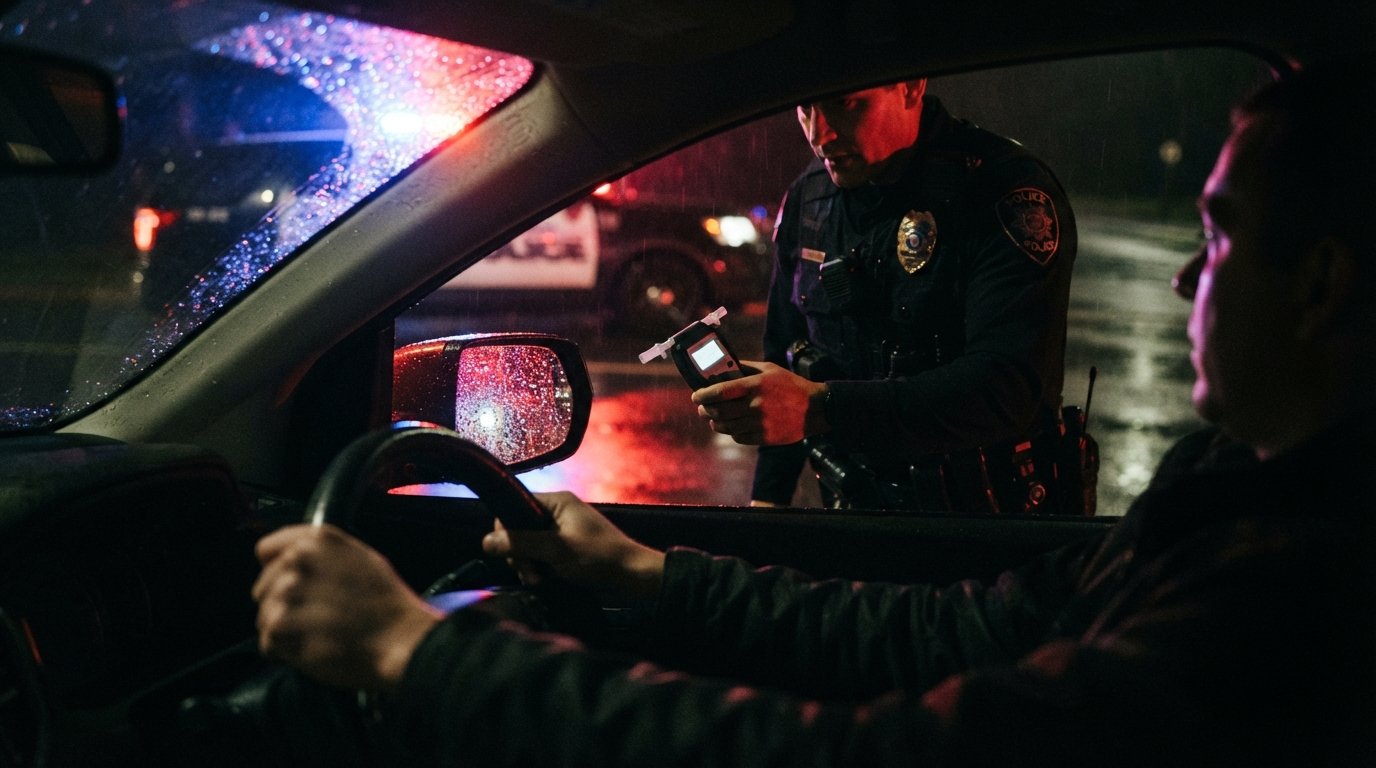
You see the flashing lights in your rearview mirror, and your heart sinks. After a traffic stop, an officer suspects you have been drinking and asks you to blow into a breathalyzer. You might think refusing is your safest bet, but that decision carries serious weight. Every state has implied consent laws, and the consequences of refusing a breathalyzer test by state vary widely, from short license suspensions to mandatory jail time and ignition interlock requirements. Understanding these penalties before you are in that situation can protect your rights and your driving privileges.
This guide breaks down how refusal penalties work across the country, what happens to your license, whether prosecutors can use your refusal in court, and when it makes sense to request a DUI case review from a criminal defense attorney. We will also explain how an attorney referral service can connect you with the right legal help quickly.
What Implied Consent Means for Every Driver
When you receive a driver's license, you automatically agree to submit to chemical testing if an officer has probable cause to believe you are driving under the influence. This legal doctrine is called implied consent, and it exists in all 50 states. The idea is simple: by using public roads, you consent to a breath, blood, or urine test when lawfully arrested for DUI. Refusing the test does not avoid arrest; it triggers separate administrative penalties that are often harsher than the DUI charge itself.
The critical distinction is that refusing a breathalyzer is not a criminal offense in most states, but it is a civil violation that leads to automatic license suspension. In some states, refusal can also be charged as a separate crime, especially if you have prior refusals or if an accident caused injury or death. Because the rules are so varied, the consequences of refusing a breathalyzer test by state require a close look at your specific jurisdiction.
Officers are required to inform you of the consequences before asking for a sample. However, they are not required to make the warning perfectly clear, and many drivers misunderstand their rights. If you are unsure whether you should submit to testing, you can request a confidential case evaluation with a DUI defense attorney through a service like LawyerOffer to understand your options before making a decision.
License Suspension Lengths by State
The most immediate consequence of refusal is the administrative license suspension. Unlike a DUI conviction, which requires a court hearing, the suspension often takes effect automatically after a refusal. The length of the suspension depends on whether it is your first refusal and whether you have prior DUI convictions. Below is a comparison of first-refusal suspension periods in several representative states.
- California: One year for a first refusal, two years for a second refusal within 10 years, and three years for a third refusal. A conviction for DUI can add additional suspension time.
- Florida: One year for a first refusal, 18 months for a second refusal. If you refuse a second time, you may also face a misdemeanor charge.
- Texas: 180 days for a first refusal, two years for a second or subsequent refusal. Texas also allows prosecutors to use refusal as evidence of guilt.
- New York: One year for a first refusal, 18 months for a second refusal within five years, and additional penalties for commercial drivers.
- Illinois: One year for a first refusal, three years for a second refusal. Illinois also requires an ignition interlock device for repeat offenders.
These are only first-refusal examples. Many states escalate penalties sharply for repeat refusals, and some impose permanent license revocation after three refusals. For a deeper look at how suspension hearings work and how to challenge them, see our guide on refusing a breathalyzer and license suspension risks. That resource explains the timeline for requesting a hearing and the evidence you need to present.
Beyond suspension length, states differ in whether you can apply for a restricted license during the suspension period. Some states allow a hardship license for work or medical appointments, while others require an ignition interlock device before any driving privilege is restored. The consequences of refusing a breathalyzer test by state therefore include not just the suspension itself but also the cost and inconvenience of reinstating your license.
Can Refusal Be Used Against You in Court?
In many states, prosecutors can introduce evidence of your refusal during a DUI trial. The theory is that refusing a test is consciousness of guilt. However, the rules vary significantly. In some states, the prosecution may comment on your refusal only if you were properly advised of the consequences. In others, refusal evidence is admissible without limitation. A few states allow the jury to draw an inference of guilt from the refusal, while others prohibit any mention of it.
For example, California allows the prosecution to use refusal as evidence of guilt, and the jury may be instructed that refusal can be considered along with other evidence. Texas similarly permits refusal evidence, and courts have upheld its use. On the other hand, states like New Jersey and Pennsylvania have more restrictive rules, and refusal evidence may be excluded unless the defendant opens the door. Because this is a highly technical area, a local DUI attorney can explain whether your refusal will hurt you at trial and whether a motion to suppress is available.
The bottom line is that refusing a breathalyzer does not necessarily prevent the prosecution from proving intoxication. Officers can testify about your driving pattern, field sobriety tests, and physical appearance. In some cases, a blood draw may be obtained by warrant, which means refusal only delays the inevitable and adds administrative penalties on top.
First Refusal Versus Repeat Refusal Penalties
The consequences of refusing a breathalyzer test by state become much more severe for repeat refusals. A first refusal typically results in a civil license suspension, but a second or third refusal can elevate the conduct to a criminal misdemeanor or even a felony. In states like Florida, a second refusal within five years is a first-degree misdemeanor punishable by up to one year in jail and a $1,000 fine. In Illinois, a second refusal can lead to a three-year suspension and mandatory interlock. In Texas, a second refusal carries a two-year suspension and potential jail time.
Repeat refusals also affect your ability to obtain a restricted license. Many states require an ignition interlock device for anyone with multiple refusals, and some require proof of financial responsibility (SR-22 insurance) for years after the suspension ends. The financial impact can be thousands of dollars when you add up towing fees, court costs, attorney fees, and increased insurance premiums.
If you have been arrested for DUI and refused a test, you should request a DUI case review from a criminal defense attorney as soon as possible. The deadline to challenge an administrative suspension is often very short, sometimes only 7 to 10 days from the date of arrest. Missing that deadline can waive your right to a hearing and result in a longer suspension. An attorney can also evaluate whether the officer had probable cause to request the test in the first place, which may provide a defense to both the refusal and the DUI charge.
When to Request a DUI Case Review
You should request a DUI case review immediately after a refusal, ideally within 24 to 48 hours. The administrative hearing deadline is strict, and evidence such as dashcam footage and officer notes can disappear quickly. A criminal defense attorney can review the traffic stop, the probable cause statement, and the implied consent warning to identify procedural errors. If the officer failed to read the warning correctly or if the arrest was unlawful, the refusal penalties may be reduced or dismissed.
Even if you believe you were in the wrong, an attorney can negotiate with the prosecutor to reduce charges or arrange a plea that avoids jail time. In some cases, first-time offenders may be eligible for diversion programs that include alcohol education and community service. The key is to act fast and get professional advice before the administrative suspension takes effect.
If you are not sure where to start, a legal referral platform like LawyerOffer can connect you with experienced DUI defense lawyers in your state. These services typically offer free or low-cost initial consultations, so you can understand the consequences of refusing a breathalyzer test by state without committing to a lengthy legal battle.
How an Attorney Referral Service Helps
Finding the right DUI attorney can be overwhelming, especially when you are facing license suspension and possible jail time. Attorney referral services simplify the process by matching you with lawyers who handle refusal cases in your jurisdiction. They can explain the specific penalties in your state, help you request a hearing, and represent you in court. Many services also provide educational content to help you understand your rights before you speak with an attorney.
When you contact a referral service, be prepared to provide basic details about your arrest, including the date, location, and whether you refused a breath or blood test. The service will then connect you with a lawyer who offers a free case evaluation. This initial review is confidential and does not obligate you to hire the attorney. It is simply a way to get informed advice about your options.
Remember that the consequences of refusing a breathalyzer test by state are not limited to the courtroom. Your insurance rates may increase, your employment may be affected if you drive for a living, and you may face difficulties renting a car or traveling abroad. An experienced attorney can help you minimize these collateral consequences and focus on the best possible outcome for your case.
If you are facing a DUI refusal charge, do not wait. Contact a DUI defense attorney today to schedule a case review and protect your driving privileges. For more information about legal resources and attorney referrals, visit LawyerOffer to explore your options.