
DUI Checkpoint Rights: What Drivers Must and Must Not Do
Know your DUI checkpoint rights: what drivers must and must not do. Call (833)-864-8408 to connect with a defense attorney for a free case review.

By Luca Bennett
You see the flashing lights and the row of cones ahead. Your pulse quickens, even if you have had nothing to drink. Sobriety checkpoints are a reality on American roads, and knowing exactly what you must do, and what you absolutely must not do, can mean the difference between a brief pause and a life-altering criminal charge. The stakes are high: a DUI conviction can cost thousands in fines, lead to license suspension, and even result in jail time. But confusion about your rights is common, and that confusion can be dangerous. This guide breaks down the legal landscape of DUI checkpoint rights, what drivers must and must not do, so you can navigate the encounter with confidence and protect your future.
Understanding the Legal Framework of Sobriety Checkpoints
The Fourth Amendment to the U.S. Constitution protects citizens against unreasonable searches and seizures. Normally, this means law enforcement cannot stop your vehicle without reasonable suspicion that a crime has occurred. However, the Supreme Court carved out an exception for sobriety checkpoints in the 1990 case of Michigan Department of State Police v. Sitz. The Court held that the brief, suspicionless stops at checkpoints serve a compelling state interest in reducing drunk driving fatalities, and the intrusion on motorists is minimal. As a result, checkpoints are legal in many states, but only if they adhere to strict procedural guidelines designed to minimize arbitrary police power.
These guidelines typically require that the checkpoint be conducted according to a neutral, published plan. Officers cannot simply decide to set up a roadblock on a whim or target a specific vehicle without cause. The location must be chosen based on safety and statistical data regarding alcohol-related accidents, not for the convenience of generating arrests. Furthermore, the selection of vehicles must be random or based on a neutral pattern, such as stopping every third car. If the checkpoint fails to follow these rules, any evidence obtained may be suppressed, and the case could be dismissed. Understanding these legal nuances is the first step in knowing your DUI checkpoint rights and what drivers must and must not do when approaching one.
What Officers May Legally Require at a Checkpoint
When you pull up to a checkpoint, the officer is conducting a limited seizure. This means they are allowed to ask you a few basic questions and make observations to determine if you are impaired. The primary requirement is that you must provide your driver's license, vehicle registration, and proof of insurance if requested. In most states, driving is a privilege, not a right, and operating a vehicle on public roads implies consent to these administrative requirements. The officer may also ask you where you are coming from and where you are going, though you are not obligated to answer these questions beyond identifying yourself. However, refusing to answer may prolong the stop and heighten the officer's suspicion.
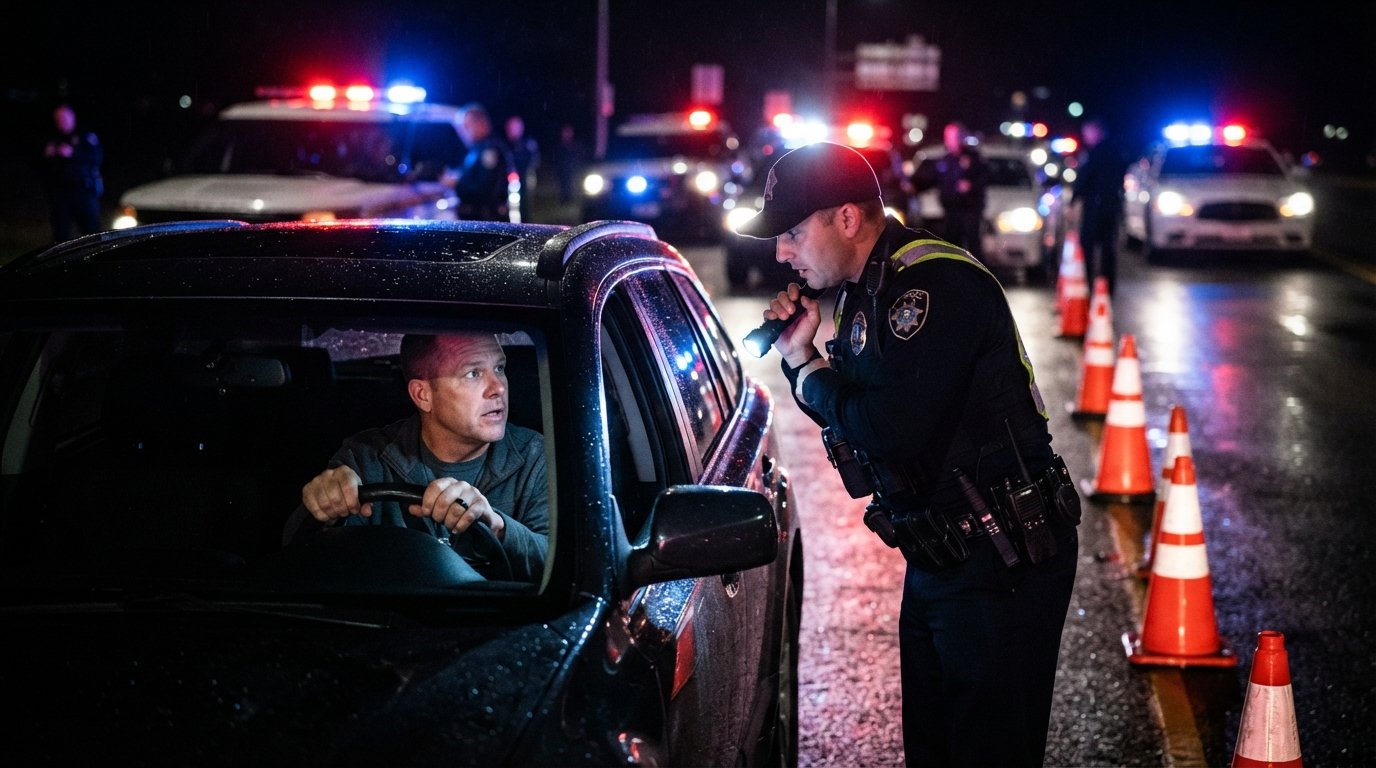
Beyond documents, the officer is permitted to observe your appearance, speech, and motor skills. They may shine a flashlight into your car to look for signs of impairment, such as open containers or the smell of alcohol. They can also ask you to perform field sobriety tests (FSTs). These are voluntary in most states, but refusing them can have consequences. The key distinction is between what you must do (provide documents, exit the vehicle if ordered) and what you should do (comply politely, but carefully consider whether to perform voluntary tests). Knowing these boundaries is crucial for anyone concerned about DUI checkpoint rights and what drivers must and must not do under pressure.
What Officers May Only Request: Voluntary Actions and Refusals
While officers can order you to provide documents and step out of the car, they can only request that you participate in field sobriety tests or submit to a preliminary breath test (PBT). Field sobriety tests include the horizontal gaze nystagmus (follow the pen), the walk-and-turn, and the one-leg stand. These tests are designed to divide attention and assess coordination, but they are not mandatory. In many states, you can politely decline to perform them. However, there is a catch: if the officer already has probable cause to believe you are impaired, your refusal to perform FSTs can be used as evidence against you in court. More importantly, refusing a PBT, which is a handheld device used at the scene, often carries no immediate license suspension penalty, but refusing a post-arrest evidentiary breath or blood test triggers implied consent laws.
Implied consent laws are a critical component of DUI checkpoint rights and what drivers must and must not do. By driving on public roads, you have implicitly agreed to submit to chemical testing if lawfully arrested for DUI. If you refuse, your license will be automatically suspended for a period ranging from 90 days to a year or more, depending on the state and whether it is a first offense. This suspension is separate from the criminal case and can be challenged, but the refusal itself can be used as evidence of guilt in court. Therefore, while you can refuse the roadside PBT, refusing the official breathalyzer or blood test at the station after arrest is a high-stakes decision that you should discuss with an attorney as soon as possible.
Recording the Encounter and Requesting an Attorney
In many states, you have the right to record the police encounter as long as you are not interfering with their duties. This is a powerful tool for protecting your DUI checkpoint rights and what drivers must and must not do. Video evidence can capture the officer's demeanor, the questions asked, and the conditions at the checkpoint, which may later contradict the police report. If you choose to record, do so openly and politely announce that you are recording. Do not physically resist or obstruct the officer's movements. If the officer orders you to stop recording, it is wise to comply to avoid escalation, but you can later challenge that order in court if it violated your state's laws.
You also have the right to request an attorney. However, the timing matters. At a checkpoint, you are not under arrest, so the officer is not required to provide you with a lawyer before asking basic questions or conducting FSTs. Once you are arrested and taken into custody, you must be given the opportunity to speak with an attorney before further interrogation. If you are unsure about what to do, state clearly: "I am invoking my right to remain silent and I want to speak with an attorney." Then, stop talking. The police cannot continue questioning you about the incident once you have invoked this right. This is perhaps the most important of all DUI checkpoint rights and what drivers must and must not do: speak up, then stay silent.
Challenging a Stop That Exceeded Lawful Checkpoint Procedures
If you believe the checkpoint was not conducted according to the law, you may have grounds to challenge the stop. For example, if the officers were not following a neutral selection pattern, if the checkpoint was not properly authorized, or if the stop was prolonged beyond what is necessary, a judge could suppress the evidence. This is where experienced legal counsel becomes invaluable. An attorney can request the checkpoint's operational plan, officer training records, and video footage to scrutinize the procedure. If the checkpoint was unlawful, the entire case may collapse, even if you were over the legal limit.
Additionally, if the officer lacked reasonable suspicion to extend the stop beyond the initial checkpoint questions, any subsequent evidence of impairment might be inadmissible. For instance, if you provided your documents and answered basic questions without issue, but the officer then ordered you out for a field sobriety test without any specific signs of impairment, that could be an illegal seizure. Challenging these procedural errors requires a deep understanding of state law and local precedent. This is not a battle you should fight alone. Seeking a professional evaluation of your case early on is a smart move. You can start by documenting everything you remember and then consulting with a DUI defense attorney who can assess whether your rights were violated.
Working with Defense Counsel Before the First Court Date
The period between your arrest and your first court appearance is critical. This is the time to gather evidence, interview witnesses, and build a defense strategy. Do not wait until the arraignment to hire a lawyer. An attorney can immediately begin investigating the checkpoint's legality, review the police report for inconsistencies, and advise you on how to handle the implied consent hearing (which is often separate from the criminal case and has a short deadline). Your lawyer can also negotiate with the prosecutor and potentially get charges reduced or dismissed based on procedural defects.
When choosing a defense attorney, look for someone with specific experience in DUI cases and local knowledge of the courts and checkpoints in your area. If you need help finding a qualified lawyer, resources like reinstating a suspended driver's license after DUI can provide guidance on the administrative process, but for the criminal defense itself, you need a dedicated attorney. Many legal information sites, such as AttorneyLawsuit, offer directories and articles on legal rights, but they are not a substitute for personalized legal advice. LawyerCaseReview.com connects individuals with top-rated attorneys for free, confidential case evaluations. If you are facing DUI charges, consider requesting a case review to speak with a lawyer who can protect your rights and future.
Key Takeaways: Your Rights at a Glance
To summarize, here is a quick reference guide for DUI checkpoint rights and what drivers must and must not do:
- Must: Provide your license, registration, and proof of insurance when requested.
- Must: Exit the vehicle if ordered by the officer.
- Must Not: Physically resist or obstruct the officer.
- Should: Politely decline field sobriety tests and the preliminary breath test if you are unsure, but understand the consequences.
- Must Not: Refuse the post-arrest chemical test without understanding implied consent penalties.
- Should: Clearly invoke your right to remain silent and request an attorney once arrested.
- Should: Record the encounter openly if your state allows, but do not interfere.
Remember, while you have rights, the way you assert them matters. Being respectful and calm can go a long way in preventing escalation. If you are arrested, do not try to talk your way out of it. The things you say can and will be used against you. Instead, focus on securing legal representation immediately. A skilled attorney can review the checkpoint procedures, challenge any illegal actions, and work to mitigate the consequences. Your future is too important to leave to chance. Take action today to protect your DUI checkpoint rights and what drivers must and must not do.