
DUI Defense Strategies to Beat Charges in 2026
Proven dui defense strategies to beat charges, from challenging the traffic stop to questioning chemical tests, can protect your future.

By Briar Ellington
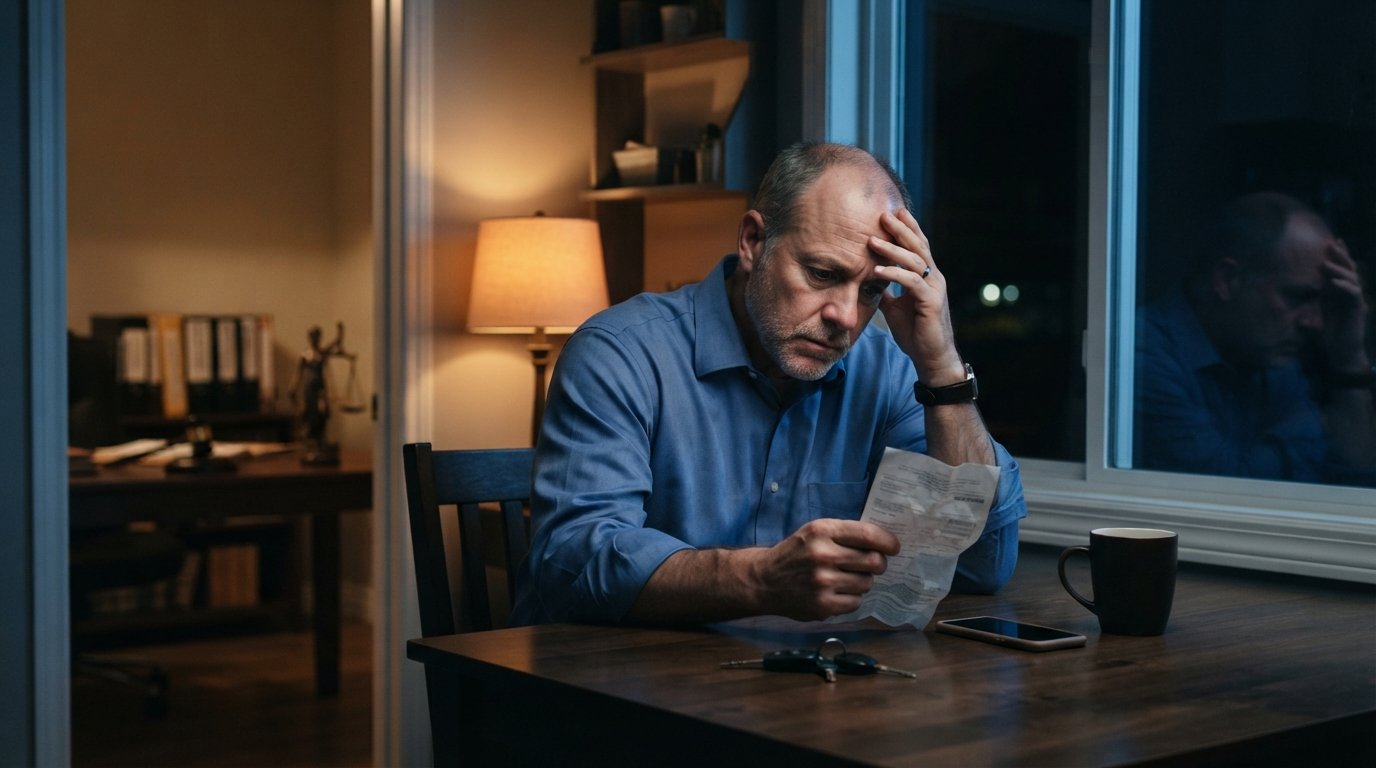
Facing a DUI charge can feel like the ground has shifted beneath you. The anxiety of a potential license suspension, heavy fines, and even jail time is overwhelming. Yet, the arrest itself is not the end of the road. In fact, a DUI charge is often the beginning of a complex legal process where the outcome is far from predetermined. Police officers and prosecutors make mistakes, and the evidence they rely on is frequently more fragile than it appears. Many drivers successfully navigate this system every year by understanding their rights and employing strategic legal defenses. The key is knowing that you have options, and with the right approach, you can build a strong case to protect your future.
This guide explores proven dui defense strategies to beat charges, from attacking the traffic stop itself to challenging the reliability of chemical tests. We break down each method in plain language, so you can understand what your attorney might be looking for and how these tactics work in practice. The goal is not just to discuss legal theory; it is to show you how a determined defense can lead to reduced penalties, dismissed charges, or even an acquittal. No two cases are identical, but the principles of a strong defense are consistent. Let us walk through the most effective approaches, step by step.
Challenge the Initial Traffic Stop
Every DUI case begins with a traffic stop, and that stop must be legally justified. The Fourth Amendment protects you from unreasonable searches and seizures, which means an officer cannot pull you over without a valid reason. This reason, known as reasonable suspicion, must be based on specific, articulable facts. An officer cannot stop you simply because they have a hunch or because you are driving in a high-crime area at night. If the officer lacked a legitimate reason to stop your vehicle, any evidence gathered after that point, including field sobriety tests and breathalyzer results, may be suppressed. This is often the first and most powerful defense strategy.
Common justifications for a traffic stop include speeding, weaving between lanes, failing to signal, or having a broken taillight. However, officers sometimes make mistakes. They might misidentify a vehicle, misjudge a speed, or rely on a minor equipment violation that does not actually exist. Your attorney will scrutinize the officer's report and dashcam footage to determine if the stop was lawful. If the initial stop was unlawful, the entire case can unravel. This is known as the fruit of the poisonous tree doctrine, where evidence obtained through an illegal stop is inadmissible in court.
In addition to the reason for the stop, the duration of the stop matters. An officer cannot prolong a traffic stop beyond the time needed to address the original issue. If they complete the citation for a broken taillight and then continue to hold you to ask DUI-related questions without additional suspicion, that delay may be unconstitutional. A skilled defense attorney will evaluate the timeline of the stop to identify any violations of your rights.
Attack Field Sobriety Tests
Field sobriety tests (FSTs) are a series of physical exercises used by officers to assess impairment. The most common are the horizontal gaze nystagmus (HGN), the walk-and-turn, and the one-leg stand. These tests are not scientific proof of intoxication; they are subjective assessments that can be influenced by many factors unrelated to alcohol. For example, a driver with a medical condition, an injury, or even just a pair of uncomfortable shoes can perform poorly on these tests. The officer's instructions are often rapid and confusing, and the roadside environment (traffic, lighting, uneven pavement) can make any test difficult to complete.
There are several angles to challenge FSTs in court. First, the officer must have administered the tests according to standardized procedures. If they skipped a step, gave incorrect instructions, or misjudged the results, the validity of the test is compromised. Second, the officer's observation of your performance is subjective. They are looking for specific clues, but their interpretation of those clues can be flawed. An experienced DUI attorney will often bring in an expert witness to explain how these tests have a high rate of error and are not reliable indicators of impairment.
It is also important to note that you are not legally required to perform field sobriety tests. In most states, these tests are voluntary, and you can politely decline without facing direct legal penalties, though this refusal may be used against you in some way. However, your attorney can argue that the tests are designed to fail and that your performance was not a true reflection of your sobriety. The video evidence from the officer's body camera or dashcam can be a critical tool here, as it can reveal that the test was conducted improperly or that the officer's instructions were unclear.
Question the Accuracy of Breathalyzer and Blood Tests
Chemical tests, such as the breathalyzer or a blood sample, are the cornerstone of many DUI cases. These tests are designed to measure your blood alcohol concentration (BAC). But these machines are not infallible. They are complex instruments that require regular calibration and maintenance. If the device was not properly calibrated, not maintained according to the manufacturer's specifications, or operated by an officer who was not adequately trained, the results may be inaccurate. A defense attorney will request the maintenance and calibration logs for the specific device used in your case, and any gaps or errors in those logs can be used to challenge the reliability of the test.
Breathalyzers measure the alcohol in your breath, and they assume a specific ratio between breath alcohol and blood alcohol. This ratio is not the same for everyone. Factors like your breathing pattern, body temperature, and even the presence of mouth alcohol (from a recent sip of an alcoholic beverage or mouthwash) can skew the results. Similarly, blood tests are not immune to error. The blood sample must be collected, stored, and analyzed following strict protocols. If the vial was not properly sealed, the sample was not refrigerated, or the lab made an error, the results could be compromised.
Beyond the technical aspects, there is the issue of rising BAC. Alcohol takes time to be absorbed into your bloodstream. If you were driving shortly after your last drink, your BAC at the time of the test might be higher than it was when you were actually driving. This can be a significant defense if you were pulled over quickly after leaving a bar or restaurant. Your attorney can use expert testimony to explain this phenomenon and argue that the test result does not accurately reflect your impairment at the time of operation.
Examine the Officer's Observations and Report
The arresting officer's written report is a central piece of evidence in any DUI case. It details their observations of your driving, your appearance, and your behavior during the stop. However, police reports are written by humans, and humans make mistakes. In some cases, the report may contain inaccuracies, exaggerations, or even false statements. Your attorney will carefully review the report for inconsistencies. For example, if the report claims you were speeding but the dashcam shows you were driving at a normal speed, that is a significant discrepancy. If the report states you had slurred speech but the audio recording shows you spoke clearly, the credibility of the officer is called into question.
The officer's observations of your physical symptoms, such as red eyes, the smell of alcohol, or unsteady balance, are also subjective. Many of these symptoms can be caused by fatigue, allergies, or anxiety. A skilled defense can argue that these observations are not definitive proof of impairment and that the officer was predisposed to believe you were intoxicated. The goal is to create reasonable doubt in the mind of the judge or jury. If the officer's credibility is damaged, the entire prosecution's case weakens.
In addition to the report, your attorney will look at the video and audio recordings from the stop. These recordings are often the most objective evidence available. They can show how you were driving, how you performed on the field sobriety tests, and how the officer interacted with you. Sometimes the video does not match the officer's written account, which can be a powerful tool for the defense. The absence of a video recording can also be an issue, as the prosecution may be unable to explain why the officer failed to activate their camera.
Negotiate for a Plea Bargain or Diversion
While fighting the charges is a primary goal, it is not always the only path. In many cases, the most pragmatic approach involves negotiating a plea bargain or entering a diversion program. A plea bargain is an agreement between the defense and the prosecution where you plead guilty to a lesser charge, such as reckless driving, in exchange for a reduced sentence. This can help you avoid a DUI conviction on your record, which has long-lasting consequences for your insurance rates, employment, and professional licenses. The prosecutor may be willing to negotiate if there are weaknesses in their case or if your BAC was only slightly above the legal limit.
A diversion program, also known as a pre-trial intervention, is another option. These programs are designed for first-time offenders and typically involve completing a series of requirements, such as attending an alcohol education class, performing community service, and paying a fee. If you successfully complete the program, the charges are dismissed. This is an excellent outcome, as it allows you to avoid a criminal record entirely. However, eligibility for diversion varies by state and depends on the specific facts of your case, including your prior criminal history and the severity of the alleged offense.
The decision to negotiate or fight is a strategic one that should be made in consultation with your attorney. The strength of the prosecution's evidence, the specific laws in your state, and your personal goals all play a role. An experienced DUI lawyer will be able to assess the situation and advise you on the best course of action. They will also be able to negotiate effectively with the prosecutor, leveraging any weaknesses in their case to secure a more favorable outcome.
Exploit Procedural Errors and Missing Evidence
The criminal justice system is built on a framework of rules and procedures designed to ensure fairness. When the police or the prosecution fail to follow these rules, it can work in your favor. Procedural errors can occur at any stage of the process, from the initial stop to the handling of evidence. For example, the officer may have failed to read you your Miranda rights before questioning you, or the evidence may have been mishandled in a way that violates chain of custody requirements. These errors can lead to evidence being excluded from trial, which can significantly weaken the prosecution's case.
The chain of custody is especially important in DUI cases involving blood tests. The prosecution must be able to prove that the blood sample was properly collected, labeled, stored, and transported to the lab. If any step in this process is not documented or if there is a break in the chain, the test results may be deemed inadmissible. Your attorney will request all documentation related to the handling of your blood sample to check for any lapses. Missing evidence, such as a dashcam video that was not preserved, can also be a problem for the prosecution. If the evidence was destroyed or lost, the court may infer that it would have been favorable to your defense.
Another procedural issue is the timing of your arrest and the administration of the chemical test. In many states, there are specific rules about how soon after an arrest a test must be conducted. If the test was not performed within the required timeframe, the results may be challenged. Additionally, you have the right to an independent test of your blood or breath at your own expense. If the police refused to allow this or failed to inform you of this right, it could be a violation of due process.
The Role of an Experienced Attorney
Navigating a DUI charge is a complex legal challenge that requires the expertise of a skilled criminal defense attorney. While you might be tempted to handle the case on your own to save money, the stakes are too high. A conviction can lead to a criminal record, which can haunt you for years. An experienced attorney understands the local court system, knows the prosecutors and judges, and has a deep knowledge of DUI law. They can spot issues that a layperson would miss, and they know how to present a compelling defense.
Your attorney will also guide you through the administrative side of a DUI, such as dealing with the Department of Motor Vehicles (DMV) to protect your driver's license. In many states, you have a limited time to request a hearing to contest an automatic license suspension. Missing this deadline can result in losing your driving privileges, regardless of the outcome of your criminal case. An attorney can handle this process for you, ensuring that all deadlines are met and that your interests are protected.
Furthermore, a lawyer can provide emotional support and practical advice during a stressful time. They can explain what to expect at each stage of the process, answer your questions, and help you make informed decisions. When you work with a professional, you are not just hiring someone to argue in court; you are hiring a strategic partner who is committed to achieving the best possible outcome for your situation. For more in-depth examples of how these strategies play out in real cases, you may find our article on can a DUI be dismissed to be a helpful resource.
Key Takeaways for Your Defense
To summarize the strategies discussed above, here is a concise list of the most critical points to remember when building your defense:
- Challenge the Stop: If the officer lacked a valid reason to pull you over, evidence gathered after the stop may be thrown out.
- Scrutinize Field Tests: Field sobriety tests are subjective and prone to error; challenge the administration and interpretation.
- Question Chemical Tests: Breathalyzer and blood tests can be inaccurate due to calibration issues, improper administration, or rising BAC.
- Review the Officer's Report: Look for inconsistencies between the report and video evidence to undermine the officer's credibility.
- Consider Negotiations: A plea bargain or diversion program can be a strategic way to avoid a conviction.
- Identify Procedural Errors: Any violation of your rights or mishandling of evidence can be grounds for dismissal.
Each of these strategies requires a thorough investigation of the facts and a deep understanding of the law. They are not mutually exclusive; in a strong defense, your attorney may use several of these approaches in combination. The ultimate goal is to create reasonable doubt or to demonstrate that the evidence against you is not reliable enough to support a conviction.
Understanding these dui defense strategies to beat charges is the first step, but taking action is what matters. The legal system is complex, and the consequences of a DUI are significant. Whether you choose to fight the charges in court or negotiate a resolution, having a knowledgeable advocate on your side is invaluable. For additional legal information and to explore your options for a free case evaluation, you can visit LegalCaseReview for resources and attorney connections.
In the end, a DUI charge does not define you. With the right legal strategy and dedicated representation, you can work towards a resolution that minimizes the impact on your life. Do not wait to seek help. The sooner you begin building your defense, the better your chances of a favorable outcome. Every step you take now can make a significant difference in protecting your driving record, your finances, and your future.