
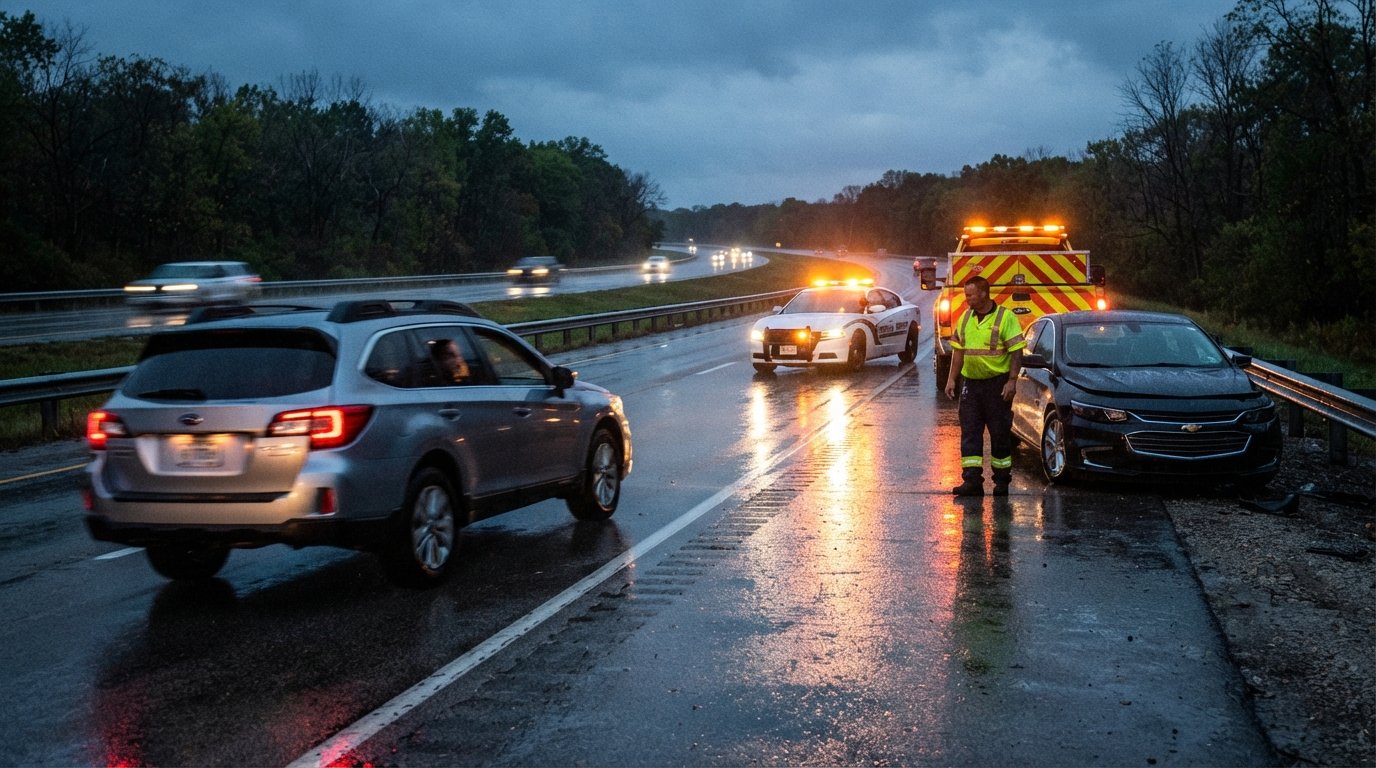
Illinois Scott's Law Expansion: 2026 Roadside Claims
Illinois Scott's Law expansion impacts 2026 roadside accident claims. Call (833)-864-8408 for a free case review and protect your right to compensation.

By Soren Whitaker
The flashing lights of a roadside stop should signal safety, yet for too many drivers and emergency responders in Illinois, they mark the site of a catastrophic collision. With the 2026 expansion of Scott's Law, the legal landscape for roadside accident claims has shifted in ways that affect everyone involved. If you have been injured in a roadside incident, understanding these changes is the first step toward protecting your rights and securing the compensation you deserve.
Scott's Law, also known as the Move Over Law, has been a cornerstone of Illinois traffic safety for years. It requires drivers to slow down and move over when approaching emergency vehicles, tow trucks, and other authorized vehicles stopped on the side of the road. The 2026 expansion broadens the scope of the law, introduces stricter penalties, and creates new avenues for civil liability. This article breaks down what the expansion means for accident claims, how to build a strong case, and why prompt legal action is critical.
What the 2026 Scott's Law Expansion Changes
The 2026 expansion of Scott's Law is not just a tweak to existing statutes; it represents a significant overhaul of how Illinois treats roadside safety violations. Under the new provisions, the definition of "authorized emergency vehicle" has been expanded to include a wider range of vehicles, such as municipal maintenance trucks, utility vehicles, and even some privately contracted roadside assistance vehicles. This means that drivers now have a legal duty to move over for more types of vehicles than ever before.
Penalties for violating Scott's Law have also increased. First-time offenders now face higher fines, and repeat offenses can lead to license suspension. More importantly for accident victims, the expansion introduces a presumption of negligence in civil cases. If a driver is cited for violating Scott's Law and a collision occurs, that citation can be used as evidence of negligence in a personal injury lawsuit. This presumption makes it easier for injured parties to establish liability, but it does not automatically guarantee a successful claim.
The expansion also extends the statute of limitations for filing certain roadside accident claims. Previously, victims had two years from the date of the accident to file a lawsuit. Under the new law, that period has been extended to three years for cases involving Scott's Law violations. This gives victims more time to seek legal counsel and build their case, but it also means that evidence may degrade over time. Acting quickly remains essential.
How the Expansion Affects Roadside Accident Claims
For anyone injured in a roadside accident, the 2026 expansion creates both opportunities and challenges. On one hand, the presumption of negligence and extended filing deadline make it easier to pursue a claim. On the other hand, insurance companies are already adapting their defense strategies to counter these new provisions. They may argue that the victim was partially at fault, that the cited driver was not actually in violation, or that the expanded definition of "authorized vehicle" does not apply to the specific circumstances of the case.
To succeed in a roadside accident claim under the expanded Scott's Law, you must be able to prove several key elements. First, you must show that the at-fault driver was indeed obligated to move over or slow down under the law. This requires evidence that the stopped vehicle qualified as an authorized emergency or roadside vehicle. Second, you must demonstrate that the driver failed to comply with the law. Third, you must establish that this failure directly caused the accident and your injuries.
Gathering the right evidence is crucial. This includes police reports, witness statements, dashcam or surveillance footage, and expert testimony. An experienced attorney can help you identify and preserve this evidence before it disappears. If you are unsure where to start, you can explore your legal rights after an employer vehicle accident, as many roadside incidents involve commercial vehicles and raise additional liability questions.
Steps to Take After a Roadside Accident
If you are involved in a roadside accident, the actions you take in the immediate aftermath can significantly impact your ability to recover compensation. The following steps are essential:
- Ensure safety first: Move to a safe location if possible, call 911, and seek medical attention immediately, even if you feel fine. Some injuries, such as whiplash or internal bleeding, may not be immediately apparent.
- Document the scene: Take photos of the vehicles, the positions of the cars, any visible injuries, and the surrounding area. If there were witnesses, collect their contact information.
- Obtain a police report: Law enforcement will create an official report that can serve as powerful evidence. Make sure to get a copy of the report number.
- Seek medical care: A medical professional can document your injuries and provide a link between the accident and your condition. This documentation is vital for your claim.
- Contact a lawyer: Before speaking with insurance adjusters, consult an attorney who understands the nuances of Scott's Law and Illinois personal injury law.
Following these steps not only protects your health but also strengthens your legal position. Insurance companies often try to settle quickly for less than the claim is worth, especially when they know the victim is unaware of the full extent of their rights. Having legal representation levels the playing field.
Building a Strong Claim Under the Expanded Law
Building a strong claim requires a thorough understanding of both the expanded Scott's Law and the general principles of negligence in Illinois. Under Illinois law, negligence is defined as the failure to exercise reasonable care, which results in harm to another person. In the context of Scott's Law, the failure to move over or slow down is a clear breach of a statutory duty.
However, Illinois follows a modified comparative negligence rule. This means that if you are found to be partially at fault for the accident, your compensation will be reduced by your percentage of fault. If you are more than 50 percent at fault, you are barred from recovering any damages. This makes it essential to build a case that minimizes your own fault and maximizes the at-fault driver's responsibility.
An attorney can help you navigate these complexities. They can work with accident reconstruction experts to determine exactly what happened, gather evidence from multiple sources, and negotiate with insurance companies on your behalf. If a fair settlement cannot be reached, they can take your case to court and present a compelling argument to a jury.
For those who have suffered serious injuries, the financial stakes are high. Medical bills, lost wages, rehabilitation costs, and pain and suffering can quickly add up. The 2026 expansion of Scott's Law is designed to hold negligent drivers accountable, but it is up to you to pursue the compensation you need. If you are considering your options, you can request a free case evaluation from FreeLegalCaseReview to connect with qualified attorneys who can assess your situation.
Common Defenses and How to Counter Them
Insurance companies and defense attorneys will not simply accept liability, even with the new presumption of negligence. They may raise several defenses to reduce or deny your claim. Being aware of these defenses can help you and your attorney prepare a strong response.
- Claiming the stopped vehicle was not authorized: The defense may argue that the vehicle you were stopped behind did not meet the expanded definition of an authorized emergency or roadside vehicle. Your attorney can counter this by presenting evidence of the vehicle's purpose and any markings or equipment that qualify it under the law.
- Arguing the driver could not safely move over: The defense might claim that traffic conditions or road design made it impossible to move over. However, the law also requires drivers to slow down, so this defense is not always successful.
- Blaming the victim: The defense may try to shift blame to you, arguing that you were not paying attention or were partially at fault. Your attorney can use accident reconstruction and witness testimony to refute this.
- Disputing the extent of injuries: The defense may argue that your injuries are not as severe as you claim. Medical records and expert testimony from your doctors can counter this.
Understanding these defenses allows your legal team to anticipate and neutralize them. It also highlights why having an experienced attorney is so important. They know the tactics used by insurance companies and can build a case that withstands scrutiny.
Why You Should Act Quickly
Even though the 2026 expansion extends the statute of limitations to three years, waiting to file a claim is never advisable. Evidence can be lost, witnesses can move away or forget details, and the longer you wait, the more time the insurance company has to build its defense. Additionally, if you are still receiving medical treatment, it is difficult to know the full extent of your damages until your condition stabilizes.
Speaking with an attorney soon after the accident allows them to begin investigating immediately. They can send spoliation letters to preserve evidence, interview witnesses while memories are fresh, and work with medical experts to document your injuries. This proactive approach often leads to better outcomes, whether through a negotiated settlement or a court verdict.
If you are unable to work due to your injuries, the financial pressure can be overwhelming. An attorney can help you pursue compensation for lost wages and future earning capacity, as well as medical expenses and pain and suffering. They can also advise you on how to handle communication with insurance adjusters, who may try to get you to make statements that could harm your case.
How a Lawyer Can Help with Your Scott's Law Claim
Navigating a roadside accident claim under the expanded Scott's Law is not something you should attempt alone. An experienced personal injury attorney brings a wealth of knowledge and resources to the table. They understand the nuances of the law, including the new presumptions and definitions, and can apply them effectively to your case.
Your lawyer will handle all aspects of your claim, from gathering evidence and interviewing witnesses to negotiating with insurance companies and representing you in court if necessary. They can also help you understand the true value of your claim, ensuring that you do not accept a settlement that is less than what you deserve. Many attorneys work on a contingency fee basis, meaning you pay nothing upfront and only pay if they win your case.
When choosing an attorney, look for someone with specific experience in Illinois personal injury law and a track record of success in roadside accident cases. You can start by using a reputable referral service like LawyerCaseReview.com, which connects individuals with top-rated attorneys. Remember, LawyerCaseReview.com is not a law firm and does not provide legal advice, but it can help you find a qualified lawyer for a free case review.
The 2026 expansion of Scott's Law is a positive development for accident victims, but it also introduces new complexities. Having a knowledgeable attorney by your side ensures that you can take full advantage of the law's protections and pursue the compensation you need to move forward with your life.
If you or a loved one has been injured in a roadside accident, do not delay. Reach out to an attorney today to discuss your case and learn more about your rights under the expanded Scott's Law.