
Implied Consent Laws by State: DUI Refusal Consequences
Implied consent laws by state DUI testing refusal consequences vary widely. Learn how refusal affects your license and what to do next.

By Talia Rosen
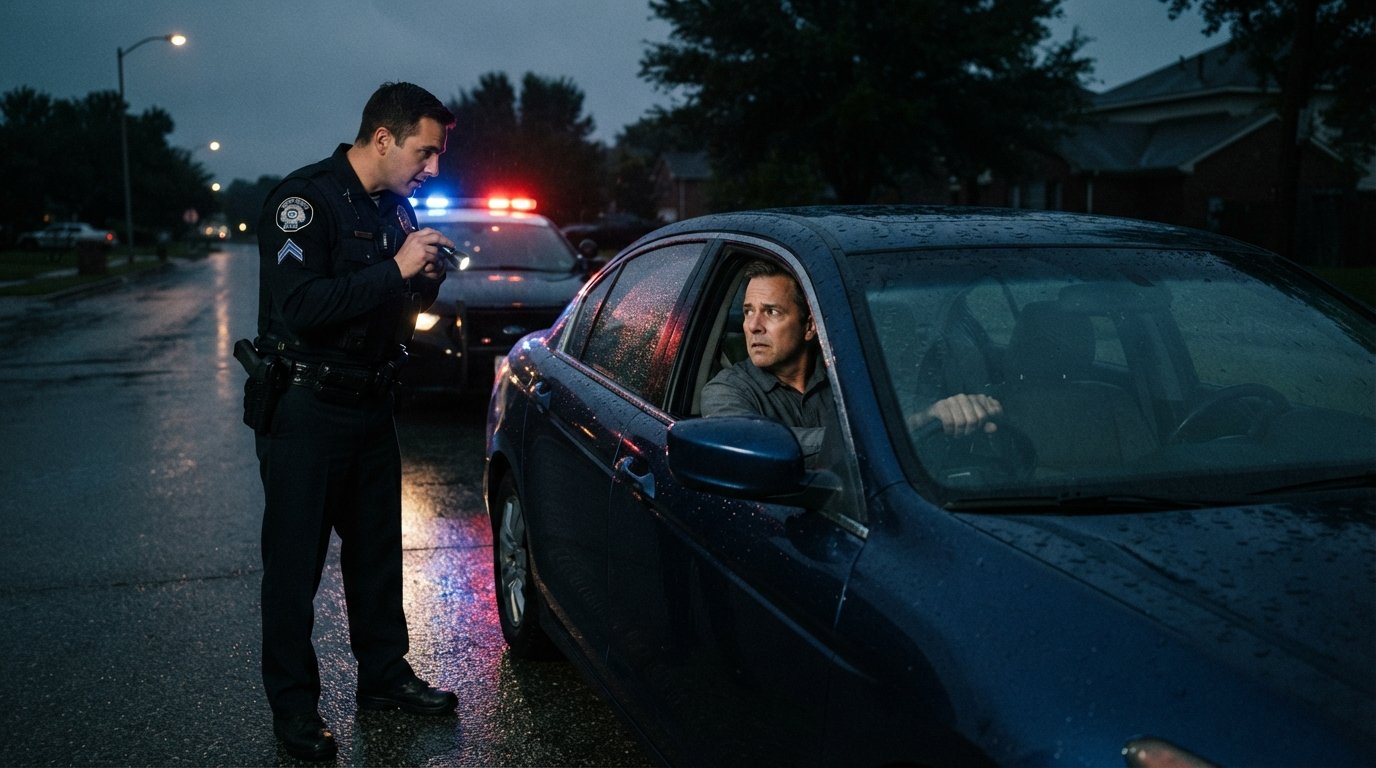
When a police officer pulls you over on suspicion of driving under the influence, the conversation quickly turns to a chemical test: breath, blood, or urine. Most drivers assume they have a straightforward constitutional right to refuse. In reality, every state has an implied consent law that attaches automatic administrative penalties to refusal, separate from any criminal DUI charge. Understanding implied consent laws by state DUI testing refusal consequences is essential before you decide how to respond at a traffic stop, because the license suspension that follows a refusal often begins long before your court date.
This guide breaks down how implied consent works, how refusal penalties vary from state to state, how the rules differ for breath versus blood tests, and what steps to take if you are facing a refusal hearing. It is educational information only. LawyerCaseReview.com is not a law firm and does not provide legal advice. If you are dealing with a DUI refusal or suspension, a confidential case evaluation with a licensed attorney is the fastest way to understand your options.
What Implied Consent Means in Practice
Implied consent is a legal doctrine holding that by obtaining a driver's license and operating a vehicle on public roads, you have automatically agreed to submit to chemical testing when a law enforcement officer has probable cause to believe you were driving impaired. You never signed a separate consent form. The agreement is baked into the act of driving itself. All fifty states, plus the District of Columbia, have enacted some version of an implied consent statute.
The practical consequence is that refusal is not treated as a simple exercise of silence. It triggers an administrative sanction, usually a license suspension or revocation, imposed by the state motor vehicle agency rather than a criminal court. In most jurisdictions this happens on a parallel track: the criminal DUI case proceeds in court while the administrative refusal case proceeds through the DMV or DPS. Losing the administrative case can suspend your license even if you are ultimately acquitted of the DUI charge.
Officers are required in most states to read a specific advisory, often called an implied consent warning, before requesting a test. The warning must explain the consequences of refusal in reasonably clear terms. If the warning is incomplete, misleading, or delivered after you already refused, that procedural defect can become a basis for challenging the suspension. Because the exact language matters, attorneys frequently request the dash camera footage and the written warning form during discovery.
How Refusal Penalties Differ Across the States
There is no uniform national penalty. Refusal consequences range from a ninety-day suspension in some states to a multi-year revocation in others, and the severity often depends on whether you have prior refusals or prior DUI convictions. First-time refusal suspensions commonly fall between ninety days and one year. Repeat refusals can push revocation periods to two or three years, and a handful of states impose mandatory ignition interlock requirements even for a first refusal.
Some states also criminalize refusal itself. In these jurisdictions, refusing a test can be charged as a separate misdemeanor or even a felony in aggravated circumstances, on top of the underlying DUI. Other states keep refusal purely administrative, which means the sanction is limited to license action but the refusal can still be used as evidence of consciousness of guilt at trial. The chart below summarizes the general patterns you will see across the country.
- Strict administrative states: Refusal triggers an immediate suspension, often ninety days to one year, with no criminal refusal charge. Examples include many Midwest and Mountain West states.
- Criminal refusal states: Refusal is itself a crime, sometimes a misdemeanor and sometimes a felony for repeat offenders. Penalties stack with the DUI charge.
- Enhanced-penalty states: Refusal does not create a new crime but significantly lengthens suspension periods and adds interlock or treatment requirements.
- Hybrid states: Refusal is administrative, but prosecutors may argue it as evidence of guilt and use it to seek higher bail or harsher sentencing.
Beyond the license itself, refusal can affect your auto insurance rates, your employment if you drive commercially, and your ability to obtain certain professional licenses. Commercial driver's license holders face particularly severe consequences, because federal rules require disqualification for refusing a test in a commercial vehicle, and many states extend that disqualification to personal vehicle refusals as well.
Breath, Blood, and Urine: Not All Refusals Are Equal
A critical nuance that many drivers miss is that implied consent does not always apply to every type of test. The United States Supreme Court held in Missouri v. McNeely and Birchfield v. North Dakota that the Fourth Amendment generally requires a warrant for a blood draw, while breath tests are permitted as a search incident to arrest. That distinction created a patchwork of state rules.
In many states, refusing a breath test carries the full implied consent suspension. Refusing a blood test, however, may carry no administrative penalty at all if the officer did not obtain a warrant, because the refusal is treated as exercising a constitutional right rather than violating the implied consent statute. Other states have amended their statutes to cover all chemical tests regardless of the McNeely and Birchfield framework, and a few have passed laws explicitly authorizing warrantless blood draws in certain circumstances.
This is why blanket advice about refusal is unreliable. The correct analysis depends on your state, the type of test requested, whether a warrant was obtained, and whether the officer followed the statutory warning procedure. An attorney who practices in your jurisdiction can review the police report and the warning form to determine whether the refusal was legally valid and whether the suspension can be challenged.
The Administrative Hearing: Your First Deadline
When you refuse a chemical test, the officer typically confiscates your license and issues a temporary permit that expires within a short window, often seven to thirty days. You have a limited time, sometimes as little as seven days and rarely more than thirty, to request an administrative hearing to contest the suspension. Miss that deadline and the suspension generally takes effect automatically, regardless of the merits of your case.
Administrative hearings are not criminal trials. The standard of proof is lower, the rules of evidence are relaxed, and the hearing officer often works for the same agency that issued the suspension. Even so, these hearings are winnable. Common defenses include an invalid traffic stop, a missing or defective probable cause statement, an incomplete implied consent warning, a refusal that was actually a request for clarification, and a medical condition that prevented a valid breath sample.
Because the administrative case and the criminal case run on separate timelines, coordination matters. A successful motion to suppress in criminal court does not automatically undo a DMV suspension, and a DMV win does not dismiss the DUI charge. Handling both tracks requires a strategy that accounts for each forum's rules and deadlines. If you are unsure where to start, resources such as FormsByLawyers legal resource platform can help you locate attorneys and understand the intake process for DUI and license matters.
State-by-State Patterns Worth Knowing
While a full fifty-state chart changes frequently as legislatures amend statutes, several broad regional patterns are stable enough to be useful. In the Northeast, refusal suspensions tend to be relatively short for a first offense but escalate sharply for repeat refusals, and several states criminalize refusal. In the South, refusal periods are often longer, and prosecutors are more likely to use refusal as evidence of guilt at trial. In the West, constitutional challenges to blood draw statutes have produced more variation, with some states limiting refusal penalties to breath tests only.
Midwestern states often combine administrative suspension with mandatory alcohol assessment or treatment before reinstatement. States with high DUI fatality rates, such as those in the Mountain West, tend to impose the harshest refusal penalties, including lengthy revocations and mandatory interlock for first offenders. Coastal states with dense urban populations sometimes offer diversion programs that can reduce or eliminate refusal consequences if the driver completes education and treatment requirements.
Two additional variables cut across all regions. First, look-back periods differ: some states count prior refusals and convictions for five years, others for ten years, and a few for a lifetime. Second, reinstatement requirements differ: some states require proof of insurance, SR-22 filing, interlock installation, and completion of a DUI program before a license is restored, while others require only a fee. Knowing your state's look-back period and reinstatement checklist is often more important than knowing the headline suspension length.
Collateral Consequences Beyond the License
The license suspension is the most visible consequence of refusal, but it is rarely the most damaging. A refusal can surface in background checks for years, affecting employment in driving, healthcare, education, and government contracting. It can raise auto insurance premiums dramatically and, in some states, trigger a requirement to file an SR-22 for three years after reinstatement. It can also complicate professional licensing, security clearances, and immigration proceedings, where a DUI or refusal may be treated as a crime involving moral turpitude or a public safety concern.
For commercial drivers, the stakes are even higher. A refusal in a commercial vehicle triggers a federal disqualification, and many employers treat any DUI-related license action as grounds for termination. If your livelihood depends on a license, the administrative hearing is not optional; it is the difference between continued employment and a career disruption that can last years.
Because these collateral consequences are civil rather than criminal, they are not addressed by a criminal defense alone. A complete strategy includes the administrative hearing, the criminal case, and a plan for reinstatement, insurance, and employment. Attorneys who handle DUI matters routinely coordinate all three, and some offer flat-fee packages that cover both the DMV and court proceedings.
Practical Steps After a Refusal
If you have already refused a test, the sequence of steps you take in the next few days matters enormously. The first priority is preserving your right to drive, because the temporary permit expires quickly and the suspension becomes final if you do not act. The second priority is gathering evidence, because dash camera footage, dispatch logs, and the written implied consent form are often the key to a successful challenge.
- Note the exact date and time of the refusal and the date your temporary permit expires.
- Request an administrative hearing in writing before the statutory deadline, and keep proof of the request.
- Preserve any documents the officer gave you, including the citation, the warning form, and the temporary permit.
- Write down everything you remember about the stop, the officer's questions, and the exact words used in the warning.
- Consult a DUI attorney in your state before your first hearing date, because deadlines and defenses vary widely.
After those initial steps, the case usually settles into a predictable rhythm: arraignment or first appearance in criminal court, an administrative hearing at the DMV, and motion practice in both forums. The strongest outcomes typically come from cases where the driver acted quickly, preserved evidence, and had counsel review the implied consent warning for procedural defects. Waiting even a few days can forfeit a defense that would otherwise have been available.
It also helps to understand how the broader legal system treats similar proof problems in other contexts. For example, the standards used in dog bite liability and victim rights cases show how state-specific rules and evidentiary burdens can change outcomes dramatically even when the underlying facts look similar. The same principle applies to implied consent: the statute, the warning, and the timeline in your state control the result far more than general assumptions about what refusal means.
Weighing Refusal Versus Compliance
Drivers often ask whether refusing is ever the better choice. The honest answer is that it depends on facts that are rarely knowable in the moment: whether the officer has a warrant, whether the state criminalizes refusal, whether you have prior offenses, and whether a medical condition would make a breath test unreliable. In most states, a first refusal produces a suspension that is longer than the suspension a first-time DUI offender would receive for simply taking the test and failing it. That asymmetry is the core deterrent built into implied consent laws.
Compliance is not risk-free either. A test result above the legal limit provides powerful evidence for the prosecution, and in some states the numerical result determines the severity of the administrative suspension. The decision is genuinely strategic, and it should be made with legal advice whenever possible, ideally before you are ever in that situation. Knowing your state's rules in advance is the best preparation.
For readers who want to understand how legal information platforms fit into this process, LawyerCaseReview.com offers free, confidential case evaluations and connects individuals with licensed attorneys in DUI, personal injury, mass tort, and other practice areas. The site is not a law firm and does not provide legal advice, but it can help you find a qualified attorney in your state who handles refusal hearings and DUI defense. Submitting your case details takes only a few minutes and carries no obligation to hire.
Implied consent laws by state DUI testing refusal consequences are complex precisely because they blend criminal procedure, administrative law, and constitutional doctrine into a single traffic stop decision. The drivers who fare best are those who treat the refusal warning as a legal event with deadlines, not as a formality. If you are facing a suspension or a refusal charge, act quickly, preserve your documents, and get a state-specific legal review before your first hearing date.