
Refusing a Breathalyzer? License Suspension Risks
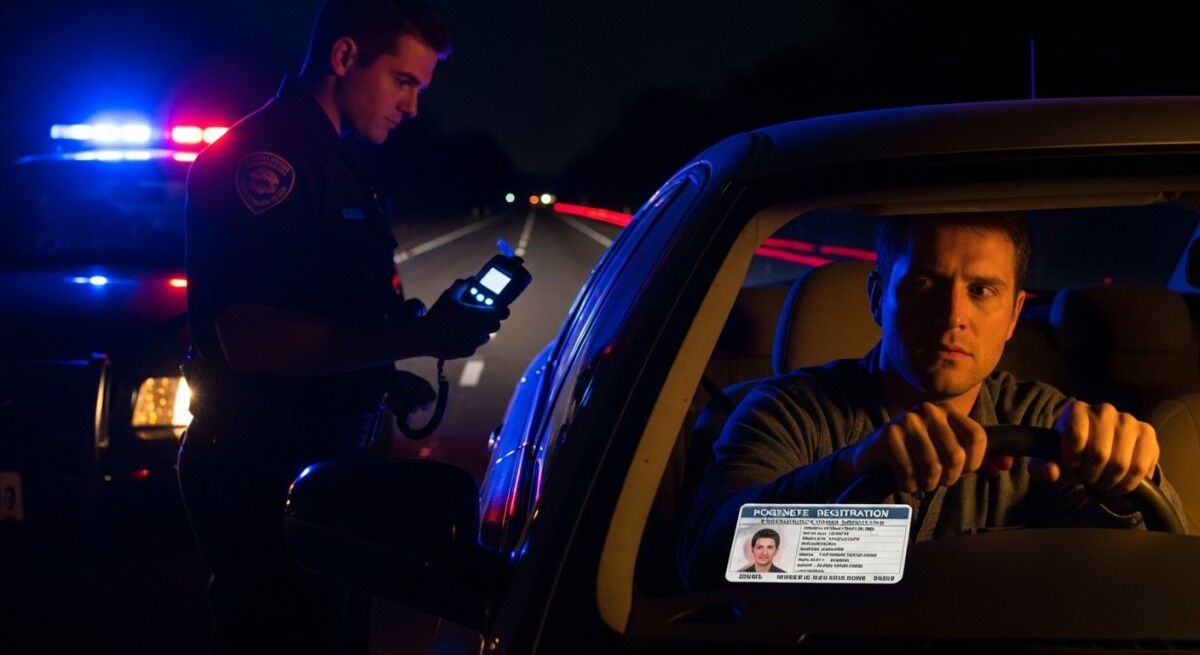
You see the flashing lights in your rearview mirror. Your heart sinks. The officer approaches and asks a question that can change your night and your driving record for years. Do you submit to the breathalyzer test or do you refuse? Many drivers believe that saying no is a safe way to avoid incriminating themselves. The reality is far more complex and carries serious consequences that often surprise even seasoned drivers. Understanding what happens if you refuse a breathalyzer test is critical before you make a split-second decision that could impact your license, your wallet, and your freedom.
The choice to refuse a breathalyzer is not a simple legal loophole. It triggers a cascade of automatic penalties that operate independently of any criminal court proceedings. These penalties are designed to remove your driving privileges quickly and decisively, often before you ever see a judge. This guide explains the immediate and long-term effects of refusal, the legal doctrines that support these penalties, and the strategic considerations that every driver should know. We also explain how connecting with an experienced attorney through a trusted referral service can help you navigate these challenges.
How Implied Consent Laws Create a Binding Contract
Every state in the United States operates under a legal principle called implied consent. When you apply for and receive a driver’s license, you automatically agree to submit to a chemical test (breath, blood, or urine) if a law enforcement officer has reasonable suspicion that you are driving under the influence. This is not a suggestion. It is a condition of the privilege to drive. By holding a license, you have legally consented to testing.
This means that refusing the test is not exercising a constitutional right to remain silent. Instead, it is a violation of your driving privilege agreement. The U.S. Supreme Court has upheld the constitutionality of these laws, ruling that states can impose civil penalties on drivers who refuse testing. The legal framework treats refusal as a separate offense from DUI itself. You can be found guilty of refusing a test even if you are later acquitted of the DUI charge. This is a critical distinction that many people fail to understand in the moment.
If you have been involved in a serious accident or are facing complex DUI charges, you may benefit from reviewing related legal scenarios. For example, understanding what happens when your spouse files bankruptcy alone in Texas can highlight how separate legal actions can have overlapping consequences. Similarly, navigating a DUI refusal requires an understanding of how civil and criminal systems interact.
Immediate Consequences of Refusing a Breathalyzer Test
The most immediate penalty for refusing a breathalyzer test is an automatic driver’s license suspension. This suspension is handled by the state’s Department of Motor Vehicles (DMV) or equivalent agency. It is not a criminal penalty. It is an administrative action that happens quickly, often within 30 to 45 days of the refusal. The length of the suspension varies by state and by the number of prior refusals or DUI offenses on your record.
Typical suspension periods include the following ranges based on common state statutes:
- First refusal: 6 months to 1 year of license suspension.
- Second refusal within a 5 to 10 year period: 1 to 2 years of suspension.
- Third or subsequent refusal: 2 to 5 years of suspension, often with mandatory ignition interlock device requirements.
These suspensions are often mandatory. The officer typically confiscates your physical driver’s license at the scene and issues a temporary driving permit that lasts only a few weeks. After that temporary permit expires, you are legally prohibited from driving. Driving on a suspended license can lead to additional criminal charges, vehicle impoundment, and even jail time. This cascading effect makes the initial refusal decision extremely costly.
Civil Penalties and Fines Beyond the Suspension
Beyond losing your license, refusing a breathalyzer test often carries substantial civil fines. These fines are separate from any criminal fines imposed by a court for a DUI conviction. They are levied by the state’s motor vehicle agency and can range from several hundred to several thousand dollars. Some states also impose a mandatory fee to reinstate your license after the suspension period ends.
Many states now require drivers who refuse testing to install an ignition interlock device (IID) in their vehicle. This device requires the driver to blow into a breathalyzer before the car will start. The costs of installation and monthly monitoring are the driver’s responsibility and can easily exceed $100 per month. In some jurisdictions, a refusal can also result in higher auto insurance premiums or mandatory SR-22 insurance filings, which are expensive certificates of financial responsibility. These financial burdens can last for years after the initial incident.
How Refusal Affects Criminal DUI Proceedings
While refusing a breathalyzer prevents the state from having a precise blood alcohol concentration (BAC) reading, it does not prevent a DUI prosecution. In fact, refusal can be used as evidence of guilt in court. Prosecutors are permitted to argue to a jury that the defendant’s refusal to submit to testing suggests a consciousness of guilt. This is often called a refusal inference. In many states, the jury is given a specific instruction that they may consider the refusal as evidence that the driver believed they were intoxicated.
Without a BAC number, the prosecution must rely on other evidence. This includes the officer’s observations of your driving pattern (swerving, speeding, or erratic behavior), your physical appearance (bloodshot eyes, slurred speech, odor of alcohol), and your performance on field sobriety tests. These field tests are notoriously subjective and difficult to challenge without expert testimony. Refusing the breathalyzer often forces your attorney to fight a case based entirely on observational evidence, which can be more difficult to defeat than a technical challenge to a breath test machine’s calibration.
If you are dealing with financial pressures from a DUI arrest or related legal matters, it is worth noting how different legal systems can affect your situation. For instance, knowing what happens when your mortgage lender contests bankruptcy in Florida can illustrate how proactive legal strategy is essential when multiple legal obligations intersect.
Long-Term Consequences on Your Record and Employment
A breathalyzer refusal appears on your driving record as a separate violation. This is not a minor mark. Many employers, especially those that require driving (such as commercial trucking, delivery services, or sales roles), view a refusal as a serious red flag. A refusal can disqualify you from holding a commercial driver’s license (CDL) for an extended period. The Federal Motor Carrier Safety Administration imposes a one-year disqualification for a first refusal and a lifetime disqualification for a second refusal for CDL holders.
Insurance companies also treat a refusal harshly. Your auto insurance rates can increase dramatically. Some insurers may refuse to renew your policy, forcing you into the high-risk insurance market where premiums are double or triple the standard rate. These rate increases can last for three to five years. The refusal mark on your record is often visible to employers who run background checks for positions that involve driving company vehicles or operating heavy machinery.
When You Should Consider Refusing the Test
There are rare circumstances where refusing a breathalyzer might be a calculated legal strategy. This is not a decision to make without legal counsel. One scenario involves drivers who are certain they will fail the test because of extremely high BAC levels. In some states, a BAC above a certain threshold (such as 0.15% or 0.20%) triggers enhanced penalties, including longer jail sentences, higher fines, and mandatory treatment programs. By refusing, the driver may avoid these enhanced penalties even though they still face standard DUI charges.
Another scenario involves medical conditions that can produce false positive breathalyzer readings. Conditions such as gastroesophageal reflux disease (GERD), diabetes, or the use of certain asthma inhalers can cause a breathalyzer to register alcohol that is not in the bloodstream. In these cases, a driver may refuse the breath test to force the prosecution to rely on a blood test (which is more accurate) or to build a medical defense. However, this strategy is high-risk and requires a skilled attorney to execute effectively.
If you are considering any legal strategy related to personal injury or traffic violations, you can explore how our referral network connects you with the right professional. Visit our about us page to learn how we help individuals find experienced legal representation.
What Happens After You Refuse: The Administrative Hearing
After you refuse a breathalyzer test, you have a very short window (usually 7 to 30 days) to request an administrative hearing with the DMV. This hearing is separate from your criminal court case. If you do not request this hearing in time, your license suspension becomes automatic and you lose the opportunity to challenge it. At the hearing, the issues are narrow. The hearing officer will determine whether the officer had reasonable suspicion to stop you, whether the officer had probable cause to believe you were driving under the influence, and whether you actually refused the test.
Winning this hearing is difficult but not impossible. If the officer fails to appear, you may be able to have your suspension overturned. If the officer did not have reasonable suspicion for the stop (for example, a random check without cause), the refusal may be thrown out. However, these hearings are administrative, not criminal. The rules of evidence are relaxed, and the officer’s testimony is often given significant weight. Having an attorney represent you at this hearing dramatically improves your chances of preserving your driving privileges.
Frequently Asked Questions
Can I refuse a breathalyzer test without losing my license?
No. Under implied consent laws, refusing a breathalyzer test automatically triggers a license suspension in every state. There is no legal way to refuse and keep your license without facing administrative penalties.
Is refusing a breathalyzer better than taking one if I have been drinking?
Not usually. Refusal gives the prosecutor a powerful piece of evidence (consciousness of guilt) and triggers automatic civil penalties. Taking the test gives the state a BAC number, which can sometimes be challenged on technical grounds. An attorney can advise you based on your specific situation.
Does refusing a breathalyzer mean I will not be charged with DUI?
No. You can still be charged with DUI based on other evidence such as field sobriety tests, officer observations, and witness testimony. Refusal does not prevent charges.
How long does a breathalyzer refusal stay on my record?
In most states, a refusal stays on your driving record for 5 to 10 years. Some states keep it permanently. It can affect insurance rates and employment opportunities during that time.
Can I refuse a breathalyzer test if I have a medical condition?
Some medical conditions may provide a defense, but you cannot simply refuse without consequences. You should inform the officer of your condition. An attorney can help you build a defense based on medical factors.
Take the Next Step with Professional Legal Guidance
Facing a DUI arrest or a breathalyzer refusal is a serious legal matter that requires professional guidance. The laws governing implied consent, license suspension, and DUI prosecution are complex and vary significantly by state. Making the wrong decision in the moment can cost you your license, your job, and thousands of dollars in fines and increased insurance costs. You do not have to navigate this process alone. Our service connects you with experienced attorneys who understand the nuances of DUI law and can evaluate your case. For more information on how we can help, read our blog articles for additional legal resources. Contact our team at (833) 227-7919 to discuss your situation and find the right legal representation for your needs.

About Luca Bennett
Recent Posts

Cybercrime Lawyer: When to Hire One and What They Do
Facing cybercrime? A cybercrime lawyer can help you recover and protect your rights. Call (833) 227-7919 to get connected with a qualified attorney.

Fraud Defense Lawyer: Your Rights and Legal Options
Facing fraud charges? A fraud defense lawyer can protect your rights. Call (833) 227-7919 to connect with experienced attorneys today.

Identity Theft Lawyer: When to Hire One and How They Help
Identity theft can wreck your credit and finances. An identity theft lawyer helps you recover. Call us at (833) 227-7919 for a free case review.