
Truck Accident Black Box Data and Evidence Preservation
Truck accident black box data can make or break your claim. Call (833)-864-8408 for a free case review and evidence preservation help.

By Briar Ellington
When a semi-truck weighing up to 80,000 pounds collides with a passenger vehicle, the physical evidence at the scene tells only part of the story. The most revealing details often live inside the truck itself, recorded by electronic logging devices, engine control modules, and telematics systems that track speed, braking, engine performance, and driver hours. This digital trail, commonly called truck accident black box data, can mean the difference between a disputed claim and a clear path to compensation. Yet this data is fragile. Trucking companies may overwrite or purge it within days or weeks of a crash, and without prompt legal action, critical evidence can vanish forever. Understanding how black box data works and how to preserve it is essential for anyone injured in a collision with a commercial truck.
What Truck Accident Black Box Data Actually Contains
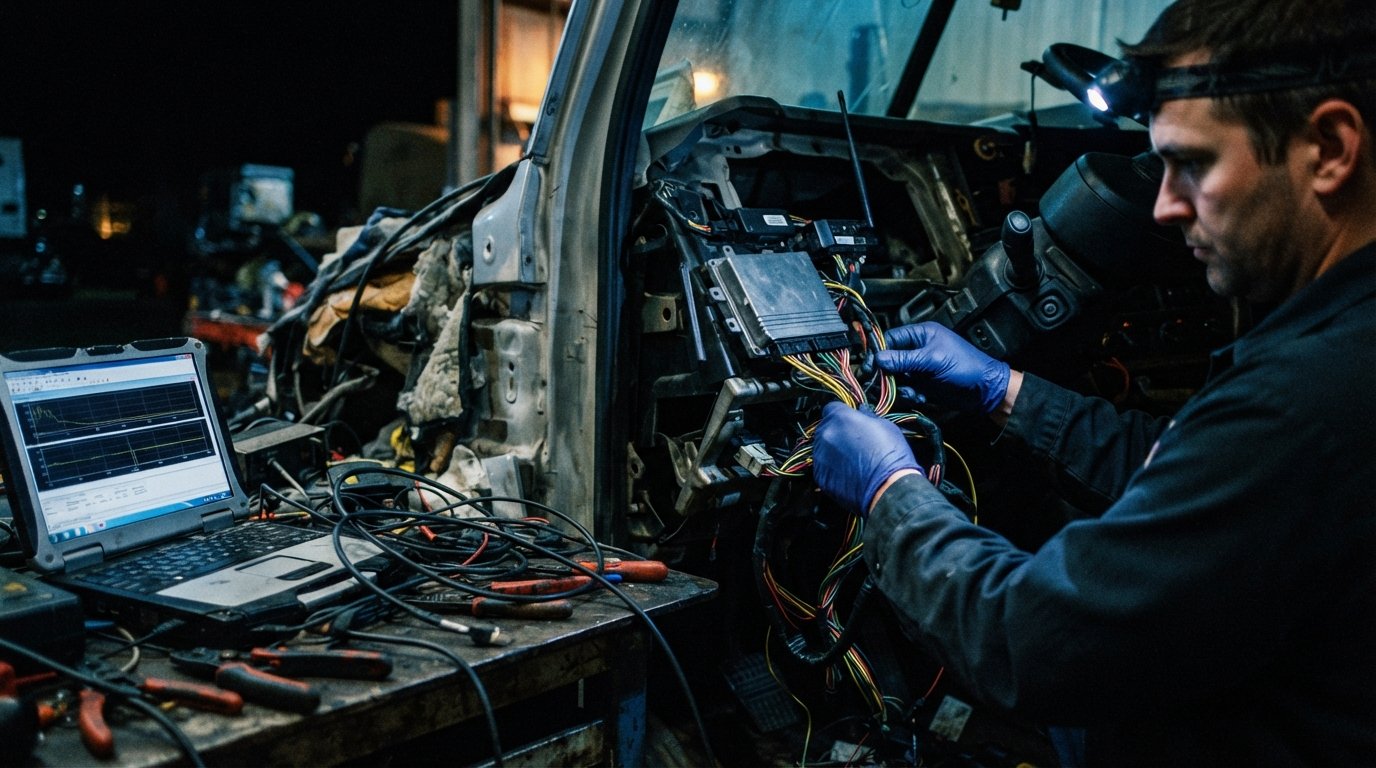
The term black box is a shorthand for several distinct electronic systems inside a commercial truck. Each one captures different information, and together they create a detailed timeline of the vehicle's operation before, during, and after a crash. The engine control module, or ECM, monitors the engine's performance and stores fault codes, RPM data, throttle position, and vehicle speed at the time of impact. Electronic logging devices, mandated by federal hours-of-service rules, record the driver's on-duty status, driving time, and rest breaks. Telematics systems, often installed by fleets for fleet management, transmit GPS location, hard braking events, and idle time to a central server. Some trucks also have event data recorders, similar to the black boxes in airplanes, that capture a few seconds of pre-crash data such as speed, brake application, and seat belt use.
These systems are not designed primarily for accident investigation. They are business tools for compliance and efficiency. But in litigation, they become powerful evidence. For example, ECM data can show whether a truck was speeding in the moments before a crash. ELD records can reveal whether the driver had exceeded legal driving hours, a common factor in fatigue-related collisions. Telematics can place the truck at a specific location at a specific time, undermining a driver's account of events. When combined with maintenance records and inspection reports, this digital evidence can establish liability with a precision that witness testimony rarely achieves.
However, the data is not always easy to obtain. Trucking companies own the systems and the data they generate, and they are not required to hand it over voluntarily. An experienced attorney can request it through formal legal channels, but time is of the essence. Many systems overwrite data on a rolling basis, meaning that every day without a preservation demand increases the risk of permanent loss.
How Quickly Trucking Companies May Purge Data and How to Stop It
There is no single federal rule that dictates how long a trucking company must retain black box data after a crash. Retention periods vary by system, by company policy, and by the type of data. Some ECMs store data for only 30 days before overwriting it. ELD records must be retained for six months under federal regulations, but that requirement applies to hours-of-service records, not necessarily to the detailed event data that plaintiffs need. Telematics data may be kept for as little as a few weeks or as long as several years, depending on the provider's contract and the fleet's internal practices. The result is a patchwork of retention windows that creates urgency for anyone seeking to preserve evidence.
To stop a trucking company from destroying data, an attorney can send a spoliation letter. This is a formal written demand that notifies the company of pending litigation and instructs it to preserve all relevant evidence, including electronic data. A well-drafted spoliation letter identifies the specific systems and data types to be preserved, the time frame, and the consequences of destruction. It also puts the company on notice that any intentional or negligent loss of evidence could lead to sanctions, an adverse inference instruction at trial, or even a separate claim for spoliation. In many jurisdictions, a spoliation letter is the first step in a broader preservation strategy that includes subpoenas to third-party telematics providers and requests for maintenance and inspection records.
The key is speed. A spoliation letter sent within days of a crash is far more effective than one sent weeks later. If you are considering legal action, contact a truck accident attorney as soon as possible so that preservation demands can be issued before data is overwritten. For a deeper look at the regulatory framework that governs trucking operations, including hours-of-service and maintenance requirements, see our guide on Truck Accident Lawyer FMCSA Regulations: Key Insights.
Federal Hours-of-Service and Maintenance Record Requests
Black box data does not exist in a vacuum. It is most powerful when paired with the paper and electronic records that trucking companies are required to maintain under federal law. The Federal Motor Carrier Safety Administration, or FMCSA, sets hours-of-service rules that limit how long a driver can operate a commercial vehicle before taking a rest break. These rules are designed to prevent fatigue-related crashes, and violations are a common basis for liability in truck accident cases. ELD data can confirm whether a driver complied with these rules, but the underlying records, including driver logs, time cards, and dispatch records, provide additional context that can expose patterns of noncompliance.
Maintenance records are equally important. Federal regulations require carriers to inspect, repair, and maintain their vehicles according to specific standards. A truck with faulty brakes, worn tires, or a defective steering component is a hazard on the road, and maintenance records can reveal whether the carrier knew or should have known about a problem. Inspection reports, repair invoices, and parts replacement logs can all be relevant. In some cases, a pattern of deferred maintenance can support a claim for punitive damages, particularly if the carrier acted with reckless disregard for safety.
Obtaining these records requires a formal request, often through a subpoena or a discovery demand. Trucking companies are not obligated to volunteer them, and some may delay or produce incomplete records. An attorney can compel production and, if necessary, seek court intervention. The sooner these requests are made, the less opportunity there is for records to be altered, lost, or destroyed.
Loading, Inspection, and Cargo Records Relevant to Liability
Not all truck accident evidence is electronic. Loading and cargo records can be just as important, especially in crashes involving overturned trucks, spilled cargo, or improperly secured loads. Federal rules require that cargo be loaded and secured in a way that prevents it from shifting or falling. If a crash was caused by a shift in cargo, the loading records can identify who was responsible for securing the load and whether proper procedures were followed. Bills of lading, weight tickets, and loading dock logs can all be relevant.
Inspection records tell a similar story. Pre-trip and post-trip inspection reports, required by federal regulations, document the condition of the truck before and after each trip. If a driver failed to note a known defect, or if a carrier pressured drivers to skip inspections, those records can support a claim for negligence. Cargo and inspection records are often overlooked, but they can be decisive in cases where the cause of the crash is disputed.
Preserving these records follows the same logic as preserving electronic data: act quickly, identify the specific documents needed, and make a formal demand. A comprehensive preservation letter should cover not only black box data but also loading manifests, inspection reports, driver qualification files, and any internal communications about the crash. The goal is to create a complete evidentiary record that leaves no room for the carrier to claim ignorance or loss.
Spoliation Concerns and Why Early Legal Involvement Helps
Spoliation is the destruction or alteration of evidence relevant to litigation. In truck accident cases, spoliation can take many forms: overwritten ECM data, deleted ELD logs, missing maintenance records, or altered inspection reports. When evidence is lost, the injured party may be unable to prove key elements of the case, such as speed, fatigue, or mechanical failure. Courts take spoliation seriously, but the remedies are not automatic. A party seeking sanctions must show that the evidence was relevant and that the other side had a duty to preserve it. Without a timely preservation demand, that duty may not attach until litigation formally begins, which can be months after the crash.
Early legal involvement changes the calculus. An attorney can send a spoliation letter within days, creating a clear record of the duty to preserve. If the carrier destroys evidence after receiving the letter, the court may impose sanctions, including an instruction to the jury that the lost evidence would have been unfavorable to the carrier. In some cases, the carrier may be held in contempt or ordered to pay the injured party's costs. The threat of these consequences is often enough to ensure compliance.
Beyond spoliation, early involvement also allows the attorney to secure witness statements, photograph the scene, and obtain police reports before memories fade and physical evidence degrades. Truck accident cases are complex, and the sooner a legal team begins building the case, the stronger the outcome is likely to be. If you are unsure whether you need an attorney, consider that most truck accident lawyers offer free consultations and work on a contingency fee basis, meaning you pay nothing unless they recover compensation for you.
For those who want to understand their rights and options, resources like AttorneyLawsuit provide general information about legal disputes and consumer guidance, though they are not a substitute for personalized legal advice. The most important step is to speak with a qualified attorney who can evaluate your case and take immediate action to preserve evidence.
Steps to Take After a Truck Accident to Protect Your Claim
If you or a loved one has been injured in a collision with a commercial truck, the actions you take in the first few days can have a lasting impact on your case. The following steps can help protect your rights and preserve critical evidence:
- Seek medical attention immediately. Your health is the priority, and prompt treatment also creates a medical record that links your injuries to the crash.
- Document the scene. If you are able, take photos of the vehicles, the road conditions, and any visible damage. Exchange information with the truck driver, but do not discuss fault or make statements about the accident.
- Report the crash to the police. A formal police report provides an independent account of the incident and can be valuable evidence later.
- Contact a truck accident attorney as soon as possible. An attorney can send a spoliation letter, request black box data, and begin gathering other evidence before it disappears.
- Keep a record of your recovery. Save medical bills, repair estimates, and documentation of lost wages. These records will support your claim for damages.
Each of these steps reinforces the others. Medical records and scene documentation provide context, while the attorney's preservation efforts ensure that the digital and documentary evidence remains available. Without that evidence, even a strong case can be undermined by gaps in the record.
It is also important to avoid speaking with the trucking company's insurer or investigators without legal representation. Insurance adjusters may try to obtain a recorded statement or ask you to sign documents that limit your rights. An attorney can handle communications on your behalf and ensure that your interests are protected.
How a Truck Accident Attorney Can Help
Truck accident litigation is inherently complex. It involves federal regulations, multiple corporate entities, and sophisticated digital evidence. An experienced attorney understands how to navigate these challenges and can build a case that withstands scrutiny. From the initial investigation to the final settlement or trial, the attorney's role is to level the playing field against the trucking company and its insurers.
One of the most valuable services an attorney provides is the preservation of evidence. This includes sending spoliation letters, subpoenaing third-party records, and working with forensic experts to extract and interpret black box data. The attorney can also identify all potentially liable parties, which may include the driver, the carrier, the shipper, the loader, and the maintenance provider. In some cases, a defect in the truck itself may lead to a products liability claim against the manufacturer.
If you are searching for legal representation, consider using a service like LawyerCaseReview to connect with top-rated attorneys who handle truck accident cases. These services can provide a free, confidential case evaluation and help you understand your options without obligation. The sooner you act, the better your chances of preserving the evidence you need.
Truck accident black box data and evidence preservation are not just technical details; they are the foundation of a successful claim. The digital record inside a truck can confirm what happened, who was at fault, and why. But that record is fragile, and without prompt action, it can be lost forever. By understanding the systems involved, the retention periods, and the legal tools available, you can take the first steps toward protecting your rights and securing the compensation you deserve.