
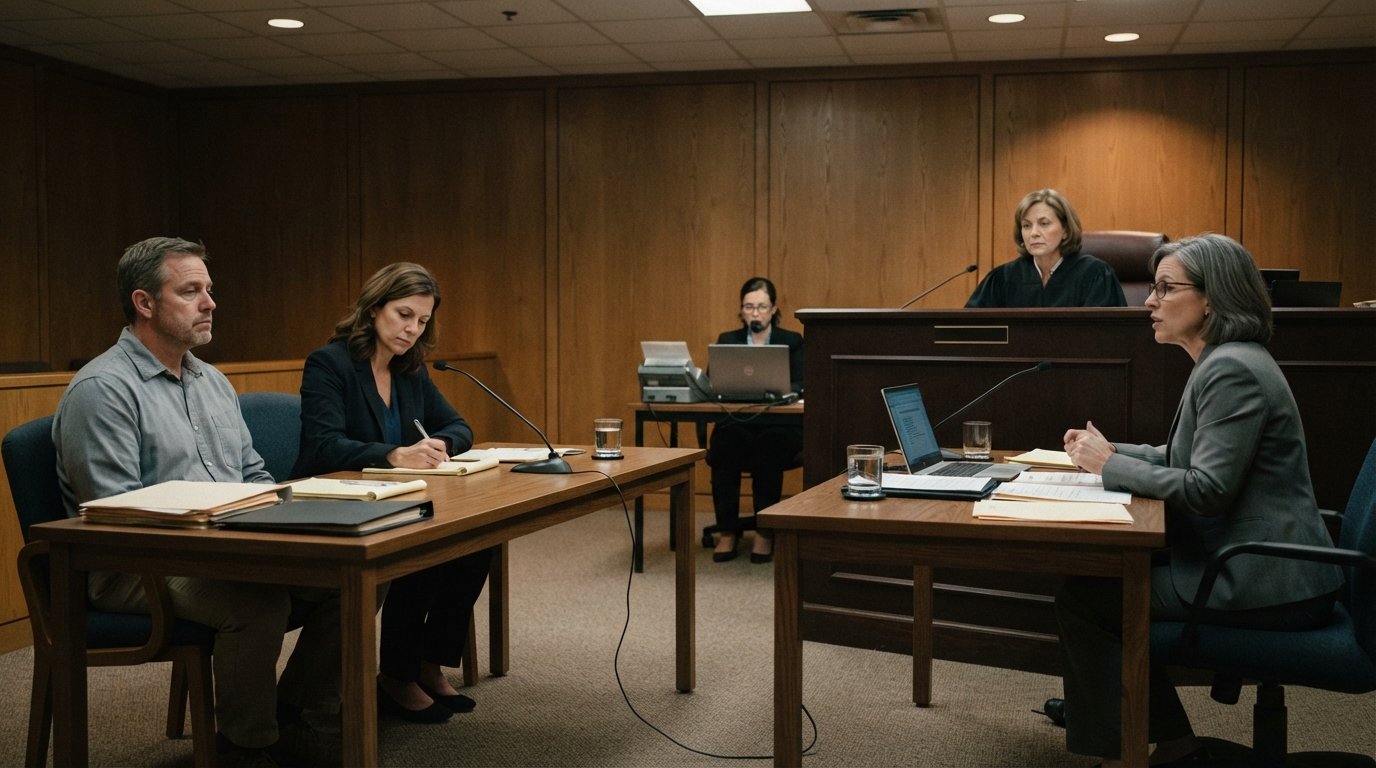
Vocational Expert Testimony in a Disability Hearing
Vocational expert testimony in a social security disability hearing can make or break your claim. Call (833)-864-8408 to connect with a lawyer who can challenge it.

You have gathered years of medical records, endured multiple denials, and finally secured a hearing before an administrative law judge (ALJ). Now the ALJ turns to a vocational expert (VE) and asks a series of hypothetical questions. Your benefits may hinge on how that expert answers. Understanding vocational expert testimony in a social security disability hearing is not optional; it is the difference between a favorable decision and another appeal. This guide explains how the process works, what to challenge, and how to prepare with the help of experienced counsel.
How the ALJ Poses Hypothetical Questions and Why Wording Matters
The ALJ controls the hearing, and the VE's role is to translate medical limitations into realistic work options. The judge does this by asking hypothetical questions that combine your age, education, work history, and functional restrictions. The precise wording of those questions determines whether the VE identifies any jobs you could perform. For example, a hypothetical that says "simple, routine tasks with occasional contact with coworkers" may yield different results than one that adds "no fast-paced production requirements." Even a single adjective can shift the outcome from "no jobs" to "three jobs in the national economy."
Your representative must listen carefully and object when a hypothetical misstates the evidence. If the ALJ forgets to include a documented limitation, such as the need for a sit-stand option or a restriction to low-stress work, your attorney should ask the VE to consider that limitation. Many ALJs will accept a post-hearing brief that points out the discrepancy. The key is to create a clear record: either the VE acknowledges that the added limitation eliminates all work, or the judge must explain why the limitation was omitted.
Because vocational expert testimony in a social security disability hearing often becomes the deciding factor, preparation before the hearing is critical. If you are still deciding whether to hire counsel, our guide on when to hire a Social Security disability benefits lawyer explains the risks of proceeding alone. A representative who understands the VE's methodology can cross-examine effectively and preserve issues for appeal.
DOT Job Classifications and Availability Assertions to Test
The Dictionary of Occupational Titles (DOT) is the VE's primary reference for job classifications. Each job has a specific entry with a reasoning level, language level, and physical demands. The VE may cite jobs like "assembler" or "document preparer" and claim that thousands exist in the national economy. But the DOT is not updated for modern technology, and many of its job descriptions are outdated. A skilled representative will test whether the VE's testimony aligns with the DOT and with more current sources like the Occupational Information Network (O*NET).
Availability assertions are another common weak point. The VE may state that 50,000 such jobs exist nationally, but that number is often based on software programs or personal experience rather than verifiable data. You can challenge the source and methodology behind the number. Ask the VE to explain how the figure was calculated and whether it accounts for the specific limitations in your case. If the VE cannot provide a reliable basis, the ALJ may give the testimony less weight.
Here are the key elements to test when the VE identifies jobs:
- DOT classification: Does the job's reasoning level, language level, and physical demands match the hypothetical? For example, a job with a reasoning level of 3 may be too complex for someone limited to simple, routine tasks.
- Skill level: Is the job unskilled, semi-skilled, or skilled? If you have no transferable skills, the VE must identify unskilled work.
- Availability data: What is the source of the job numbers? Are they based on the DOT, O*NET, or the VE's personal experience? The VE should be able to explain the methodology.
- Regional vs. national economy: The VE may cite national numbers, but the relevant inquiry is whether jobs exist in significant numbers in your region. Ask for regional data when possible.
After the VE testifies, your representative can point out inconsistencies in a closing statement or brief. For example, if the VE identified a job requiring frequent reaching, but the medical evidence shows you cannot reach overhead, that job is eliminated. The cumulative effect of these challenges can reduce the job base to zero.
Cross-Examination Angles on Skill Level, Sit-Stand Options, and Time Off-Task
Cross-examination is where vocational expert testimony in a social security disability hearing is most vulnerable. The VE is not your treating physician, and the VE's opinion is only as good as the hypothetical question. Your representative should focus on three areas: skill level, sit-stand options, and time off-task.
Skill level. The VE may classify a job as unskilled when it actually requires significant training. For example, a "cleaner" job may be listed as unskilled, but in the real economy, employers may require prior experience. Ask the VE whether the job is truly entry-level and whether it requires any specific vocational preparation (SVP). If the job requires more than a short demonstration, it may be semi-skilled, which could preclude a finding of transferable skills.
Sit-stand options. Many claimants need a sit-stand option because of back or leg impairments. The VE may testify that a sit-stand option is available in certain jobs. But the DOT does not address sit-stand options, and the VE's testimony may be based on assumption rather than data. Ask the VE to identify specific employers that allow a sit-stand option and to explain how often the worker can alternate. If the VE cannot provide concrete examples, the testimony is weak.
Time off-task. The VE may testify that an employer would tolerate being off-task for 10 percent of the workday. But many employers require strict productivity. If your medical condition causes frequent breaks or absences, the VE should be asked whether those limitations would preclude competitive employment. A good cross-examination can establish that even a small amount of off-task time eliminates all jobs.
These angles are not theoretical. Administrative law judges often rely heavily on the VE's testimony, and a well-prepared cross-examination can expose inconsistencies that lead to a favorable decision. If you are facing a hearing, consider consulting with an attorney who has experience questioning vocational experts. Platforms like CarInjuryAccident connect individuals with legal professionals who handle Social Security disability cases, among other practice areas, and can provide a free case evaluation.
When to Request a Supplemental Hearing or Post-Hearing Brief
Sometimes the VE's testimony is incomplete or contradictory, and you need a second chance to develop the record. If the VE identifies jobs that do not exist in your region or fails to consider a critical limitation, your representative can request a supplemental hearing. A supplemental hearing allows the ALJ to ask additional questions, either to the same VE or to a new one. This is especially useful when new medical evidence emerges after the hearing or when the VE's testimony is ambiguous.
A post-hearing brief is another powerful tool. After the hearing, your representative can submit a written argument that highlights the VE's errors and explains why the testimony should be rejected or discounted. The brief can include citations to the DOT, O*NET, and case law. Many ALJs appreciate the clarity of a well-organized brief, and it creates a record for appeal if the decision is unfavorable.
Timing matters. If you wait too long, the ALJ may issue a decision before considering your request. Your representative should request a supplemental hearing or submit a brief as soon as possible after the hearing. In some cases, the ALJ will schedule a supplemental hearing on their own motion if the testimony is unclear.
Preparing for Vocational Expert Testimony in a Social Security Disability Hearing
Preparation is the key to neutralizing unfavorable VE testimony. Before the hearing, your representative should review your medical records and identify every functional limitation that could affect your ability to work. They should also review the DOT descriptions for any jobs the VE might identify and prepare cross-examination questions in advance. At the hearing, your representative should listen for hypothetical questions that omit limitations and object when necessary.
You can also help by providing a detailed work history and describing your daily activities. The VE may use that information to determine whether you have transferable skills. If you have limited education or no transferable skills, the VE's job base may be smaller. Be honest about your limitations and do not exaggerate, because the ALJ will compare your testimony with the medical evidence.
Finally, remember that vocational expert testimony in a social security disability hearing is not the only evidence. The ALJ must consider the entire record, including your testimony, medical records, and statements from family and friends. A strong record can outweigh a VE's opinion, especially if the VE's testimony is based on flawed assumptions.
If you are facing a disability hearing and want to understand your options, consider reaching out to a legal professional who can evaluate your case. LawyerCaseReview is not a law firm and does not provide legal advice, but it can connect you with attorneys who handle Social Security disability claims. For a free, confidential case evaluation, call (833)-864-8408 or visit the website to submit your details. With the right preparation, you can challenge vocational expert testimony and improve your chances of securing the benefits you deserve.