
Weighted Blanket Fire Hazard Recall Injury Claims
Injured by a recalled weighted blanket? Call (833)-864-8408 to explore weighted blanket fire hazard recall injury claims and protect your right to compensation.

By Everett Colebrook
A weighted blanket is supposed to help you sleep, not put your family at risk of a house fire. Yet in recent years, federal regulators have announced recalls for weighted blankets and similar household products tied to overheating, melting, and fire hazards. If a recalled blanket caused a burn injury, smoke damage, or worse in your home, you may have legal options that go beyond returning the product for a refund. This guide explains how to verify a recall, how a product liability case works when the defect is thermal or electrical, who can be held responsible when an imported product fails, and how to coordinate injury claims with any recall or class action remedies already in place.
Check the CPSC Recall Database Before Anything Else
The first practical step after a fire, scorching, or burn injury involving a weighted blanket is to determine whether the product has been recalled. The U.S. Consumer Product Safety Commission (CPSC) maintains a public recall database at SaferProducts.gov, and it is the fastest way to confirm whether your specific model is subject to a corrective action. Recalls for weighted blankets have cited risks such as overheating, melting, and fire, particularly when the products contain electrical components like built-in heating elements, or when fabrics and fill materials fail to meet flammability standards.
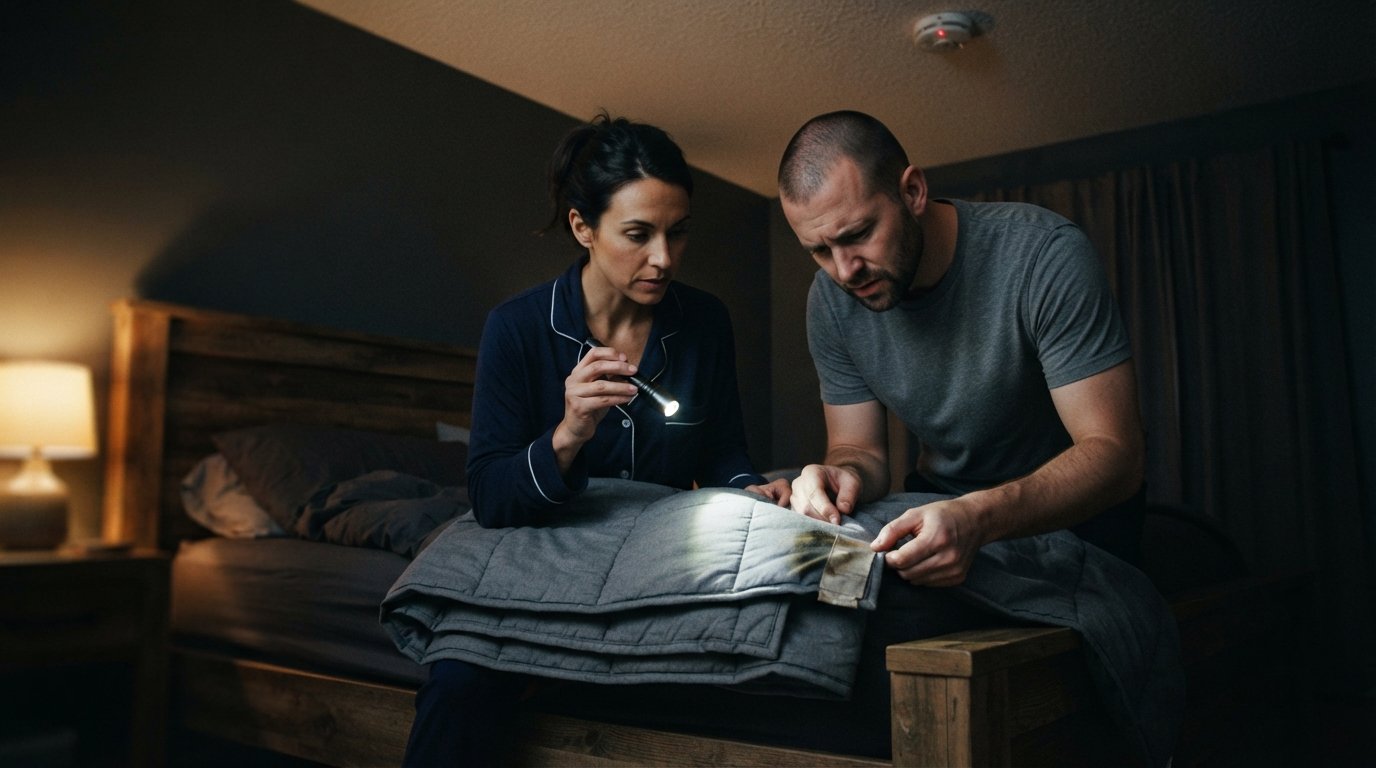
To check your product, gather the brand name, model number, UPC code, and approximate purchase date, all of which usually appear on the sewn-in tag or the original packaging. Then search the CPSC database and the manufacturer's recall page. If a match appears, read the recall notice carefully: it will describe the hazard, the remedy offered (refund, replacement, or repair), and the number of units affected. Save the notice, photograph your damaged product, and keep any receipts or order confirmations.
Keep in mind that a recall is not the only path to a claim. Many dangerous products are never recalled at all, and a defect can exist even when no official action has been taken. A recall is powerful evidence, but the absence of one does not eliminate your rights. If you are unsure whether your situation qualifies, a free case evaluation through a platform like LawyerOffer can help you understand your options before you decide how to proceed.
How a Thermal or Electrical Defect Becomes a Product Liability Case
Weighted blankets fail in fires in a few recognizable ways. Some contain electrical heating components, controllers, or wiring that can short, overheat, or ignite. Others use fabrics or fill materials that burn faster than safety standards allow. In either scenario, the legal theory is product liability, and it generally rests on three pillars: a design defect, a manufacturing defect, or a failure to warn.
A design defect claim argues that the product was dangerous by design, for example because the heating element lacked adequate thermal cutoff protection or the wiring was routed in a way that concentrates heat. A manufacturing defect claim argues that a particular unit departed from the intended design, such as a pinched wire or a missing fuse. A failure to warn claim argues that the seller did not adequately disclose risks like overheating when the blanket is used under other bedding or left plugged in overnight. Burn injuries, smoke inhalation, property damage, and emotional distress can all be recoverable harms if causation can be established.
Proving causation in a fire case usually requires an origin and cause investigation. A qualified fire investigator can determine where the fire started, and a forensic engineer can examine the blanket's remains for evidence of electrical arcing, melted components, or fabric ignition. This is why preserving the product, even in damaged form, matters so much. Do not throw the blanket away, and do not ship it back to the manufacturer before documenting it, because the recall remedy process and the injury claim process serve different purposes.
Retailer vs. Manufacturer Liability for Imported Products
Many weighted blankets sold in the United States are manufactured overseas and imported by domestic brands, distributors, or marketplace sellers. That supply chain matters for your claim. Under U.S. product liability law, you can often sue not only the manufacturer but also the importer, distributor, and retailer that placed the product into the stream of commerce. Retailers and online marketplaces can be liable under theories including strict liability, negligence, and breach of warranty, particularly when they sold a product they knew or should have known was defective.
Practical realities shape strategy here. Foreign manufacturers can be difficult to locate, serve, and collect from, so plaintiffs frequently pursue the domestic importer or the retailer instead. If you bought the blanket from a large online marketplace, the seller's identity and the importer's identity may be buried in order records, which is why keeping your purchase history is essential. An attorney can use discovery to trace the product from factory to shelf and identify every party with potential responsibility.
Here is how a typical investigation unfolds after a fire injury:
- Preserve the product, packaging, receipts, and any photos or video of the scene.
- Obtain the fire department report and any insurance adjuster findings.
- Trace the supply chain through order records, labels, and import documentation.
- Retain a forensic engineer to test the product and identify the failure mode.
- Notify potential defendants and preserve evidence before it is destroyed.
Each step builds the evidentiary record that supports a claim against the right parties. Skipping any of them can weaken an otherwise strong case, so it is worth consulting a product liability attorney early, before evidence is lost or memories fade.
Coordinating Injury Claims with Recall and Class Action Remedies
When a product is recalled, consumers are usually offered a refund, replacement, or repair. Those remedies compensate you for the product itself, not for burns, medical bills, lost wages, or property damage. A recall does not release your injury claim, and accepting a refund generally does not waive your right to sue for personal injuries, though the specific terms of any settlement should always be reviewed by counsel.
Class actions present a more complicated picture. If a class action has been filed over the same defective blanket, you may receive notice and an opportunity to participate or opt out. Class action settlements often resolve property damage and economic losses for a large group, while serious personal injury claims are frequently excluded from the class and pursued individually. The key question is whether your injury claim is covered by the class definition. If it is, you may need to opt out to preserve your right to pursue a separate lawsuit; if it is not, you can usually proceed on your own while the class action continues.
A few practical rules help avoid costly mistakes. Do not cash a settlement check without understanding what rights you are giving up. Do not assume a recall notice is the final word on compensation. And do not wait: personal injury statutes of limitations vary by state and can expire within one to three years, sometimes less. Documenting your injuries, medical treatment, and property damage from day one gives your attorney the strongest foundation to work from.
Why Early Legal Guidance Matters for Burn Injury Claims
Burn injuries are among the most expensive and painful harms in consumer product cases. Treatment can involve skin grafts, long recovery periods, scarring, and psychological trauma, and the damages can far exceed what a recall refund could ever cover. Insurers and manufacturers often move quickly after a fire to inspect the scene and contact victims, and statements made early can be used against you later. Having counsel in place protects the evidence and levels the negotiating field.
A legal information and attorney referral service can connect you with lawyers who handle product liability and mass tort matters on a contingency basis, meaning you typically pay nothing upfront and owe nothing unless you recover. When you request a confidential case evaluation, be ready to describe the product, the incident, your injuries, and any recall notices you have received. That information helps matching attorneys assess whether you have a viable claim and what it may be worth.
Finally, remember that this article is general information, not legal advice, and no attorney-client relationship is created by reading it. Every case turns on its own facts, and deadlines are strict. If a recalled weighted blanket has harmed you or your family, act promptly: verify the recall, preserve the evidence, and speak with a qualified attorney about your injury claim before time runs out.