
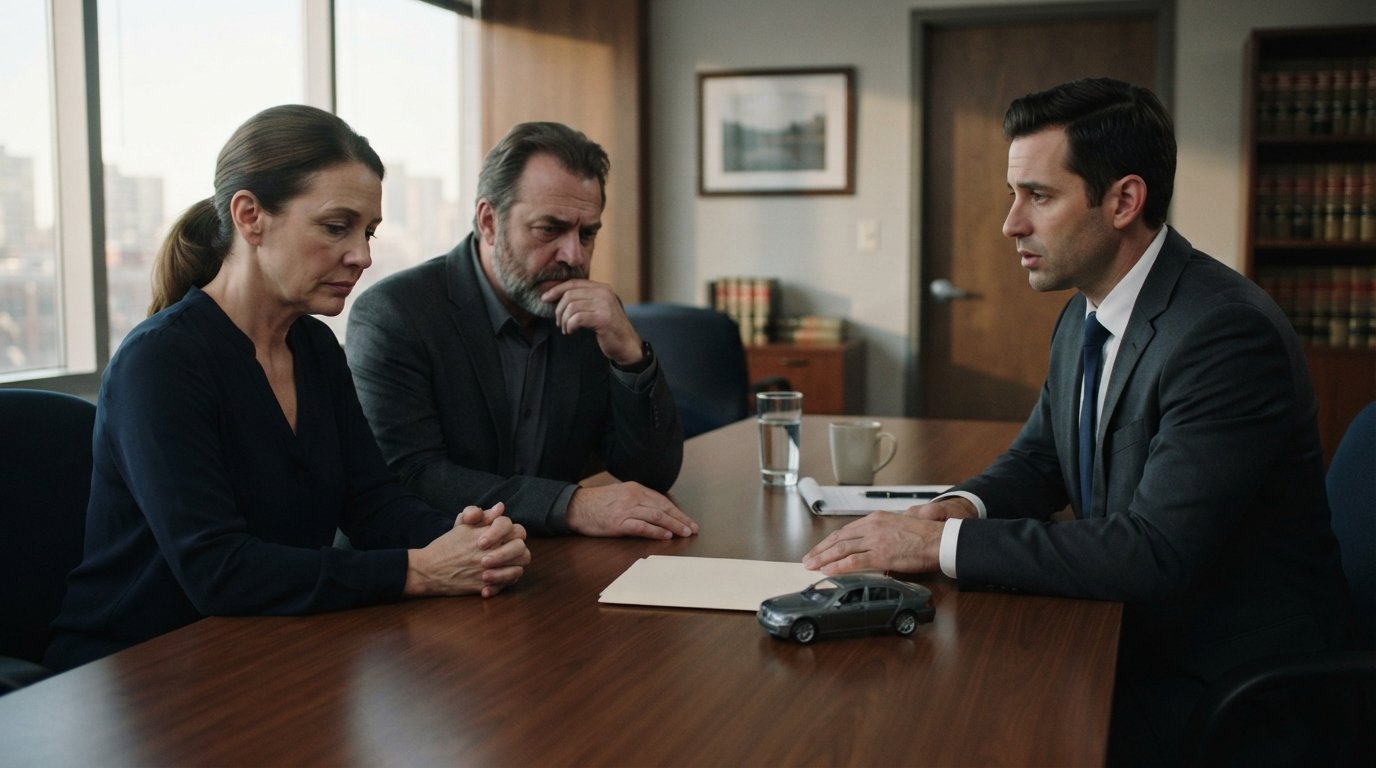
Wrongful Death Claim When Deceased Was Partially at Fault
Partial fault does not always bar a wrongful death claim. Learn how comparative fault works and protect your family's rights. Call (833)-864-8408 for a free case review.

When a family loses a loved one in a fatal accident, the last thing they expect is to be told that the deceased shared some responsibility for what happened. Yet in many wrongful death cases, insurance companies and defense attorneys raise the issue of comparative fault, arguing that the victim's own actions contributed to the fatal outcome. This defense can reduce or even eliminate recovery in some states, leaving grieving families confused and uncertain about their legal options. If you are facing this situation, understanding how partial fault affects a wrongful death claim is essential to protecting your family's rights and securing the compensation you deserve.
How Comparative Fault Applies After a Fatal Accident
Comparative fault, also called comparative negligence, is a legal doctrine that allocates responsibility among all parties involved in an accident. When a death occurs, the personal representative of the deceased's estate may file a wrongful death claim against the at-fault party. However, if evidence suggests the deceased was partly responsible, the defendant will argue that the claim should be reduced or barred entirely. The outcome depends heavily on the state where the accident occurred, because each state follows its own rule for handling shared fault.
There are three main approaches used across the United States. Pure comparative fault allows the plaintiff to recover damages even if the deceased was 99 percent at fault, with the award reduced by their percentage of responsibility. Modified comparative fault, followed by a majority of states, bars recovery if the deceased's fault exceeds a certain threshold, typically 50 or 51 percent. Contributory negligence, still used in a few states, completely bars recovery if the deceased was even slightly at fault. These distinctions make it critical to identify the applicable state law immediately.
For example, suppose a pedestrian is struck and killed by a speeding driver, but the pedestrian was jaywalking at the time. In a pure comparative fault state, the family might still recover 70 percent of damages if the pedestrian is found 30 percent at fault. In a modified state with a 50 percent bar, the same facts could result in zero recovery if the jury assigns 51 percent fault to the pedestrian. Understanding these rules helps families set realistic expectations and plan their legal strategy accordingly.
Survival Claims Versus Wrongful Death Claims in Fault Allocation
Wrongful death claims and survival claims are often confused, but they serve different purposes and can be affected differently by the deceased's partial fault. A wrongful death claim is brought by the surviving family members (spouse, children, or parents) to recover damages for their own losses, such as loss of companionship, financial support, and funeral expenses. A survival claim, on the other hand, is brought on behalf of the estate for injuries the deceased suffered before death, including pain and suffering, medical expenses, and lost wages prior to passing. Both types of claims may be pursued in the same lawsuit, but the fault allocation can impact each one.
In many jurisdictions, the deceased's comparative fault reduces both wrongful death and survival damages. However, some states treat them differently. For instance, in a survival claim, the estate stands in the shoes of the deceased, so any fault of the deceased is directly attributed to the claim. In a wrongful death claim, the focus is on the beneficiaries' losses, but courts still consider the deceased's conduct because the claim arises from the same incident. An experienced attorney can explain how your state handles this distinction and whether one claim might be more viable than the other.
It is also important to note that the personal representative of the estate typically files both claims. This person has a fiduciary duty to the beneficiaries and must act in their best interests. If you are the personal representative, you should consult with a wrongful death attorney who understands the interplay between these claims and can help you maximize recovery despite allegations of partial fault. For a broader overview of survivor rights and compensation, you can refer to our guide on wrongful death lawsuit survivor rights, which explains the types of damages available and who can file.
Investigating Fault Quickly Before Evidence Disappears
When partial fault is alleged, the investigation becomes even more critical. Evidence can disappear quickly after a fatal accident: skid marks fade, surveillance footage is overwritten, witnesses move or forget details, and vehicle data may be lost if the car is repaired or sold. To counter claims that your loved one was partly responsible, you need a thorough investigation that preserves all relevant evidence and builds a clear picture of what happened.
An attorney can act fast to secure evidence that might otherwise be lost. This may include obtaining police reports, interviewing eyewitnesses, reviewing traffic camera footage, hiring an accident reconstruction expert, and analyzing vehicle event data recorders (black boxes). In cases involving defective products or unsafe premises, experts may need to inspect the product or location before it is altered. Time is of the essence, and delaying the investigation can severely weaken your ability to challenge fault allegations.
Here are key steps that should be taken immediately to protect evidence and build a strong case:
- Contact a wrongful death attorney as soon as possible to initiate an independent investigation.
- Preserve the deceased's vehicle, personal belongings, and any relevant documents.
- Identify and interview witnesses while their memories are fresh.
- Request surveillance footage from nearby businesses or traffic cameras before it is erased.
- Obtain and review the police report and any accident reconstruction reports.
By taking these steps early, you can gather the evidence needed to rebut claims of comparative fault and demonstrate that the defendant's negligence was the primary cause of the fatal accident.
Why Early Attorney Involvement Matters in Disputed-Fault Deaths
Insurance companies often move quickly to contact family members after a fatal accident, hoping to obtain recorded statements or settlement releases before the family has legal representation. When partial fault is at issue, these early interactions can be especially damaging. A seemingly innocent statement like "He always crossed there" or "She was distracted" can later be used to argue that the deceased contributed to the accident. Having an attorney involved from the start levels the playing field and ensures your family's rights are protected.
An attorney can handle all communication with insurers, conduct a thorough investigation, and negotiate from a position of strength. They can also help you understand the comparative fault rules in your state and develop a strategy to minimize the impact of any fault assigned to your loved one. In some cases, an attorney may be able to uncover evidence that shifts blame entirely to the defendant, such as proof of speeding, distracted driving, or a defective vehicle part. Even if some fault is assigned, skilled legal representation can significantly increase the compensation your family receives.
If you are unsure where to turn, consider using a free case review service to connect with experienced wrongful death attorneys in your area. Services like CheapInjuryLawyer provide no-cost, confidential case evaluations and match you with lawyers who work on contingency, meaning you pay nothing unless you recover. This can be a valuable resource when you are facing a disputed-fault death and need professional guidance without upfront costs.
Strategies to Overcome a Partial Fault Defense
When the deceased is alleged to be partially at fault, your attorney will employ a range of strategies to challenge that assertion and maximize recovery. The specific approach depends on the facts of your case and the laws of your state, but some common tactics include:
- Rebuttal with expert testimony: Accident reconstruction experts and human factors specialists can demonstrate that the defendant's actions were the sole or primary cause of the accident, and that the deceased acted reasonably under the circumstances.
- Challenging the defendant's evidence: Attorneys can scrutinize the defendant's claims, looking for inconsistencies, lack of proof, or violations of traffic laws that outweigh any minor fault of the deceased.
- Negotiating a favorable settlement: Even in modified comparative fault states, insurers may agree to a settlement that accounts for disputed fault rather than risk a trial with uncertain outcomes.
- Filing a lawsuit to leverage pressure: Sometimes the mere filing of a lawsuit and the prospect of a jury trial can prompt a more reasonable settlement offer, especially if the defendant's fault is clear.
It is also important to remember that the burden of proving comparative fault typically lies with the defendant. Your attorney can hold them to that burden and ensure that any allocation of fault is supported by credible evidence, not just speculation.
How a Wrongful Death Attorney Can Help
Wrongful death cases involving partial fault are complex and require an attorney who understands both the legal doctrines and the practical realities of negotiation and litigation. An experienced lawyer can evaluate the strength of the comparative fault defense, determine the best legal strategy, and guide you through the process while you focus on grieving and healing. They can also handle the procedural requirements, such as filing within the statute of limitations and complying with notice requirements for claims against government entities.
At LawyerCaseReview, we understand the challenges families face when a loved one's death involves disputed fault. Our platform connects you with top-rated wrongful death attorneys who can provide a free, confidential case evaluation. We are not a law firm and do not provide legal advice, but we can help you find the legal representation you need to pursue justice and compensation. Whether you are dealing with a car accident, workplace fatality, medical malpractice, or another tragic event, our network of attorneys is ready to help.
Losing a family member is devastating, and being told that your loved one was partly at fault adds another layer of pain and confusion. Do not let insurance companies take advantage of your grief. By acting quickly, preserving evidence, and securing experienced legal representation, you can challenge comparative fault allegations and pursue the compensation your family deserves. Reach out today to learn more about your rights and options in a wrongful death claim when the deceased was partially at fault.