
Wrongful Death Claims for Commercial Truck Crashes
Wrongful death claims for commercial truck crashes require fast evidence preservation. Call (833)-864-8408 for a free case review.

By Elspeth Warren
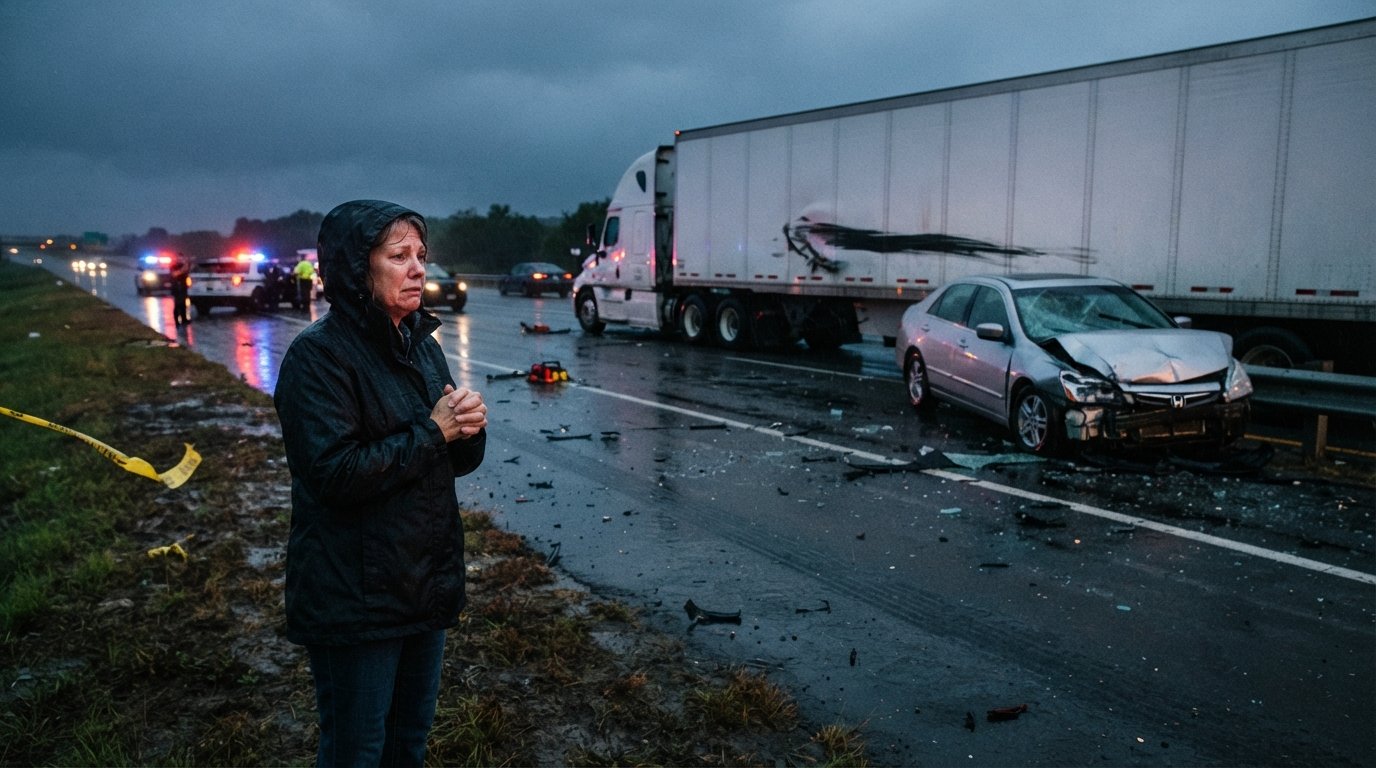
The phone call comes without warning. A family member was driving to work, or perhaps heading home on the interstate, when a commercial truck crossed the center line, failed to brake in time, or drifted from its lane. The collision is catastrophic by simple physics: an 80,000-pound tractor-trailer against a passenger vehicle rarely ends with anyone in the car walking away. In the days that follow, grief collides with insurance adjusters, accident reconstruction teams, and questions no one wanted to ask. If you are searching for answers about wrongful death claims for commercial truck crashes, you are likely trying to understand how civil law addresses a loss that no amount of money can truly repair.
A wrongful death claim is a civil lawsuit filed by surviving family members against the party or parties legally responsible for the death. In the context of commercial truck crashes, these claims differ significantly from ordinary car accident cases. Multiple defendants may share liability, federal safety regulations can establish negligence automatically, and the trucking company often has a legal team on the scene within hours. Understanding how these claims work, what evidence matters, and how damages are calculated can help families make informed decisions during an overwhelming time.
Why Commercial Truck Cases Are Different from Ordinary Car Accidents
When a passenger car collides with another passenger car, the legal fight usually centers on two drivers and two insurance policies. Commercial truck crashes open a much wider field. The truck driver is only one potential defendant. The motor carrier that employs or contracts with the driver, the broker who arranged the load, the shipper who loaded the cargo, and even the manufacturer of a defective truck part may all bear responsibility. Each of these entities carries its own insurance coverage, its own legal counsel, and its own strategy for minimizing payouts.
Federal law adds another layer. The Federal Motor Carrier Safety Administration (FMCSA) imposes detailed rules on commercial trucking operations, covering everything from driver hours to vehicle maintenance to drug testing. When a carrier violates these rules and that violation contributes to a fatal crash, the violation itself can serve as proof of negligence in many jurisdictions. This legal concept, known as negligence per se, allows a plaintiff to establish breach of duty by showing that the defendant violated a statute or regulation designed to protect the public. In a wrongful death case, negligence per se can streamline the path to liability, but only if the family's attorney knows which records to request and how to use them.
Time is another critical difference. Trucking companies are required to preserve certain records, but those retention periods vary. Electronic logging device data, driver qualification files, and maintenance logs may be overwritten or discarded if not formally requested through litigation holds or spoliation letters. Families who wait too long may find that key evidence has vanished. That is why experienced truck accident attorneys send preservation demands immediately, often within days of the crash.
Federal Motor Carrier Rules That Can Establish Negligence
The FMCSA rulebook is thick, but several categories of violations appear repeatedly in fatal truck crash litigation. Each one offers a potential pathway to proving that the carrier or driver failed to meet the standard of care owed to others on the road.
Hours-of-service regulations limit how long a driver may operate without rest. These rules exist because fatigue impairs reaction time, judgment, and attention in ways comparable to alcohol intoxication. When a driver exceeds the allowed driving window or falsifies logs to hide violations, the carrier may be liable for negligent scheduling or failure to supervise. Electronic logging devices now capture much of this data automatically, but older trucks or exempt operations may still rely on paper logs that can be altered.
Maintenance requirements mandate regular inspections and prompt repair of safety-critical components such as brakes, tires, and steering systems. A carrier that skips maintenance to save money, or that pressures drivers to accept unsafe equipment, may be found negligent. Driver qualification files must document that each driver holds a valid commercial driver's license, has passed required medical examinations, and has a clean enough record to operate safely. When a carrier hires a driver with a history of DUIs or reckless driving, that hiring decision itself can become evidence of negligence.
To build a strong wrongful death case, the family's legal team typically seeks the following records as early as possible:
- Electronic logging device data and any corresponding paper logs for the driver and vehicle
- Driver qualification file, including license history, medical examiner certificates, and prior employment checks
- Vehicle maintenance and inspection records for the truck and trailer involved
- Dispatch and routing communications between the driver, carrier, and broker
- Dashcam footage, onboard safety system data, and post-crash drug and alcohol test results
Each of these records can either support or undermine a claim. For example, if the driver's logs show that he or she had been on duty for 16 hours straight, that fact alone may establish a hours-of-service violation and support a negligence per se argument. If maintenance records reveal that brake problems were reported but not repaired, the carrier faces exposure for both negligent maintenance and negligent supervision. The earlier these documents are secured, the harder they are for the carrier to explain away later.
Identifying All Potentially Liable Parties
One of the most consequential decisions in a commercial truck wrongful death case is determining whom to sue. Naming only the driver often leaves the family chasing an individual with limited insurance and few assets. Naming the carrier, broker, and shipper expands the pool of available compensation and increases pressure on each defendant to settle rather than face a jury.
The driver is the most obvious defendant, but his or her personal insurance policy is rarely enough to cover a wrongful death claim. The motor carrier is usually the primary target because it carries commercial auto liability coverage, often in amounts of $750,000 to $5 million or more depending on the cargo and operation. Carriers may argue that the driver was an independent contractor rather than an employee, but courts often look beyond labels to the degree of control the carrier exercised over the driver's schedule, route, and equipment.
Brokers and shippers can also share liability. A broker that hires a carrier with a known history of safety violations may be negligent in its selection process. A shipper that overloads a trailer or fails to secure cargo properly may contribute to a crash. In some cases, the manufacturer of a defective truck component, such as a brake chamber or tire, may be liable under product liability law. Each additional defendant brings additional insurance coverage and additional incentive to resolve the case.
For families trying to understand their options, a resource like the Wrongful Death Lawsuit: Survivor Rights & Compensation guide can help explain how survivor claims are structured and what compensation may be available. When multiple defendants are involved, coordination among attorneys and insurers becomes complex, and having a clear picture of the legal landscape is essential.
Survivor Damages and Survival Actions: Two Distinct Claims
Wrongful death claims and survival actions are often confused, but they are separate legal vehicles with different purposes and different beneficiaries. Understanding the distinction can help families and their attorneys pursue the full range of available compensation.
A wrongful death claim belongs to the surviving family members, typically a spouse, children, or parents, depending on state law. It compensates them for the losses they suffered because of the death. These damages may include funeral and burial expenses, loss of the deceased's future financial support, loss of companionship and guidance, and in some cases, emotional distress. The claim is designed to address the hole left in the family's life, not the suffering of the deceased before death.
A survival action, by contrast, belongs to the estate of the deceased and compensates for the pain and suffering the deceased experienced between the moment of injury and the moment of death. If the deceased survived for several minutes or hours after the crash, that period of conscious pain can support a survival claim. Survival actions also cover medical expenses incurred before death and any lost wages the deceased would have earned during that interval. In some states, the same personal representative may bring both claims, but the damages are kept separate.
Practical differences matter. Wrongful death damages are distributed according to state intestacy laws or the terms of a will, while survival action proceeds become part of the estate and are subject to estate debts and expenses. A skilled attorney will plead both claims when the facts support them, ensuring that the family and the estate each receive the compensation they are entitled to under the law.
The Claims Process: From Investigation to Resolution
Most wrongful death claims for commercial truck crashes follow a predictable arc, though every case has its own twists. The process begins with an immediate investigation. An attorney or investigator may visit the crash site, photograph skid marks and debris, interview witnesses, and obtain the police report. At the same time, the legal team sends spoliation letters to the carrier, broker, and any other potentially responsible parties, demanding that they preserve all relevant records and data.
Once evidence is secured, the attorney files a claim with the appropriate insurance companies. The carrier's insurer will assign a defense lawyer and may make an initial settlement offer. These early offers are almost always far below the true value of the case, especially when the family has not yet documented the full extent of their losses. Experienced attorneys typically reject low offers and continue building the case through discovery, expert witnesses, and accident reconstruction.
If settlement negotiations do not produce a fair result, the case proceeds to litigation. Filing a lawsuit does not necessarily mean the case will go to trial; many cases settle after depositions and expert reports clarify the strength of each side's position. Throughout this process, the family's attorney works to quantify damages, establish liability, and pressure insurers to pay the full value of the claim.
For families who need help finding qualified legal representation, platforms like LawyerOffer connect individuals with attorneys who handle complex personal injury and wrongful death matters. A referral service can be particularly valuable when the family is unsure where to turn or wants to compare options before committing to a law firm.
How Compensation Is Calculated in Truck Crash Wrongful Death Cases
Calculating damages in a wrongful death case is not a simple formula. It involves both economic and non-economic losses, and the final number can vary widely based on the deceased's age, income, health, and family circumstances.
Economic damages are the most straightforward. They include medical bills incurred before death, funeral and burial costs, and the present value of the income the deceased would have earned over a normal lifetime. An economist or forensic accountant often prepares a report projecting future earnings, benefits, and household contributions. For a young parent with a long career ahead, these numbers can be substantial.
Non-economic damages are harder to quantify but often represent the largest portion of a wrongful death verdict or settlement. They include loss of companionship, loss of parental guidance, emotional pain and suffering, and in some states, loss of consortium for the surviving spouse. Some jurisdictions cap non-economic damages in certain types of cases, while others allow juries broad discretion. An attorney familiar with the state's wrongful death statute will know how to present these losses persuasively.
Punitive damages may also be available if the defendant's conduct was especially reckless or intentional. A carrier that knowingly dispatched a fatigued driver or falsified maintenance records may face punitive exposure. These damages are designed to punish and deter, and they can significantly increase the value of a claim. However, they are not available in every case or every state, and proving the requisite level of misconduct requires strong evidence.
Steps Families Should Take Immediately After a Fatal Truck Crash
In the aftermath of a fatal commercial truck crash, emotions run high and time feels distorted. Even so, certain steps can protect the family's legal rights and preserve evidence that might otherwise disappear.
First, avoid speaking with the trucking company's insurer or its representatives. They may contact the family quickly, offering condolences and asking for recorded statements. Anything said in those conversations can be used later to reduce the claim. Politely decline to give a statement and refer them to an attorney.
Second, gather and preserve documents. The police report, death certificate, photographs of the scene, and any communication from the carrier or its insurer should be kept in a safe place. If the family has access to the deceased's phone or vehicle, do not delete anything; data from these devices may help reconstruct what happened.
Third, consult with an attorney who handles commercial truck wrongful death cases. Many law firms offer free consultations and handle cases on a contingency fee basis, meaning the family pays nothing unless the case resolves successfully. An attorney can send preservation letters, investigate the crash, and begin building a claim while the family focuses on grieving and healing.
Finally, be patient with the process. Wrongful death litigation can take months or years, especially when multiple defendants are involved. The goal is not a quick settlement but a full and fair recovery that holds all responsible parties accountable.
Losing a family member in a commercial truck crash is a tragedy that no legal process can undo. But the civil justice system offers a path to accountability and financial stability for surviving family members. By understanding how wrongful death claims work, what evidence matters, and how to identify all liable parties, families can make informed decisions about their legal options. With the right legal guidance, they can pursue the compensation they deserve and begin to rebuild their lives.