
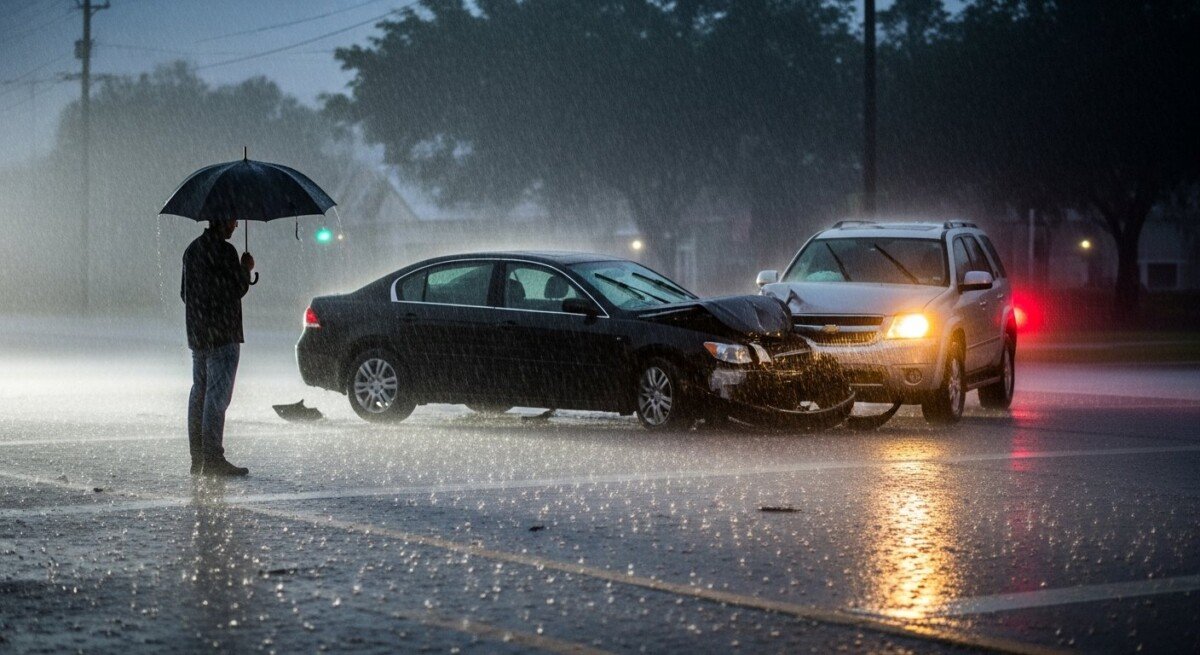
Car Accident in Florida Bad Weather: Your Legal Guide
If you were in a car accident during Florida bad weather, know your legal rights. Call (833) 227-7919 for a free case evaluation.

By Briar Ellington
Florida’s weather can shift from sunshine to a torrential downpour in minutes, creating treacherous driving conditions that lead to serious collisions. When an accident occurs during a storm, hurricane, or heavy fog, the aftermath is not only chaotic but legally complex. Determining fault becomes a battle of narratives, where insurance companies often rush to blame the weather itself, not the driver who failed to adjust. Understanding your rights and the specific legal considerations for bad weather accidents is crucial to protecting your claim and securing fair compensation for your injuries and losses.
How Florida’s Negligence Laws Apply in Bad Weather
Florida is a comparative negligence state. This means that if you are found partially at fault for an accident, your compensation is reduced by your percentage of fault. However, if you are found more than 50% at fault, you are barred from recovering any damages. In bad weather accidents, insurance adjusters aggressively use this system to shift blame onto all drivers involved, arguing that everyone should have been driving more carefully. The legal standard, however, is not perfection, but reasonableness. The key question becomes: did the driver exercise the level of care a reasonable person would under the same rainy, windy, or foggy conditions? A driver who speeds through a known flood zone or fails to turn on headlights during a heavy storm may be deemed negligent, regardless of the weather. Proving the other driver’s unreasonable actions is the cornerstone of your case.
The Critical Role of Evidence After a Storm-Related Crash
Gathering evidence immediately after a weather-related accident is paramount. Conditions change quickly, and vital proof can literally wash away. While ensuring everyone’s safety is the first priority, documenting the scene effectively creates a foundation for your claim. This evidence directly counters the insurance company’s default position that the accident was an unavoidable “act of God.”
If you are physically able, focus on collecting the following types of evidence:
- Photographs and Video: Take extensive pictures of vehicle damage, skid marks, road conditions (standing water, debris), traffic signs, and visibility. A video panning the scene can capture weather intensity.
- Witness Information: Get contact details from any witnesses. Their independent account of a driver’s speed or failure to use headlights is invaluable.
- Police Report: Always call the police. The officer’s report will document conditions, statements, and may issue citations (like for speeding in the rain), which is powerful evidence.
- Vehicle Data: Modern cars have event data recorders (EDRs). A lawyer can help preserve this data, which may show speed, braking, and steering inputs moments before impact.
This collection of evidence helps reconstruct the event. For instance, the length of skid marks can help an expert calculate speed. Photos of a driver’s clear tail lights versus their activated headlights can prove a visibility violation. This level of detail is essential, and a skilled attorney knows how to marshal it effectively. In fact, identifying the best personal injury lawyers in Florida often involves assessing their resources and experience in evidence collection and reconstruction for complex cases like these.
Dealing with Insurance Companies and the “Act of God” Defense
One of the biggest hurdles you will face is the insurance adjuster’s use of the “Act of God” defense. This legal argument asserts that the accident was caused solely by an unforeseeable, severe natural event for which no human can be held liable. However, Florida courts have consistently held that predictable weather events, like seasonal thunderstorms or hurricanes, are not unforeseen Acts of God. Drivers have a duty to anticipate and adjust to known hazardous conditions. The insurance company’s goal is to use the weather as a pretext to deny or undervalue your claim. They may pressure you for a recorded statement, asking leading questions like, “The rain was coming down pretty hard, wasn’t it? Could you even see?” Your response could be twisted to imply you were driving negligently by merely being on the road. It is critical to never give a statement or sign any documents from the other driver’s insurer without legal counsel. An attorney handles all communication, protecting you from these tactics and building a counter-argument that focuses on the other driver’s breach of their duty of care. This strategic approach is a key reason why finding Florida’s best personal injury lawyers for your case makes a significant difference in outcome.
Specific Weather Hazards and Associated Negligence
Different weather conditions create unique hazards and corresponding driver duties. Understanding these can clarify how negligence may be established.
Heavy Rain and Hydroplaning
Hydroplaning occurs when a layer of water builds between a vehicle’s tires and the road, causing loss of traction. While it can happen suddenly, drivers are expected to take preventative measures. Negligence may include driving with bald tires, speeding through standing water, or using cruise control on wet pavement. If a driver hydroplanes and crosses into your lane, their failure to maintain proper tire tread or reduce speed could be the proximate cause of the crash.
Fog and Reduced Visibility
Florida fog, especially in the morning or near bodies of water, can severely limit sightlines. The law requires drivers to use low-beam headlights (or fog lights if equipped) and reduce speed to a level commensurate with visibility. Tailgating in fog is extremely negligent. A rear-end collision in fog is rarely a pure accident, it is typically a failure to maintain a safe following distance.
Hurricane and Storm Aftermath
Accidents in the days following a major storm involve hazards like downed power lines, debris in roadways, and non-functioning traffic signals. Drivers must treat non-working intersections as four-way stops. Municipalities and property owners may also share liability if they fail to clear roads or warn of dangers in a timely manner, adding another layer of complexity to the claim.
Steps to Take Immediately After a Bad Weather Accident
Your actions in the moments and days following the crash are critical. Follow this structured approach to protect your health and your legal rights.
- Ensure Safety and Call 911: Move vehicles to a safe location if possible, turn on hazard lights, and check for injuries. Request medical attention and a police report.
- Document Everything: Use your phone to photograph the scene, vehicles, license plates, VINs, and your visible injuries. Note the exact time, location, and weather conditions.
- Exchange Information: Get the other driver’s name, insurance details, and vehicle registration. Provide yours. Limit conversation about fault to basic facts.
- Seek Medical Evaluation: Adrenaline can mask injuries. See a doctor immediately after the accident. This creates a medical record linking your injuries to the crash.
- Notify Your Insurer: Report the accident to your own insurance company, but stick to basic facts. Do not speculate or admit fault.
- Consult a Personal Injury Attorney: Before speaking with the other insurer or accepting any settlement offer, consult with a lawyer who specializes in bad weather accidents. Most offer free consultations.
This process helps preserve your claim. The consultation with an attorney is particularly vital, as they can immediately begin an investigation. A thorough lawyer will know how to find the best personal injury lawyers in Florida with the specific expertise and resources your complex case requires, or will apply that expertise directly to your situation.
Frequently Asked Questions
Can I still be compensated if I was partially at fault for the weather-related accident? Yes, under Florida’s comparative negligence law, you can recover damages as long as you are not more than 50% at fault. Your compensation will be reduced by your percentage of responsibility.
The police report says the cause was “weather conditions.” Does this hurt my claim? Not necessarily. A generic police report notation is a starting point, not a final legal determination. An attorney can investigate beyond the report to uncover evidence of the other driver’s specific negligent actions that contributed to the crash.
What if the accident was caused by poor road design that flooded during rain? Government entities can be held liable for dangerous road conditions if they were aware of a recurring hazard (like chronic flooding) and failed to address it. These claims have strict notice requirements and shorter deadlines, making immediate legal counsel essential.
How long do I have to file a lawsuit after a car accident in Florida? The statute of limitations for personal injury in Florida is generally two years from the date of the accident. For property damage only, it is three years. Do not wait, as building a strong bad-weather case takes time.
Should I use my own insurance or file against the other driver? This is a strategic decision. You may need to use your Personal Injury Protection (PIP) and collision coverage initially. Your attorney will then pursue a claim against the at-fault driver’s liability insurance for your full damages, including pain and suffering, which PIP does not cover. Navigating this requires expertise, which is why finding the best personal injury lawyers in Florida is a critical step for maximizing your recovery.
An accident during Florida’s notorious bad weather creates a perfect storm of physical, emotional, and legal challenges. While insurance companies may try to use the conditions as an excuse to minimize your claim, the law holds drivers accountable for operating their vehicles with reasonable care for the circumstances. By taking prompt, informed action and securing experienced legal representation, you can cut through the complexity and fight for the compensation you need to recover fully and move forward with your life.