
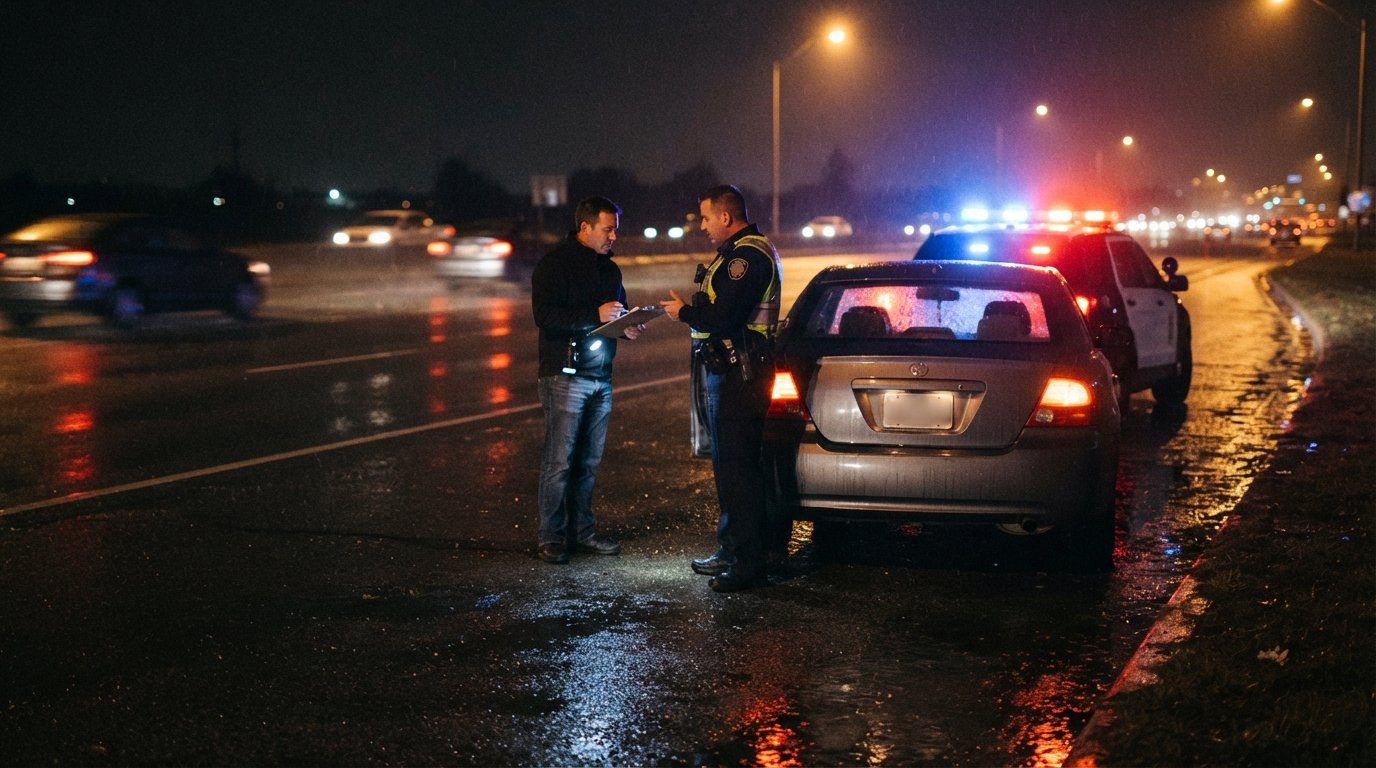
DUI Defense Strategies Challenging Traffic Stop Evidence
Explore DUI defense strategies challenging traffic stop evidence. Call 8338648408 for a free case evaluation and protect your rights.

By Pierce Larkin
A traffic stop is the foundation of nearly every DUI prosecution in the United States. If that stop was unlawful, the evidence gathered afterward, including breath test results, field sobriety exercises, and admissions, can be suppressed and the case may collapse. That is why experienced DUI attorneys attack the stop itself before they ever argue about alcohol concentration or field sobriety tests. This article explains the most effective DUI defense strategies challenging traffic stop evidence, from constitutional violations to procedural errors, and shows how a skilled lawyer can use these arguments to protect your rights.
Why the Traffic Stop Is the Most Vulnerable Part of a DUI Case
The Fourth Amendment protects you from unreasonable searches and seizures. A police officer cannot simply pull you over because they have a hunch that you might be driving drunk. The officer must have reasonable suspicion, supported by specific and articulable facts, that a traffic violation or criminal activity is occurring. If the officer cannot point to those facts, the stop is unconstitutional and everything that flows from it is generally inadmissible.
This is not a technicality. Courts across the country have thrown out DUI cases because an officer misread a license plate, relied on an anonymous tip without corroboration, or stopped a driver for a violation that was not actually a violation under state law. In some jurisdictions, a single mistake of law by the officer can invalidate the entire stop. Defense attorneys know this, and they scrutinize every detail of the police report, dashcam video, and bodycam footage to find weaknesses.
If you are facing charges and want to understand the broader range of defenses available beyond the stop itself, a guide such as our explainer on DUI defense strategies to beat charges can help you see how suppression motions fit into a larger case strategy. The key point is that the stop is not just a preliminary event; it is a legal battleground that can determine the outcome of your entire case.
Common Constitutional Violations That Invalidate a Traffic Stop
Defense lawyers look for a handful of recurring constitutional problems when reviewing a DUI stop. Each one can serve as the basis for a motion to suppress.
The first is lack of reasonable suspicion. An officer might claim you were weaving, speeding, or had a broken taillight. But what if the video shows you stayed in your lane? What if the radar reading was uncalibrated? What if the taillight was working fine? Without a valid legal basis, the stop fails.
The second is an unlawful extension of the stop. Even if the initial stop was valid, the officer must complete the traffic-related purpose quickly and then let you go unless new facts justify continuing the detention. Prolonging the stop to wait for a drug dog or to administer field sobriety tests without reasonable suspicion of impairment is unconstitutional.
The third is a pretextual stop. In many states, an officer can stop you for a minor traffic infraction even if their real motive is to investigate DUI, as long as the infraction is real. But in some states, pretext stops are restricted or prohibited. Defense attorneys research the specific law in their jurisdiction.
Other common violations include:
- Stopping a vehicle without probable cause that a traffic violation occurred.
- Relying on an anonymous tip that lacks sufficient indicia of reliability.
- Misunderstanding the law, such as believing a particular driving behavior is illegal when it is not.
- Extending the stop beyond its original purpose without new evidence.
- Conducting a search without consent or a warrant after the stop should have ended.
Each of these issues requires a careful review of the officer's report and any available video. A skilled DUI attorney will compare the officer's stated reasons with the actual footage and with the text of the relevant statutes. Discrepancies often become the centerpiece of a suppression motion.
Challenging Field Sobriety Tests and Chemical Test Evidence
Once a stop is deemed lawful, the next line of attack focuses on the evidence gathered during the investigation. Field sobriety tests, breath tests, and blood draws each have strict protocols. When officers deviate from those protocols, the results become unreliable and can be excluded.
Standardized field sobriety tests include the horizontal gaze nystagmus (HGN), the walk-and-turn, and the one-leg stand. Each has specific scoring criteria. For example, the HGN test must be administered with the stimulus held at a certain distance and speed. If the officer moves the pen too quickly or holds it too close, the results are compromised. The walk-and-turn requires a designated number of heel-to-toe steps on a line; if the line is uneven or the instructions are unclear, the test is unreliable.
Breath testing machines must be calibrated and maintained according to manufacturer and state regulations. Defense attorneys request maintenance logs, calibration records, and the operator's certification. If the machine was not properly calibrated or the operator was not certified, the breath test result may be inadmissible. Blood tests involve even more variables: the chain of custody, the qualifications of the phlebotomist, the preservative used in the vial, and the testing method. Any break in the chain or deviation from standard procedures can lead to suppression.
In addition, the prosecution must prove that the test was administered within the required time frame after driving. If there is a gap, the result may not reflect your blood alcohol concentration at the time you were driving.
These technical defenses require an attorney who understands the science and the regulations. They often hire expert witnesses to review the testing procedures and challenge the prosecution's evidence.
The Motion to Suppress: How It Works and What It Can Achieve
A motion to suppress is a formal request to the court to exclude evidence obtained in violation of your constitutional rights. In a DUI case, this motion typically targets the traffic stop, the field sobriety tests, and any chemical test results. If the motion is granted, the prosecution may have no choice but to dismiss the charges because the remaining evidence is insufficient.
The process begins with a hearing where the judge listens to testimony from the arresting officer and reviews any video evidence. The burden is on the prosecution to prove that the stop and subsequent investigation were lawful. Your attorney will cross-examine the officer, pointing out inconsistencies, memory lapses, and legal errors. If the judge finds that the officer violated your rights, the evidence is suppressed.
Even if the motion is not fully granted, it can lead to a favorable plea bargain. Prosecutors may reduce charges or offer a lesser penalty when they realize their evidence is weak. In some cases, the mere filing of a strong suppression motion can persuade the prosecution to drop the case entirely.
It is important to remember that you do not have to navigate this process alone. Platforms like FormsByLawyers connect individuals with legal professionals who can evaluate your case and help you understand your options. Whether you need a DUI attorney or assistance with another legal matter, having access to experienced counsel is critical.
Procedural Errors and Discovery: Finding the Weak Spots
Beyond constitutional issues, DUI defense attorneys look for procedural mistakes that can undermine the prosecution's case. These include errors in the police report, missing or incomplete documentation, and violations of discovery rules.
Officers are required to document their observations in detail. If the report is vague, contradictory, or missing key elements, the defense can argue that the officer's testimony is not credible. For example, if the officer claims you had bloodshot eyes and slurred speech but the bodycam video shows you speaking clearly and looking normal, the discrepancy can be used to impeach the officer's credibility.
Discovery is the process by which the defense obtains evidence from the prosecution. This includes dashcam and bodycam footage, dispatch logs, calibration records, and the officer's training records. If the prosecution fails to provide this evidence in a timely manner, the defense can file a motion to compel or even a motion to dismiss. In some cases, the failure to preserve evidence (such as a blood sample) can lead to exclusion of test results.
Defense attorneys also scrutinize the chain of custody for blood samples. Every person who handled the sample must be documented, and any gap can create reasonable doubt. Similarly, the maintenance records for breath machines must be current. If the machine was not serviced within the required interval, the results may be challenged.
These procedural defenses require meticulous attention to detail. An experienced DUI lawyer will know exactly what to request and how to use the information to your advantage.
State-Specific Rules and the Importance of Local Knowledge
DUI laws vary significantly from state to state. What constitutes reasonable suspicion in California may differ from Texas or Florida. Some states require officers to advise drivers of their right to refuse chemical testing, while others imply consent. The legal limit for blood alcohol concentration is 0.08% in all states, but the penalties and procedures for challenging evidence differ.
For example, in some states, a first-time DUI offender may be eligible for diversion programs that avoid a conviction. In others, the lookback period for prior offenses is longer. An attorney who practices regularly in your local courthouse will know the judges, the prosecutors, and the typical outcomes for suppression motions. That local knowledge is invaluable when building a defense strategy.
If you are unsure where to find a qualified DUI attorney in your area, consider using a legal referral service that connects you with lawyers who focus on DUI defense. The right attorney will understand the specific rules in your state and can tailor a strategy that addresses the unique facts of your case.
Building a Strong Defense: Steps You Can Take Now
If you have been charged with DUI, the steps you take immediately after the arrest can affect the strength of your defense. Here are some practical guidelines to protect your rights.
- Write down everything you remember about the stop as soon as possible. Include the time, location, weather, and the officer's behavior.
- Do not discuss the case with anyone other than your attorney. Anything you say can be used against you.
- Preserve any evidence you may have, such as receipts, text messages, or dashcam footage from your own vehicle.
- Contact a DUI defense attorney promptly. Early intervention can make a difference in how the case unfolds.
- Ask your attorney about the possibility of a motion to suppress and what evidence they plan to challenge.
Remember that the prosecution has the burden of proving every element of the offense beyond a reasonable doubt. By challenging the traffic stop and the evidence that followed, you can force the prosecution to meet that burden with reliable, lawfully obtained evidence. If they cannot, the case may be dismissed or reduced.
Finally, keep in mind that this article is for informational purposes only and does not constitute legal advice. Every case is unique, and the best course of action is to consult with a qualified attorney who can evaluate the specific facts of your situation.
DUI defense strategies challenging traffic stop evidence are not about gaming the system. They are about holding law enforcement accountable to the Constitution and ensuring that only reliable, lawfully obtained evidence is used against you. With the right attorney and a careful review of the stop, the tests, and the procedures, you can build a defense that protects your rights and your future.