
Ignition Interlock Device Requirements After a DUI by State
Ignition interlock device requirements after a DUI by state vary widely. Get clarity on costs, rules, and compliance. Call (833)-864-8408 for a free case review.

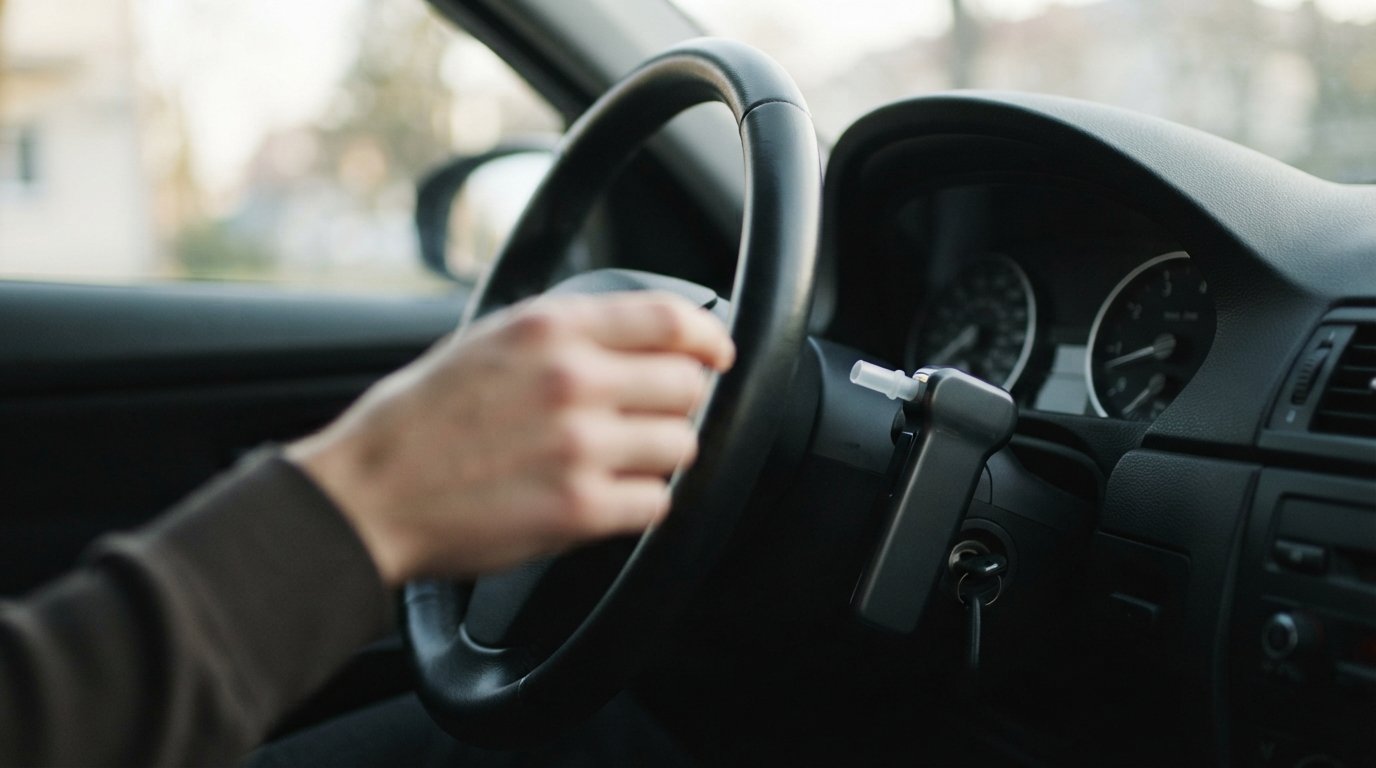
After a DUI conviction, the road back to legal driving often runs through an ignition interlock device. These breathalyzer-equipped units, wired into your vehicle's ignition, have become the most common condition for reinstating driving privileges across the United States. But the rules are far from uniform. What counts as a mandatory installation in one state may be discretionary in another, and the costs, reporting duties, and violation consequences can vary just as widely. For anyone navigating a DUI case, understanding ignition interlock device requirements after a DUI by state is not just academic; it directly affects your ability to drive, your budget, and your exposure to additional penalties. This guide breaks down the national landscape, explains how the programs actually work, and gives you a practical framework for staying compliant.
The National Patchwork: Mandatory vs. Discretionary Interlock Laws
There is no single federal interlock mandate for DUI offenders. Instead, each state sets its own rules, and those rules often differ based on the number of prior offenses, the driver's blood alcohol concentration (BAC) at the time of arrest, and whether the case involved refusal of a chemical test. Roughly two-thirds of states require some form of interlock for all DUI convictions, including first offenses. The remaining states leave installation to the judge's discretion for first offenders but typically mandate it for repeat offenses or high-BAC cases.
For a first offense, the trend over the past two decades has moved steadily toward mandatory interlocks. States like Arizona, Arkansas, Connecticut, and New Mexico require an interlock for even a first DUI, often for six months to a year. In these jurisdictions, the device is not a bargaining chip; it is a condition of getting back on the road at all. By contrast, states such as California and Colorado give judges latitude for first offenders, though they impose mandatory interlocks for second and subsequent convictions. A few states, including some rural jurisdictions, still allow restricted licenses without an interlock for first-time offenders who meet certain criteria, but these exceptions are shrinking.
Repeat offenses almost universally trigger mandatory interlock requirements, and the duration increases with each prior conviction. A second DUI in many states means a one- to two-year interlock term, while a third can push the requirement to three years or longer. Some states also require interlocks for drivers who refuse a breath or blood test, even without a conviction, under implied consent laws. This means you can face an interlock requirement administratively, through the DMV, before your criminal case is resolved. Understanding whether your state treats the interlock as a criminal sentence or an administrative condition matters because it affects the timeline and the appeal process.
Installation, Calibration, and the Costs Drivers Actually Pay
Every interlock program places the financial burden on the driver. The device itself is not provided free of charge, and the ongoing costs can add up quickly. Typical installation fees range from $70 to $200, depending on the vendor and the vehicle's make and model. Monthly lease or service fees usually run between $60 and $120. On top of that, states require periodic calibration, often every 30 or 60 days, which can cost $30 to $75 per visit. Some vendors bundle calibration into the monthly fee, but many do not, so it pays to ask for a full cost breakdown before signing a contract.
Beyond the hardware, there are administrative costs. Many states charge a reinstatement fee, an interlock program fee, and sometimes a monthly monitoring fee paid to the state or its contractor. In California, for example, the DMV charges an interlock-restricted license fee in addition to the vendor costs. In Texas, the program requires a $100 installation verification fee and an annual $50 program fee. These charges are separate from the device vendor's bill, and they are non-negotiable if you want to keep your restricted license valid.
Here is a quick breakdown of the cost categories you should budget for:
- Installation: One-time fee, typically $70 to $200.
- Monthly lease: $60 to $120 per month, paid to the vendor.
- Calibration: $30 to $75 per visit, often monthly or bimonthly.
- State fees: Reinstatement and program fees, which vary by state but often total $100 to $300 per year.
Some states offer financial hardship exemptions or reduced-fee programs for indigent drivers, but the eligibility criteria are strict and the application process can be cumbersome. If you cannot afford the interlock, you may face a choice between driving illegally and losing your job, which is why it is critical to explore every assistance option before your installation deadline. A DUI defense attorney can often identify state-specific programs or negotiate a payment plan with the vendor, but the obligation remains yours.
If you are still in the early stages of your case and want to understand your rights at sobriety checkpoints, our guide on DUI checkpoint rights explains what drivers must and must not do during a stop. Knowing those boundaries can help you avoid compounding a difficult situation.
Violation Reporting, Lockouts, and License Consequences
An ignition interlock is not a set-it-and-forget-it device. It records every breath test, every startup attempt, and every rolling retest, and it reports that data to the state or its monitoring vendor. If the device detects alcohol above the programmed threshold, typically 0.02 or 0.025 BAC, it logs a violation. The vehicle may enter a temporary lockout period, during which you cannot start the car for a set number of minutes. More importantly, the violation is reported to the DMV or the court, and repeated violations can lead to license suspension, extension of the interlock term, or even revocation of the restricted license.
The reporting process varies by state, but the pattern is consistent. The vendor transmits data electronically, usually daily or weekly. The state reviews the data and flags violations. You may receive a warning letter for a first minor violation, but a second or third violation within a specified period often triggers formal action. In some states, a single violation above a higher threshold, such as 0.08 BAC, results in immediate suspension. Others require a hearing before the DMV imposes sanctions. The key point is that you cannot assume a failed reading will go unnoticed. The device is designed to catch it, and the reporting chain is automated.
Lockouts are a separate headache. If you fail a breath test or miss a rolling retest, the device may lock you out for a period ranging from a few minutes to several hours. Some devices require you to take another test after a cool-down period; others require you to contact the vendor or the monitoring authority to reset the device. A lockout does not necessarily mean your license is suspended, but it does mean you cannot drive until the issue is resolved. If you are stranded or late for work, the practical consequences can be severe. Understanding your device's specific lockout protocol before you need it is essential.
Rolling retests are another common source of violations. The device prompts you to blow again at random intervals, usually every 5 to 15 minutes after startup, to ensure you are not drinking while driving. If you miss a rolling retest, the device logs a violation, even if you have not been drinking. Some states treat a missed retest as a violation equivalent to a failed test, while others are more lenient for a first missed prompt. The safest approach is to treat every prompt as mandatory and to pull over safely before testing.
Steps to Obtain a Restricted License with an Interlock After Suspension
If your license has been suspended for a DUI, an interlock-restricted license is often the fastest path back to legal driving. The process is administrative, but it requires careful sequencing. Missing a step can delay your reinstatement by weeks or months. While the specifics differ by state, the general framework follows a predictable pattern.
- Confirm your eligibility. Not every suspended driver qualifies for a restricted license. You typically must serve a minimum suspension period, complete a DUI education or treatment program, and have no other unresolved suspensions. Check your state DMV's website or call to confirm your eligibility before you pay any fees.
- Obtain the required documents. Most states require proof of enrollment in a DUI program, an SR-22 certificate of financial responsibility from your insurer, and a clean driving record for the suspension period. Some states also require a court order or a clearance letter from the sentencing judge.
- Schedule the installation. Once the DMV approves your restricted license application, you will receive an installation order. You must have the device installed by a state-approved vendor and submit proof of installation to the DMV. Do not install the device before you receive the order, as the state may not accept the installation if the paperwork is not in the correct sequence.
- Pay all fees and submit your application. This includes the reinstatement fee, the restricted license fee, and any interlock program fees. Keep copies of every receipt. If your application is lost or delayed, those receipts are your proof of compliance.
- Maintain compliance. Once you have the restricted license, you must keep the interlock installed for the full term, attend all calibration appointments, and avoid any violations. A single violation can extend your term or revoke the restricted license entirely.
The timeline for this process varies widely. In some states, you can complete everything within two to three weeks after the suspension period ends. In others, the paperwork alone can take a month. If you are facing a DUI charge and want to understand how an attorney can help you navigate the administrative and criminal consequences, you can research attorney lawsuit resources that explain client rights and legal options. For a free case evaluation with a DUI defense attorney in your state, consider reaching out to a referral service like LawyerCaseReview, which connects drivers with top-rated legal professionals.
State-by-State Variations That Matter Most
While a full 50-state chart is beyond the scope of this article, certain state-level differences are especially consequential. In Arizona, a first DUI conviction requires an interlock for 12 months, and the device must be installed on every vehicle you own or operate. In California, first offenders may receive a restricted license with an interlock for six months, but repeat offenders face one to three years. Texas mandates interlocks for second and subsequent offenses, and judges have discretion for first offenses involving high BAC. New York requires interlocks for all DUI convictions, including first offenses, for a minimum of six months.
Some states have unique quirks. In Florida, the interlock requirement for first offenders is discretionary, but the court must order it if the BAC was 0.15 or higher. In Illinois, first-time offenders with a BAC under 0.16 may qualify for a Monitoring Device Driving Permit (MDDP) instead of a full suspension, but the interlock is mandatory for that permit. In Washington, the interlock requirement applies to any conviction involving alcohol, including first offenses, and the term is one year for a first offense. These variations mean that a generic online answer is rarely sufficient. You need to confirm the specific rules for your state and your specific charge.
Another important variation is the treatment of out-of-state convictions. Most states honor interlock requirements from other jurisdictions under the Driver License Compact, but enforcement can be inconsistent. If you move to a new state while your interlock term is still active, you may need to transfer the requirement and find a vendor approved by both states. Failing to do so can result in a suspension in your new state, even if you were compliant in the old one.
Practical Tips for Staying Compliant and Avoiding Surprises
The most common mistakes drivers make with interlocks are preventable. First, never assume that a low-alcohol product is safe. Mouthwash, hand sanitizer, and even certain foods can trigger a false positive if you use them immediately before blowing. Wait at least 15 minutes after eating or drinking anything other than water before taking a test. Second, do not skip calibration appointments. The device will eventually lock out if it is not calibrated on schedule, and the state will treat that as a violation. Third, keep your device clean and free of debris. A dirty mouthpiece or a blocked sensor can cause failed readings that look like violations.
It also helps to understand the difference between a violation and a lockout. A lockout is a temporary inability to start the car; a violation is a reported event that can affect your license. Some devices display a warning before a lockout, giving you a chance to retest. Pay attention to those warnings. If you believe a violation was false, you have the right to request a hearing or a data review, but the burden is on you to prove the device malfunctioned. Document everything: keep a log of calibration dates, save receipts, and note any unusual device behavior. If you are dealing with a DUI charge and want to explore your defense options, a local attorney can help you challenge improper interlock requirements or negotiate a reduced term.
Finally, remember that the interlock requirement is not the end of the story. Even after the device is removed, your driving record will carry the DUI for years, affecting insurance rates and future employment. Completing the interlock term successfully is one step, but it is not a substitute for a strong legal defense. If you are facing a DUI charge, seek legal advice early. The decisions you make in the first 72 hours can shape the interlock requirements you face for years to come.
Ignition interlock device requirements after a DUI by state are complex, but they are navigable with the right information and the right support. Whether you are installing a device for the first time or trying to transfer a requirement to a new state, understanding the rules is the first step toward regaining your driving privileges and moving forward.