
What Happens If the At-Fault Driver Was Texting in Florida?
If the at-fault driver was texting in Florida, your injury claim changes significantly. Call (833) 227-7919 to protect your rights and maximize compensation.

By Briar Ellington
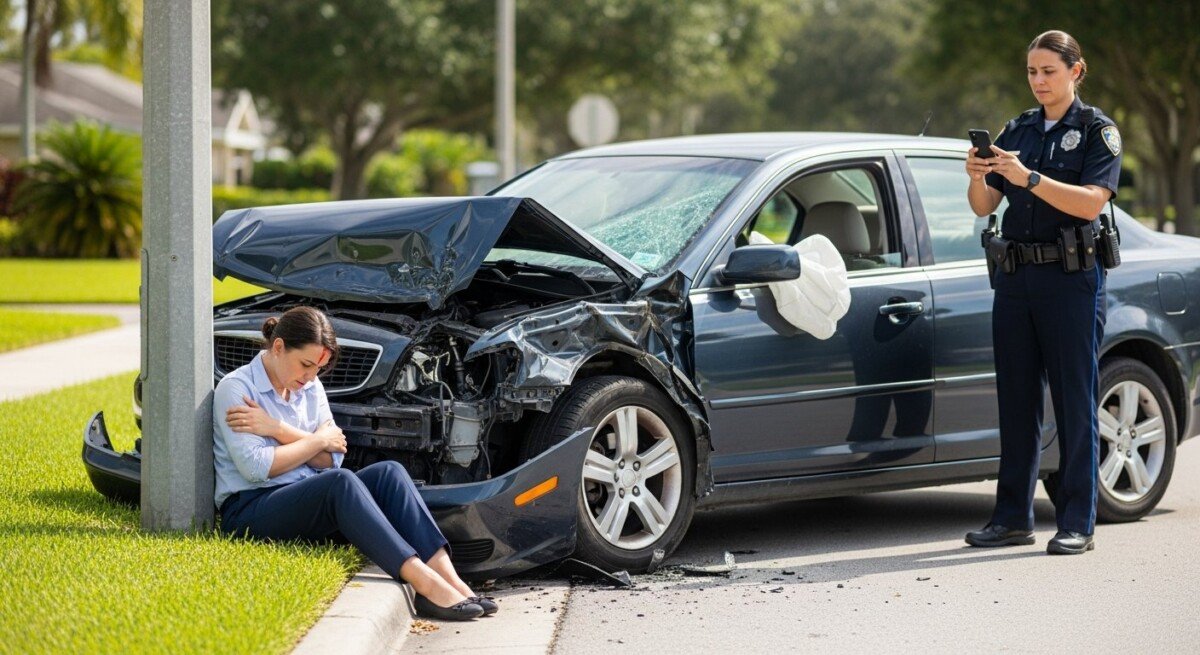
You are injured, your car is damaged, and the crash was not your fault. As you piece together the events, a disturbing detail emerges: the other driver was looking down at their phone just before impact. This revelation changes everything. In Florida, a driver who causes an accident while texting is not just negligent, they are engaging in a specific, dangerous act that carries significant legal and financial consequences. Understanding how Florida’s laws on distracted driving impact your personal injury claim is crucial to securing the full compensation you deserve for your medical bills, lost wages, and pain and suffering.
Florida’s Texting and Driving Laws and Legal Negligence
Florida Statute 316.305, commonly known as the Florida Ban on Texting While Driving Law, makes it illegal for any person to operate a motor vehicle while manually typing or entering multiple letters, numbers, or symbols into a wireless communications device to text, email, or instant message. This is a primary enforcement law, meaning an officer can pull over a driver solely for that violation. In the context of a car accident, this law establishes a critical legal standard. When a driver violates a statute designed for public safety, such as the texting ban, they can be found negligent per se. This legal doctrine means the violation itself is evidence of negligence, simplifying your task of proving the other driver was at fault for the crash.
However, it is important to distinguish between a traffic ticket and a civil lawsuit. The police may cite the driver for texting, which results in a fine and points on their license. Your personal injury claim is a separate civil action where you seek financial compensation. The traffic citation is powerful evidence in your civil case, but your attorney must still build a comprehensive claim demonstrating how the distracted driving directly caused your injuries and damages. This involves gathering evidence beyond the police report, such as phone records (which often require a subpoena), witness statements, and accident reconstruction analysis.
How Texting Impacts Insurance Claims and Liability
When the at-fault driver was texting, it fundamentally alters the dynamics of dealing with insurance companies. Florida is a no-fault state, meaning your own Personal Injury Protection (PIP) insurance covers your initial medical bills and lost wages up to your policy limits, typically $10,000, regardless of who caused the accident. However, for serious injuries, you can step outside the no-fault system and file a claim directly against the at-fault driver’s bodily injury liability (BIL) insurance. This is where evidence of texting becomes a powerful lever.
Insurance adjusters are trained to minimize payouts. In a standard accident, they may argue comparative negligence, suggesting you were partially to blame to reduce their liability. When clear evidence of texting exists, this argument becomes much harder for them to make. The egregious nature of the violation often shifts the negotiation power in your favor. It signals to the insurer that if the case goes to trial, a jury could be sympathetic to you and potentially award significant damages, including punitive damages in extreme cases. Therefore, an insurer may be more inclined to offer a favorable settlement to avoid a public trial where their insured’s reckless behavior is showcased. For guidance on navigating these complex negotiations, our resource on Florida personal injury settlement lawyers details the strategic approach needed.
Proving the Driver Was Texting: Evidence is Key
Asserting that the other driver was texting is one thing, proving it is another. Successful claims rely on concrete evidence. The first source is often the police report. If the responding officer observed the behavior, interviewed witnesses who saw the driver on the phone, or the driver admitted to texting, this will be documented. You should always request a copy of the crash report. Witness testimony is equally vital. Passengers in either vehicle, other drivers, or pedestrians may have seen the at-fault driver with their phone in hand, looking down, or swerving before the collision. Their contact information should be gathered at the scene if possible.
In many cases, the most definitive evidence comes from the driver’s cell phone records. These records can show if a text message was sent or received at the exact time of the crash. However, obtaining these records is not simple. Individuals cannot legally access another person’s private phone data. Your attorney can file a lawsuit and use the discovery process to subpoena the records from the wireless carrier. This is a complex legal procedure that underscores the importance of having skilled legal counsel. An experienced lawyer knows how to preserve and collect this digital evidence before it is lost or deleted.
Maximizing Your Compensation in a Distracted Driving Case
The presence of distracted driving can significantly increase the value of your claim. You are entitled to recover both economic and non-economic damages. Economic damages are quantifiable losses like medical expenses (future and past), lost wages, loss of earning capacity, and property damage. Non-economic damages are more subjective but equally real, including pain and suffering, mental anguish, loss of enjoyment of life, and disfigurement. A jury is permitted to consider the reckless nature of texting while driving when calculating these non-economic damages, often leading to higher awards.
In certain circumstances, Florida law may even allow for punitive damages. Unlike compensatory damages meant to make you whole, punitive damages are intended to punish the defendant for especially reckless or malicious conduct and to deter similar behavior in the future. While not awarded in every case, a conscious disregard for safety, such as choosing to text in heavy traffic at high speed, could meet the threshold. Pursuing these damages requires a sophisticated legal strategy. The process of finding the best personal injury lawyers in Florida is critical to ensuring you have an advocate who can effectively argue for the full scope of your damages.
Critical Steps to Take After an Accident with a Distracted Driver
Your actions in the immediate aftermath of a crash can make or break your future claim. First, ensure safety and call 911. Seek medical attention even if you feel okay, as some injuries manifest later. When speaking with the police, calmly state the facts: if you saw the driver texting, tell the officer. Do not speculate or accuse angrily. Collect information from witnesses and take photographs of the scene, vehicle damage, and any visible injuries. Do not discuss fault or the details of the accident with the other driver’s insurance company before consulting an attorney. They may record the call and use your statements against you.
Perhaps the most important step is to contact a Florida personal injury attorney who specializes in distracted driving cases as soon as possible. An attorney will handle all communication with insurers, initiate investigations to secure evidence like traffic camera footage or phone records, and build a compelling case for maximum compensation. The legal complexities of these cases, from dealing with PIP to pursuing a third-party liability claim, demand professional expertise. For a deeper understanding of selecting the right legal partner, consider our guide on finding Florida’s best personal injury lawyers for your case.
Frequently Asked Questions
What if the police report doesn’t mention texting?
You can still pursue a claim. Your attorney can investigate independently by interviewing witnesses, seeking traffic or business surveillance footage, and subpoenaing phone records. The police report is not the final word on evidence.
Can I sue the driver personally if their insurance isn’t enough?
Yes. If your damages exceed the at-fault driver’s bodily injury liability limits, you can file a lawsuit against the driver personally to seek a judgment for the excess amount. However, collecting on such a judgment depends on the driver’s personal assets.
Does Florida’s no-fault law affect my texting and driving claim?
It affects the process. You must first use your PIP coverage for initial medical bills. For serious injuries, you then pursue a claim against the at-fault driver. Evidence of texting is pivotal in proving the severity of their negligence to step outside the no-fault system.
What if I was partially at fault?
Florida follows a pure comparative negligence rule. Even if you are 50% at fault, you can still recover 50% of your damages from the other party. However, evidence that they were texting can drastically reduce the percentage of fault assigned to you by an insurer or jury.
How long do I have to file a lawsuit?
Florida’s statute of limitations for personal injury is generally two years from the date of the accident. For property damage, it is four years. Missing this deadline forfeits your right to sue forever. The intricate steps involved in building a strong case, as outlined in our article on finding the best personal injury lawyers in Florida for your case, should begin immediately.
If you have been injured by a driver who was texting, you have rights that extend far beyond a standard fender-bender claim. The reckless choice to divert attention from the road creates legal liability that can form the foundation for a robust compensation claim. Do not allow an insurance adjuster to minimize what you have been through. By taking prompt action, securing evidence, and enlisting experienced legal help, you can hold the distracted driver fully accountable and secure the financial resources needed for your recovery and future stability.