
What Happens If Your Uber Driver Crashes in Pennsylvania?
Understand your rights and options if your Uber driver caused an accident in Pennsylvania. For a free case evaluation, call (833) 227-7919.

By Jordan Parker
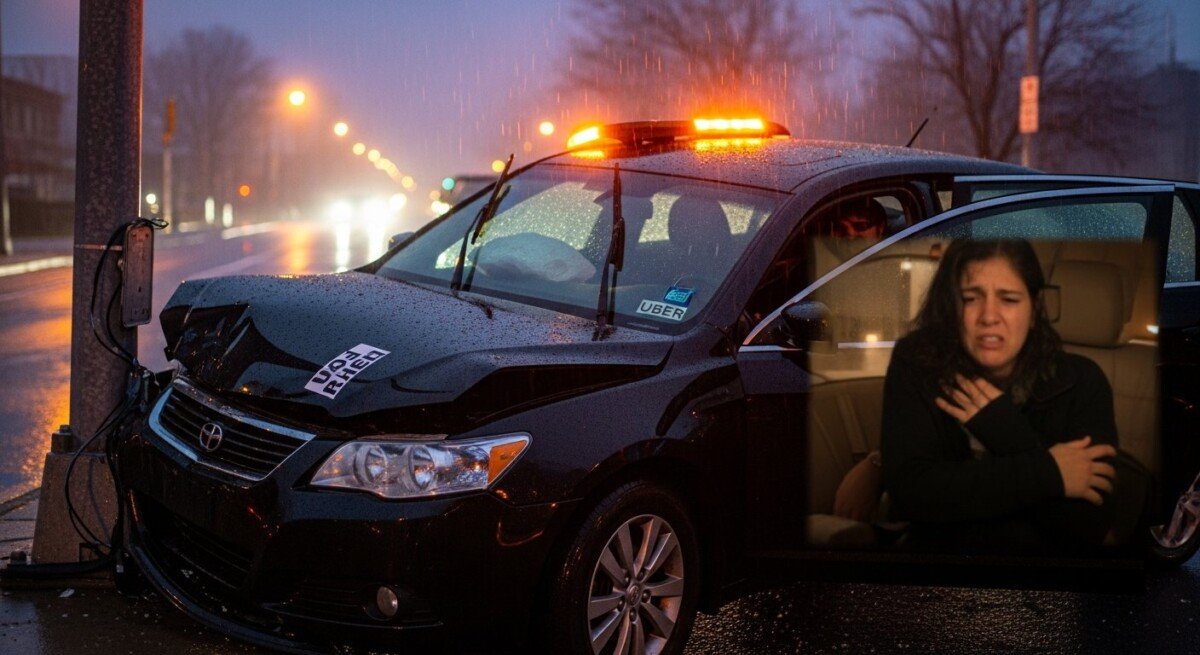
You hail an Uber for a safe ride home, but the unthinkable happens: a sudden collision. In the chaotic aftermath, pain and confusion set in, followed by a critical legal question: who is responsible when your Uber driver causes an accident in Pennsylvania? The answer is far more complex than a typical car crash. Pennsylvania’s unique insurance laws, Uber’s corporate policies, and the driver’s status at the moment of impact create a tangled web of liability. Understanding how to navigate this system is essential to protecting your rights and securing the compensation you need for medical bills, lost wages, and vehicle repairs.
Understanding Uber’s Insurance Policy in Pennsylvania
Uber provides a contingent commercial insurance policy that changes based on the driver’s app status. This layered coverage is the cornerstone of any accident claim involving an Uber vehicle. Pennsylvania law requires Uber and other transportation network companies to maintain specific minimum coverage, but the applicable policy depends entirely on what the driver was doing when the crash occurred. There are three distinct periods, each with different insurance implications for injured passengers and third parties.
Period 1: App Off or Driver Logged Out. When the Uber app is off, the driver is not working for Uber in any capacity. In this scenario, only the driver’s personal automobile insurance policy applies. Uber’s commercial policy provides no coverage. If the driver causes an accident during this time, any claim must be made against the driver’s personal insurance, which may complicate matters if their policy has low limits or exclusions for commercial activity.
Period 2: App On, Waiting for a Trip Request. Once the driver turns on the Uber app and is available to accept ride requests, Uber’s contingent liability coverage begins. This coverage is secondary, meaning it applies only if the driver’s personal insurance denies the claim or is insufficient. Pennsylvania mandates that Uber provide at least $50,000 in bodily injury per person, $100,000 per accident, and $25,000 in property damage during this period. However, accessing these funds often requires a denial from the primary insurer first.
Period 3: En Route to Pick Up or During a Trip. This period offers the highest level of protection. From the moment a driver accepts a trip request until the trip is complete, Uber’s primary commercial insurance policy is active. The required minimum coverage in Pennsylvania jumps significantly to $1,000,000 per accident for third-party liability, plus comprehensive and collision coverage for the driver’s vehicle, subject to a deductible. For passengers injured during a ride, this $1 million policy is the primary source for a claim.
Determining Liability and Fault in Pennsylvania Uber Accidents
Establishing who is at fault, or liable, for your damages involves investigating the accident and applying Pennsylvania’s legal principles. Liability determines which insurance policy or policies must pay. In many crashes, the Uber driver may be solely at fault, but other parties can share responsibility. A thorough investigation is crucial.
Pennsylvania is a “choice” no-fault state for auto insurance, but this system interacts uniquely with Uber accidents. Drivers must select either full tort or limited tort coverage on their personal policies. However, if you are a passenger in an Uber vehicle, your own tort selection typically does not apply to your claim against Uber’s policy. As a claimant against the commercial policy, you generally retain the full right to sue for pain and suffering regardless of your personal election, provided you can prove a serious injury. This is a critical distinction from standard Pennsylvania car accident law.
Liability is not always clear-cut. Consider these common scenarios where multiple parties may be at fault:
- The Uber Driver’s Negligence: This is the most direct cause. Examples include distracted driving, speeding, running red lights, or driving under the influence.
- Another Driver’s Negligence: A third-party motorist who causes the crash would be liable through their own insurance. Uber’s policy may still provide underinsured motorist coverage if the at-fault driver’s limits are too low.
- Uber’s Potential Vicarious Liability: Under agency law, a company can be held responsible for the negligent acts of its employees or agents. Whether an Uber driver is considered an employee or an independent contractor is a contested legal issue that can impact Uber’s direct liability.
- Municipal or Government Liability: Dangerous road conditions, like unmarked construction zones or malfunctioning traffic signals, could make a government entity partially liable.
Similar complexities arise in other rideshare contexts. For instance, the process for handling a crash in a rental car used for Uber involves additional layers, as detailed in our guide on navigating a rental car accident in Pennsylvania.
Critical Steps to Take After an Uber Accident in Pennsylvania
Your actions in the immediate aftermath of an Uber crash can significantly impact your health, safety, and legal claim. Prioritize safety first, then evidence preservation.
- Seek Medical Attention Immediately: Your health is paramount. Some injuries, like whiplash or internal trauma, may not be immediately apparent due to shock. A medical record created right after the accident directly links your injuries to the crash.
- Report the Accident to Police: Call 911. A police report provides an official, third-party account of the incident, including initial determinations of fault and citations issued. This document is invaluable for insurance claims.
- Gather Evidence at the Scene: If you are physically able, collect information. Take photos and videos of vehicle damage, license plates, street signs, traffic signals, skid marks, and your injuries. Get the Uber driver’s name, insurance information, and vehicle details. Obtain contact information from any witnesses.
- Notify Uber Through the App: Use the Uber app’s safety toolkit or help section to report the accident. This creates a time-stamped record with the company. Do not provide a detailed recorded statement to Uber or any insurance adjuster without legal counsel.
- Preserve Your Ride Details: Your trip receipt and history in the Uber app contain crucial data: the driver’s name, the exact time and route of the trip, and the trip ID. This information helps establish the driver’s status (Period 3) at the time of the crash.
Following these steps creates a strong foundation. However, dealing with insurance companies requires strategic communication. It is highly advisable to consult with a Pennsylvania attorney experienced in rideshare accidents before giving any formal statements or accepting a settlement offer.
Navigating Insurance Claims and Legal Action
Filing a claim after an Uber accident involves multiple potential insurers, each with an interest in minimizing their payout. The process is adversarial, not supportive. You will likely need to file claims with both the at-fault driver’s personal insurance and Uber’s commercial carrier. These companies may dispute which policy is primary or attempt to shift blame to reduce their exposure.
Uber’s $1 million policy, administered by companies like James River Insurance or Progressive, is robust but vigorously defended. Adjusters may contact you quickly with a low settlement offer before you understand the full extent of your injuries and damages. Accepting such an offer almost always waives your right to seek additional compensation later, even if complications arise. Calculating a fair settlement requires a comprehensive assessment of both economic and non-economic damages, including future medical costs, long-term disability, and pain and suffering.
If insurance negotiations fail to yield a fair outcome, filing a lawsuit may be necessary. This legal action would typically name the Uber driver as the defendant. Under the legal doctrine of respondeat superior, Uber could also be named if it can be shown the driver was acting as its agent. A lawsuit initiates the discovery process, allowing your attorney to obtain internal Uber documents, driver logs, and other evidence. The threat of litigation often motivates insurers to offer a more reasonable settlement at the mediation stage. Understanding the full legal landscape, including how fault is determined, is essential, much like the considerations outlined in our resource on Pennsylvania rental car accident legal procedures.
Frequently Asked Questions (FAQ)
Can I sue Uber directly if my driver caused the accident?
Possibly, but it is complex. Uber’s terms of service include arbitration clauses aimed at preventing direct lawsuits. However, arguments can be made to challenge these clauses, or Uber can be brought in under vicarious liability theories. An experienced attorney can assess the best legal strategy for your case.
What if I was a pedestrian or in another car hit by an Uber driver?
Your claim process is similar. You would be considered a third party and are entitled to make a claim against the applicable Uber insurance policy based on the driver’s period status. The $1 million coverage applies if the driver was on a trip.
How long do I have to file a lawsuit in Pennsylvania?
Pennsylvania’s statute of limitations for personal injury claims is generally two years from the date of the accident. Missing this deadline will almost certainly bar you from ever recovering compensation through the courts. The timeline for dealing with complex insurance claims, like those involving Uber, can be found in our analysis of rental car accident claim timelines.
What if the Uber driver was at fault but doesn’t have personal insurance?
Uber requires its drivers to maintain personal insurance, but some may let it lapse. If the driver was on a trip (Period 3), Uber’s $1 million primary policy should cover your claim. If the driver was waiting for a request (Period 2), Uber’s contingent policy should apply after you demonstrate the lack of primary insurance.
Does my own car insurance help if I’m hurt as an Uber passenger?
It might. If the Uber driver’s and Uber’s policies are insufficient, you may be able to make a claim under the underinsured motorist (UIM) coverage of your own personal auto policy or a household member’s policy. This is a nuanced area requiring careful review of policy language.
Securing full compensation after an Uber accident in Pennsylvania demands navigating a maze of insurance layers and legal doctrines. While the process is designed to protect corporate interests, knowing your rights and the applicable laws empowers you to take decisive action. The most critical step you can take is to seek qualified legal guidance to investigate the crash, identify all responsible parties, and aggressively pursue the maximum recovery you are owed. For further insight into handling complex vehicular accidents, consider reviewing our guide on legal strategies after a Pennsylvania rental car accident.