
What to Do After a Commercial Truck Accident in Illinois
Understand your rights and the complex process after a commercial truck accident in Illinois. For a free case evaluation, call (833) 227-7919.

By Corbett Hayes
A collision with a commercial truck is a life-altering event. The sheer size and weight of these vehicles, from tractor-trailers to delivery box trucks, often result in catastrophic injuries, extensive property damage, and immense financial pressure. In the immediate aftermath, victims are left grappling with pain, confusion, and a daunting question: what happens if you were hit by a commercial truck in Illinois? The legal and insurance landscape following such a crash is profoundly more complex than a standard car accident. Multiple liable parties, stringent federal regulations, and aggressive insurance defense teams create a challenging path to fair compensation. Understanding the critical steps to take and the unique legal principles at play is essential to protecting your rights and your future.
Immediate Actions at the Accident Scene
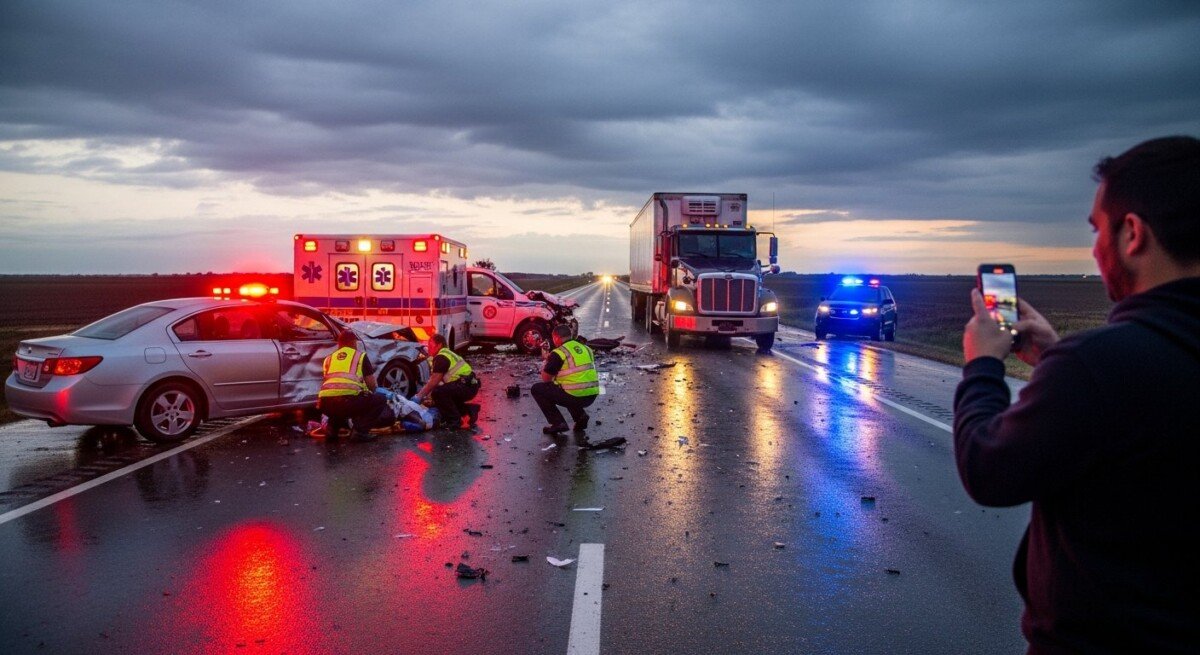
Your actions in the minutes and hours following the crash can significantly impact the strength of any future claim. While your health is the absolute priority, if you are physically able, there are crucial steps to follow. First, call 911 immediately. A police report is an official, third-party record of the event and is indispensable. Request medical attention at the scene, even if you feel “okay.” Adrenaline can mask serious injuries like internal bleeding or whiplash. Document everything you can. Use your phone to take comprehensive photos and videos of the vehicles, skid marks, road conditions, traffic signs, and your visible injuries. If there are witnesses, politely ask for their names and contact information. Exchange insurance and driver’s license details with the truck driver, but limit your conversation about the accident. Do not admit fault or speculate on what happened. Statements made in the shock of the moment can be misconstrued and used against you later.
Why Truck Accident Claims Are Inherently Complex
Pursuing compensation after a commercial truck accident is not like dealing with another private motorist. The potential defendants extend far beyond the individual behind the wheel. This multi-layered liability is what makes these cases both challenging and, with proper legal strategy, potentially more substantial. An experienced attorney will investigate all possible sources of liability to build the strongest claim. Common liable parties in Illinois truck accident cases include the truck driver (for negligence like speeding or fatigue), the trucking company (for negligent hiring, training, or supervision), the cargo loader (for improper loading leading to shift and rollover), the truck manufacturer or parts maker (for defective brakes or tires), and the company leasing the truck. Each entity will have its own insurance policy and legal team aiming to minimize payout.
Furthermore, commercial trucking is governed by a dense web of federal and state regulations administered by the Federal Motor Carrier Safety Administration (FMCSA). These rules cover maximum driving hours (Hours of Service), mandatory maintenance logs, drug and alcohol testing, and cargo securement standards. A violation of these regulations, such as a driver exceeding the 11-hour daily driving limit, can constitute negligence per se, meaning the violation itself can be used as evidence of fault. Preserving the truck’s electronic logging device (ELD) data, which records driving time, speed, and braking, becomes a critical, time-sensitive task, as trucking companies may not retain this data for long.
The Illinois Legal Framework for Your Claim
Illinois law provides the foundation for your injury claim. The state operates under a “fault” system for auto accidents, meaning the person who caused the accident is financially responsible for the damages. Illinois also follows a doctrine called “modified comparative negligence.” This means your compensation can be reduced by your percentage of fault in causing the accident. Crucially, if you are found to be 51% or more at fault, you are barred from recovering any damages. This makes establishing clear liability against the truck driver and other parties paramount. The statute of limitations in Illinois for personal injury is generally two years from the date of the accident. Missing this absolute deadline will almost certainly result in your claim being dismissed by the court, regardless of its merits.
Damages in a serious truck accident case aim to make the victim whole, covering both economic and non-economic losses. A comprehensive claim will account for all past and future needs. Just as navigating complex regulations is key in trucking cases, understanding intricate legal processes is vital in other areas of law. For instance, individuals facing overwhelming debt may find a similar need for specialized guidance, as outlined in our resource on bankruptcy law procedures and exemptions. In a truck accident claim, recoverable damages typically include medical expenses (emergency care, surgery, rehabilitation, future medical costs), lost wages and loss of future earning capacity, property damage (vehicle replacement or repair), pain and suffering, emotional distress, loss of normal life (inability to enjoy hobbies or family activities), and in tragic cases, wrongful death damages for surviving family members.
The Critical Role of a Specialized Attorney
Given the complexities involved, attempting to handle a commercial truck accident claim without skilled legal counsel is extremely risky. Insurance adjusters for trucking companies are trained to settle claims quickly and for as little as possible. They may contact you soon after the accident with a low settlement offer before you even know the full extent of your injuries. An attorney specializing in truck accidents levels the playing field. They understand the tactics used by these insurers and how to counter them. Your lawyer will handle all communication with the insurance companies, preventing you from making statements that could harm your case. They will also immediately launch an investigation to secure vital evidence before it disappears.
This investigation is multifaceted and requires resources. A qualified firm will dispatch investigators to the scene, subpoena the truck driver’s logs and employment records, obtain the truck’s maintenance history, download data from the vehicle’s “black box” (ECM), and consult with accident reconstruction experts and medical specialists. This thorough approach is necessary to prove not just negligence, but often the “willful and wanton” conduct that may justify punitive damages in Illinois, which are intended to punish the defendant for egregious behavior. The importance of skilled representation cannot be overstated, much like when dealing with recorded insurance statements, a process we explain in detail for Texas car accident statements and their legal implications.
The Claims and Litigation Process
The path to compensation typically begins with a demand package. Your attorney will compile all evidence, medical records, bills, and expert reports into a comprehensive demand sent to the at-fault party’s insurer. This package tells the full story of the crash and your damages, demanding a specific settlement amount. Negotiations follow. If a fair settlement cannot be reached, your attorney will file a lawsuit. Litigation involves phases like discovery (formal exchange of evidence and depositions) and potentially mediation, where a neutral third party helps facilitate a settlement. Most cases settle before a trial, but having a lawyer prepared to take the case to a jury is essential for maximizing leverage.
Throughout this process, your focus should be on recovery. Your legal team handles the heavy lifting. This includes dealing with your own health insurance liens and ensuring all your treatment is properly documented. It also means preparing you for every step, such as a deposition where you will answer questions under oath from the defense attorney. Proper preparation is key to presenting a credible and compelling case. Finding the right legal advocate is a critical decision, similar to the process described in our article on selecting top-rated personal injury lawyers for your claim.
Frequently Asked Questions
How long do I have to file a truck accident lawsuit in Illinois?
The statute of limitations for personal injury from a truck accident in Illinois is two years from the date of the crash. For wrongful death, it is also generally two years from the date of death. There are very few exceptions, so consulting an attorney immediately is crucial to protect your right to sue.
What if the truck driver was an independent contractor?
This does not automatically absolve the trucking company. Companies can still be held liable if they were negligent in hiring the contractor or if they exerted significant control over the contractor’s work. An attorney will investigate the contractual relationship to identify all responsible parties.
Can I recover damages if I was partially at fault?
Yes, under Illinois’ modified comparative negligence rule, you can recover damages as long as you are less than 51% at fault. Your total compensation will be reduced by your percentage of fault. For example, if you are found 20% at fault and your damages are $100,000, you would recover $80,000.
What is the average settlement for a truck accident in Illinois?
There is no “average” settlement. Values range from tens of thousands to millions of dollars, depending on injury severity, liability clarity, insurance policy limits, and the skill of your legal representation. Catastrophic injuries like spinal cord damage or traumatic brain injury result in the highest valuations due to lifelong care needs.
What should I do if the trucking company’s insurer calls me?
Politely decline to give a statement or answer questions. Refer them to your attorney. Their primary goal is to find inconsistencies or admissions to minimize your claim. It is vital to have all communication go through your legal counsel, a principle that applies across many legal challenges, including the strategic guidance needed for rebuilding your financial future with a Chicago bankruptcy lawyer.
The aftermath of a commercial truck collision in Illinois demands a strategic and informed response. By taking the right immediate steps, understanding the unique complexities of trucking law, and securing experienced legal representation, you can navigate this difficult time. Your focus should remain on healing, while a dedicated legal professional works to hold all negligent parties accountable and secure the full compensation you need to move forward.